







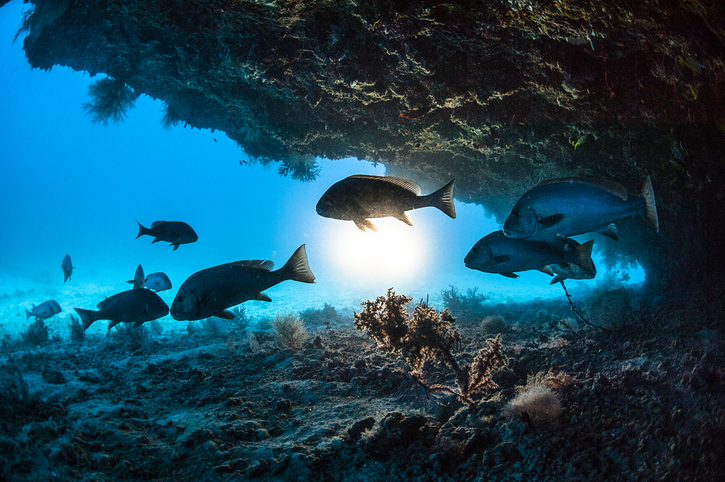
India has decided to sign and ratify the Biodiversity Beyond National Jurisdiction (BBNJ) Agreement. This international treaty, under the United Nations Convention on the Law of the Sea (UNCLOS), aims to protect marine biodiversity in the high seas through international cooperation.
Also known as the ‘High Seas Treaty,’ the BBNJ Agreement ensures that no country can claim sovereign rights over marine resources in the high seas – areas open to all for activities such as navigation, overflight, and laying submarine cables and pipelines.
Following the Cabinet’s endorsement of the treaty on July 2, Science and Technology Minister Jitendra Singh emphasized India’s commitment to environmental conservation and sustainable development.
The Ministry of Earth Sciences (MoES) will oversee the implementation of the BBNJ Agreement in India.
Highlighting the benefits of the treaty for India, MoES Secretary Dr. M Ravichandran said, “The BBNJ Agreement allows us to enhance our strategic presence beyond our Exclusive Economic Zone (EEZ), which is very promising. It will strengthen our marine conservation efforts, open new avenues for scientific research, provide access to samples and information, and promote capacity building and technology transfer.”
Ravichandran underscored that signing the BBNJ Agreement is a crucial step towards ensuring the health and resilience of our oceans.
The BBNJ Agreement will become the third implementation agreement under UNCLOS, alongside the 1994 Part XI Implementation Agreement (regulating mining in international seabed areas) and the 1995 UN Fish Stocks Agreement (conserving and managing fish stocks). UNCLOS, adopted in 1982 and effective from 1994, is vital for environmental protection, maritime boundaries, marine resource rights, and dispute resolution. It has been ratified by over 160 countries and maintains order and fairness in using the world’s oceans.
The BBNJ Agreement will become legally binding 120 days after 60 countries ratify it. As of June 2024, 91 countries have signed the agreement, and eight have ratified it.
By Manish Poswal