











Despite ongoing challenges, such as tariffs and protectionist policies, India and the US have set an ambitious goal of achieving $500 billion in bilateral trade, with a focus on high-growth sectors like semiconductors, electronics, and critical technologies, industry experts said on Friday.
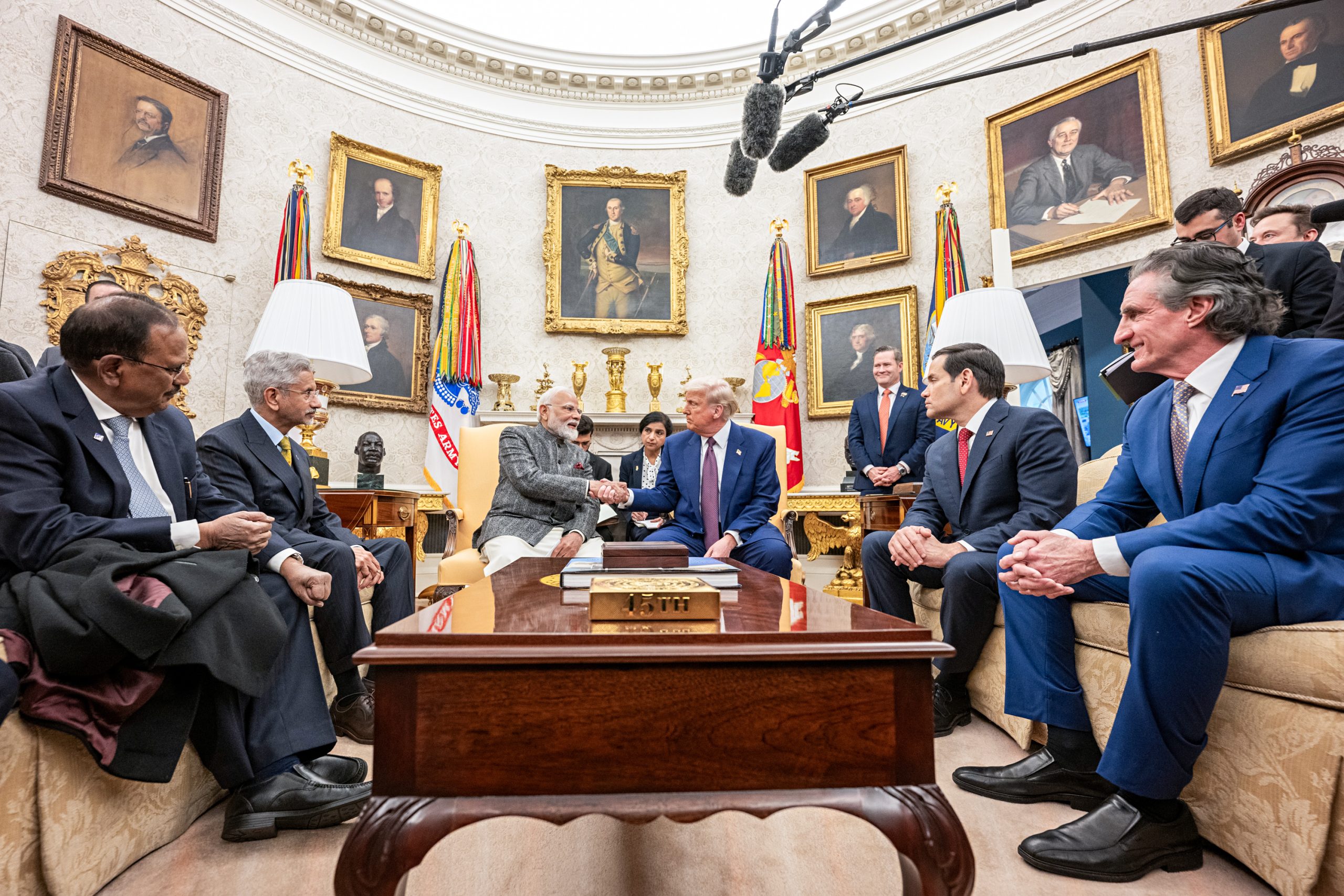
The India-US bilateral engagement, following Prime Minister Narendra Modi’s meeting with US President Donald Trump, reaffirmed a shared vision of the relationship as pivotal to global stability and prosperity.
This partnership has grown into one of the most significant in the 21st century, addressing strategic, economic, and technological priorities, said Ashok Chandak, President of the India Electronics and Semiconductor Association (IESA).
Building on the iCET (Initiative on Critical and Emerging Technologies) framework, the partnership will promote the application of cutting-edge technologies in areas such as defence and artificial intelligence (AI), semiconductors and quantum computing, and biotechnology, energy, and space exploration.
The launch of the INDUS Innovation Bridge, modelled after the successful INDUS-X platform, will foster deeper US-India partnerships in academia and industry.
This initiative aims to spur investments in space, energy, and emerging technologies, helping both nations maintain leadership in innovation to meet 21st-century needs.
The US-India TRUST (Transforming the Relationship Utilizing Strategic Technology) initiative highlights the potential for large-scale US-origin AI infrastructure deployment in India, addressing export control concerns and enabling access to cutting-edge technology.
This would also open doors for Indian companies to contribute to global AI ecosystems, said Chandak.
The meeting underscored the importance of research, development, and investments across the critical mineral value chain to meet the demands of emerging industries such as semiconductors.
Additionally, the US-India collaboration on energy affordability, reliability, and sustainability will help India expand its solar energy markets, though tariff-related concerns remain a critical issue to address.
Major decisions were also made to strengthen India’s defence infrastructure, including technology transfers and collaboration in advanced weapon systems, enhancing India’s strategic autonomy.
With a shared commitment to innovation, economic growth, and global security, the India-U.S. partnership is poised to deliver transformative outcomes across industries including Semiconductors and technology sector, said experts.
–IANS







