











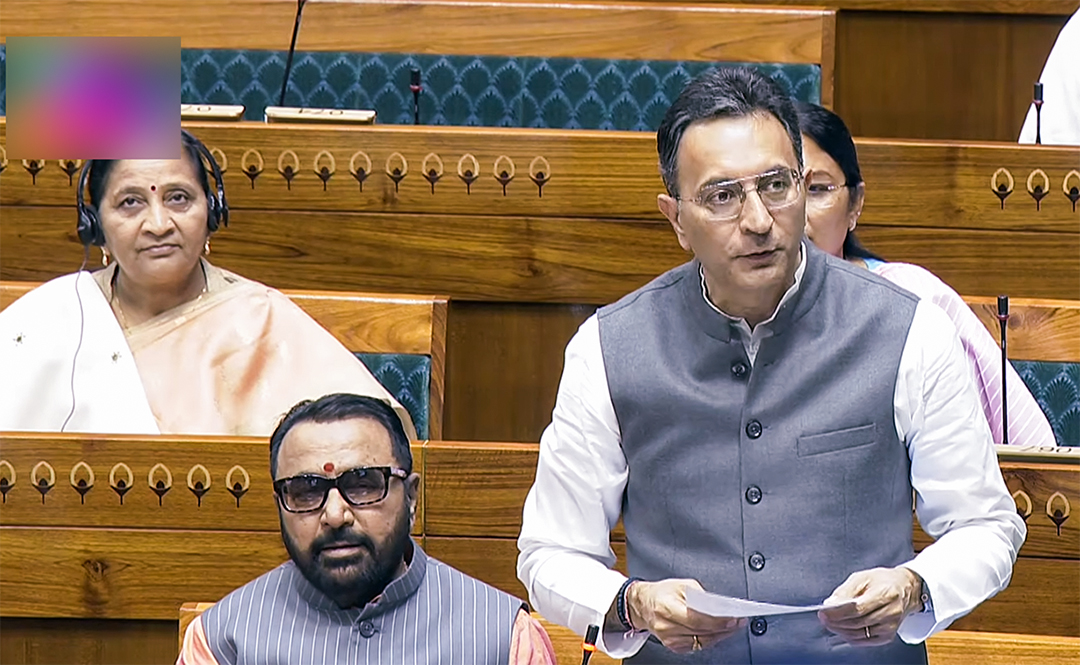
Union Minister of State for Electronics and Information Technology, Jitin Prasada, informed Rajya Sabha on 13 February 2026 that India’s AI ecosystem has made significant strides under the IndiaAI Mission, launched in March 2024 with an outlay of ₹10,372 crore. The mission, aimed at democratizing technology, addressing India-centric challenges, and creating economic and employment opportunities, has in less than 24 months laid a strong foundation for AI development in the country.
Under the IndiaAI Mission, more than 38,000 GPUs have been onboarded to a common compute facility, available to Indian start-ups and academic institutions at affordable rates. Twelve organisations and consortia, including Sarvam AI, Soket AI, Gnani AI, Gan AI, Avataar AI, IIT Bombay Consortium (BharatGen), GenLoop, Zenteq, Intellihealth, Shodh AI, Fractal Analytics Ltd., and Tech Mahindra Maker’s Lab, have been shortlisted to develop indigenous foundational models, including large language and multimodal AI models trained on Indian datasets and languages. These models are expected to support government use, open-source deployment, and innovation across India’s startup and research community.
Financial assistance for the selected organisations covers actual compute usage costs, with an additional 25% earmarked for ancillary expenses such as datasets and personnel. Total support includes Sarvam AI ₹246.72 crore, Gnani AI ₹177.27 crore, Gan AI ₹110.03 crore, Soket AI ₹177.08 crore, Avataar AI ₹16.10 crore, BharatGen ₹1,058.52 crore, Fractal Analytics ₹137.91 crore, Tech Mahindra ₹2.66 crore, Zenteq ₹206.49 crore, GenLoop ₹2.61 crore, Intellihealth ₹49.50 crore, and Shodh AI ₹9.40 crore.
The mission has also approved 30 applications for India-specific AI solutions and is supporting more than 8,000 undergraduate students, 5,000 postgraduates, and 500 PhD students. Twenty-seven India Data and AI labs have been established, with 543 additional labs identified for future development.
IndiaAI Mission promotes sustainable AI compute infrastructure through a shared national model, optimizing high-performance computing resources and reducing duplication. The “Safe & Trusted AI” pillar supports 13 projects focusing on bias mitigation, machine unlearning, privacy-preserving architectures, algorithm auditing, deepfake detection, risk assessment, and ethical AI frameworks. AI Kosh provides controlled access to India-based datasets to ensure responsible data governance and privacy protection.
The mission’s governance framework establishes national AI guidelines based on seven principles — Trust, People First, Innovation over Restraint, Fairness & Equity, Accountability, Understandable by Design, and Safety, Resilience & Sustainability — with proportionate safeguards for high-risk AI use cases. Institutional mechanisms include an AI Governance Group, Technology & Policy Expert Committee, and AI Safety Institute. The Digital Personal Data Protection Act, 2023, provides a legal framework for secure and lawful processing of personal data in AI applications.
The Indian Computer Emergency Response Team (CERT-In) has issued multiple advisories to secure AI deployment, including a May 2023 advisory on adversarial threats, the CSPAI program launched in September 2024, a March 2025 advisory on generative AI best practices, and a co-signed February 2025 ANSSI report advocating a cyberrisk-based approach for trusted AI development.


