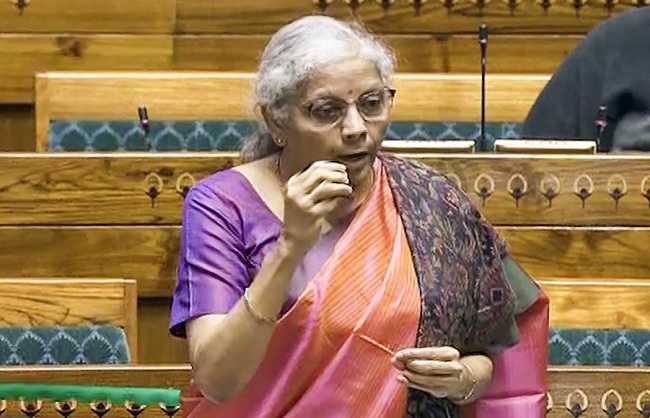
The Economic Survey presented in Parliament today by Finance Minister Nirmala Sitharaman paints an optimistic picture for India’s economic future. According to the survey, the Indian economy has the potential to sustain a growth rate of over 7% in the medium term, provided it builds on the structural reforms undertaken over the last decade.
This ambitious growth target, however, is not without conditions. The survey emphasizes that achieving this sustained growth will require a concerted effort from multiple stakeholders. “This requires a tripartite compact between the Union Government, State Governments and the private sector,” the survey says.
The document outlines a comprehensive growth strategy for the medium term, dubbed “Amrit Kaal.” This strategy focuses on several critical areas, including boosting private investment, expanding India’s MSMEs, unlocking the potential of agriculture, securing financing for green transitions, bridging the education-employment gap, and building state capacity.
Initiatives like E-NAM, promoting Farmer Producer Organizations (FPOs), and allowing cooperatives to participate in agri-marketing can improve market infrastructure and price discovery.
India’s financial sector is undergoing significant transformations, with primary capital markets facilitating substantial capital formation. During FY24, these markets accounted for approximately 29% of the gross fixed capital formation of private and public corporates.
The survey also highlights India’s improving position in the global economic landscape. The country’s rank in the World Bank’s Logistics Performance Index has climbed from 44th in 2018 to 38th in 2023, reflecting enhanced resilience in the external sector.
On the social front, initiatives like the New Education Policy 2020 and Ayushman Bharat are driving positive changes. The healthcare scheme has generated over 34.7 crore cards and covered 7.37 crore hospital admissions, saving over Rs 1.25 lakh crore in out-of-pocket expenses for poor families.
Labour market indicators show improvement, with the unemployment rate declining to 3.2% in 2022-23. The government’s ‘Skill India’ program continues to play a crucial role in boosting employment and skill development.
While the overall outlook is positive, the survey acknowledges several challenges. These include slowing global GDP growth, rising trade protectionism, and the need to boost India’s export competitiveness. The document stresses the importance of agile policy interventions and continued efforts to address these challenges.
R&D and innovation, along with vocational education, can help address skill shortages effectively. The services sector’s emerging job demands require focused skills in areas such as AI, blockchain, cybersecurity, and more. However, the advent of AI might moderate India’s services export growth, highlighting the need to enhance the tourism sector.
Upskilling through government and industry collaboration can enable India to become a high-value partner in specialized areas. Infrastructure development in India is predominantly public sector-led, necessitating higher private sector financing and resource mobilization.
(Inputs from ANI)