








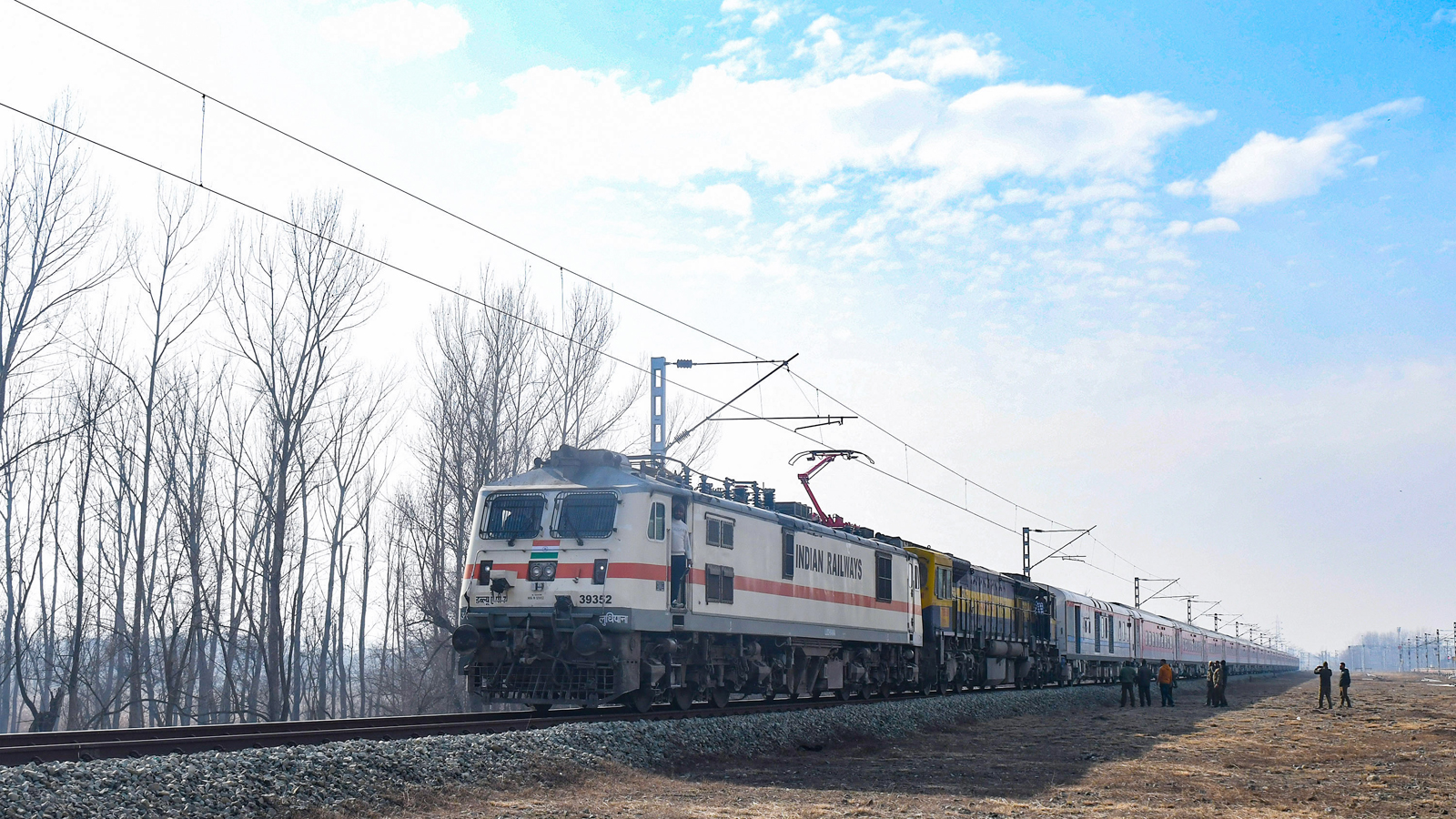
Indian Railways has introduced an artificial intelligence-enabled Intrusion Detection System (IDS) to prevent accidents involving elephants on railway tracks, Union Minister for Railways, Information & Broadcasting and Electronics & Information Technology Ashwini Vaishnaw, informed the Lok Sabha on Wednesday.
In a written reply, the Minister said the initiative has been taken by the Ministry of Railways in coordination with the Ministry of Environment, Forest and Climate Change to address the long-standing issue of elephant casualties on railway lines, particularly in forested and wildlife-sensitive regions.
The AI-enabled IDS uses Distributed Acoustic Sensors (DAS) installed along optical fibre cables laid near railway tracks. The system is equipped with pre-installed acoustic signatures of elephant locomotion, enabling it to detect the movement of elephants in close proximity to tracks. Once detected, real-time alerts are generated for loco pilots, station masters and railway control rooms, allowing timely preventive measures such as slowing down or stopping trains.
At present, the IDS is operational over 141 route kilometres at critical and vulnerable locations identified by forest departments in the Northeast Frontier Railway (NFR). In addition, works have been sanctioned for deploying the system across several other zones, including NFR (403.42 route km), East Coast Railway (368.70 route km), Southern Railway (55.85 route km), Northern Railway (52 route km), South Eastern Railway (55 route km), North Eastern Railway (99.18 route km), Western Railway (115 route km) and East Central Railway (20.3 route km).
The Minister noted that in the event of any elephant-train collision, zonal railways investigate the incident in close coordination with forest authorities. Immediate measures such as imposing speed restrictions in sensitive sections, issuing alerts to train crews and station masters, and holding regular coordination meetings with forest officials are undertaken. Over the past five years, an average of about 16 such incidents have been reported annually.
Apart from the AI-based detection system, Indian Railways has implemented a range of additional mitigation measures. These include construction of underpasses and ramps to facilitate safe elephant movement, installation of fencing along tracks in vulnerable stretches, and placement of warning signage at identified elephant corridors to alert loco pilots in advance.
Other initiatives involve clearing vegetation and edible plants near tracks within railway land, installing solar-powered LED lighting in forest areas, and deploying elephant trackers engaged by forest departments to provide timely alerts. Innovative honey bee buzzer devices, which emit sounds that act as repellents, have been installed at select level crossings to deter elephants from approaching railway lines.
Indian Railways is also experimenting with thermal vision cameras to detect the presence of wild animals on straight track sections during night or low-visibility conditions, further enhancing safety for both wildlife and train operations.
The Minister said these combined technological and infrastructural measures reflect the Railways’ commitment to balancing operational efficiency with wildlife conservation and reducing human-animal conflict along railway corridors.