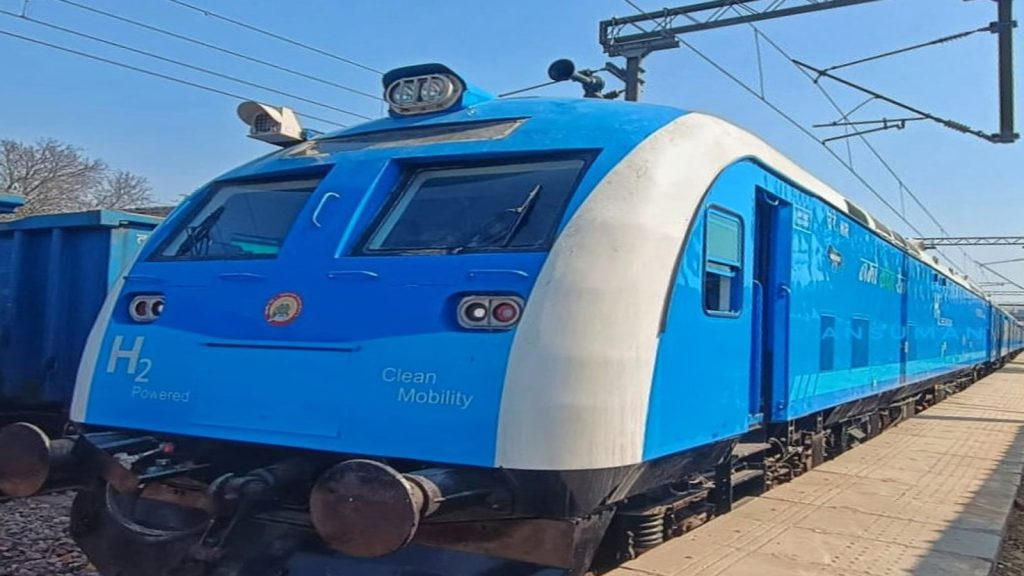
In a major push towards green and sustainable transportation, Indian Railways is set to introduce the country’s first indigenous hydrogen fuel cell-based train on the Jind-Sonipat section of Northern Railway in Haryana.
The 10-car hydrogen-powered trainset, approved by Indian Railways, will operate at a maximum speed of 75 kmph and will be driven by a 1200 KW hydrogen fuel cell propulsion system.
The development marks a significant milestone in India’s clean energy transition, placing the country among a select group of nations such as Germany, Japan, China and the United States that are exploring hydrogen-powered rail transportation for sustainable mobility.
Hydrogen fuel cell technology produces electricity through a chemical reaction using hydrogen, with water vapour being the only emission, making it a clean alternative to fossil fuel-based railway traction systems.
The Ministry of Railways said the Jind-Sonipat section was selected as the pilot corridor for the project. To support operations, an indigenous hydrogen storage and refuelling facility has been established at Jind.
The Petroleum and Explosives Safety Organisation (PESO) has granted the required licence for the storage and dispensing of compressed hydrogen gas at the site.
The facility is equipped with a hydrogen compression system for refuelling operations, along with technical support systems and critical spare components to ensure reliable and fail-safe functioning. A standby compressor unit is also being arranged as part of the safety infrastructure.
Railway authorities said several safety measures have been incorporated into the project, including hydrogen leak detectors, flame detectors and regular inspection protocols for the hydrogen production, storage and dispensing systems.
Operation and maintenance manuals for both the hydrogen trainset and the hydrogen plant, approved by the Research Designs and Standards Organisation (RDSO), are also being prepared for deployment.
The proposed maintenance facility at Shakurbasti will operate under strict safety provisions, standard operating procedures and regular safety audits.
According to the Ministry, the project approval also mandates round-the-clock monitoring of the hydrogen refuelling system, deployment of trained and certified personnel for critical operations and periodic inspection and maintenance schedules.
During the initial phase of operations, trained technical staff will accompany the train to ensure smooth functioning and operational reliability.
The hydrogen train project is part of Indian Railways’ broader strategy to promote innovation, energy efficiency and environmentally sustainable transport solutions, while supporting India’s long-term clean energy and net-zero carbon emission goals.