Indian researchers have identified critical gene mutations linked to oral cancer among women in southern India, providing new insights into a disease that remains a major public health challenge in the country.
The study, conducted by scientists from the Jawaharlal Nehru Centre for Advanced Scientific Research (JNCASR), Bengaluru, and the BRIC–National Institute of Biomedical Genomics (NIBMG), Kalyani, in collaboration with clinicians from Sri Devaraj Urs Academy of Higher Education and Research (SDUAHER), Kolar, focused on female patients with a history of chewing tobacco-infused betel quid and related products. Oral cancer rates among women are notably high in certain parts of southern and northeastern India, yet most research has traditionally focused on male patients.
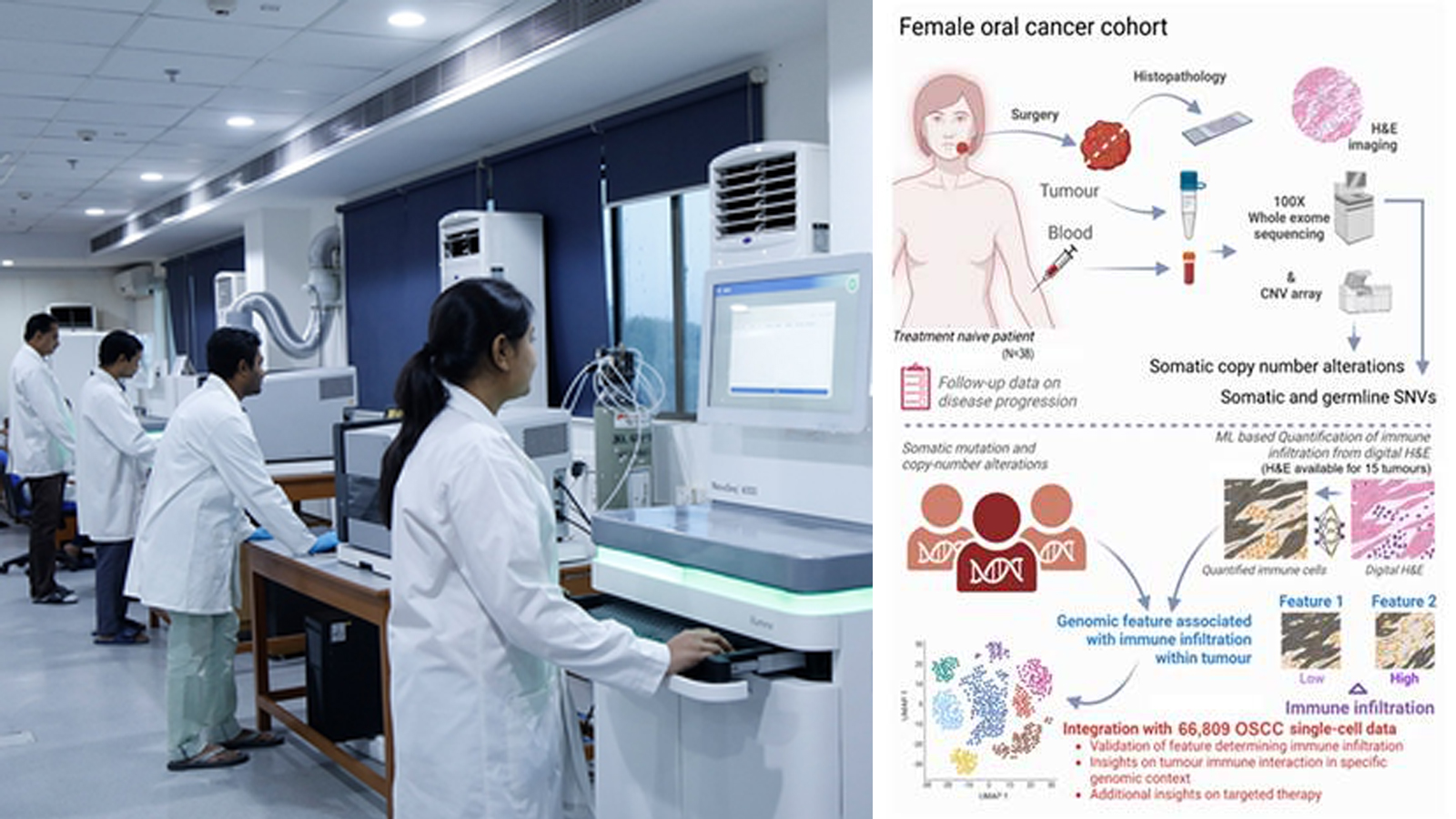
Published in Clinical and Translational Medicine, the study used whole-exome sequencing to analyse tumor samples from 38 women. Researchers identified ten key genes with significant mutations. Among these, CASP8 and TP53 showed high mutation rates, but the team found that CASP8 appears to function as a driver mutation in women—differing from patterns typically seen in male-dominated studies.
The co-occurrence of TP53 and CASP8 mutations was associated with more aggressive and recurrent forms of the disease. Researchers noted that although the sample size was limited, the findings indicate a potentially lethal mutation pattern that requires further investigation. The next phase of research will explore how CASP8-driven cancer develops when combined with TP53 alterations.
The team also used artificial intelligence tools to examine tumor tissues. The analysis revealed two groups of patients with distinct immune responses, suggesting that treatment responses may vary depending on tumor characteristics.
Researchers say the findings highlight the need for more studies focused on women and could help guide personalised treatment approaches for oral cancer. They emphasized that the results must be validated in larger patient cohorts to strengthen their clinical relevance.