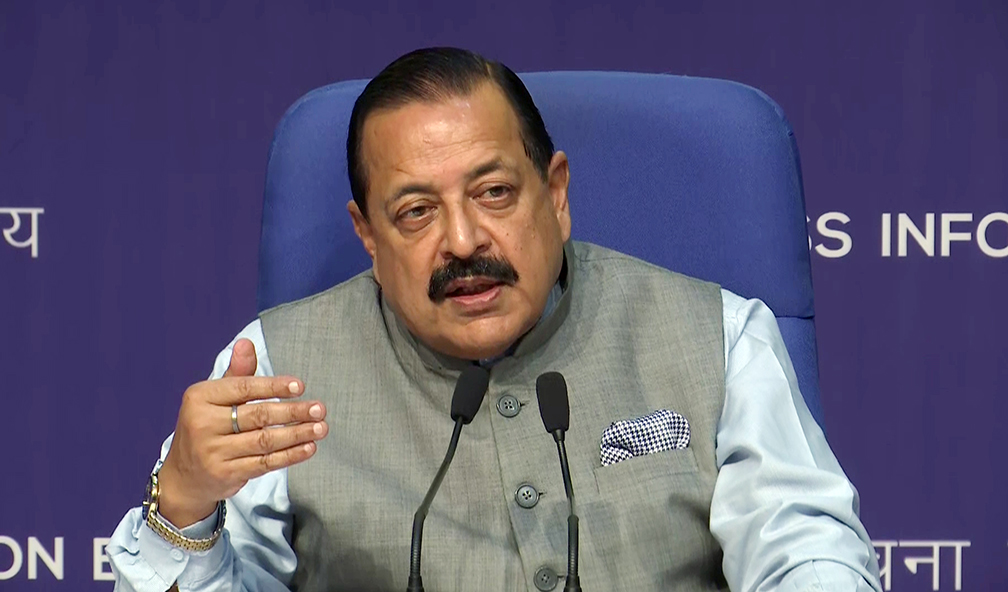
Union Minister Dr. Jitendra Singh on Thursday said India’s bioeconomy has witnessed a remarkable surge from around $10 billion in 2014 to over $195 billion in 2025, underlining the country’s emergence as a fast-growing global biotechnology hub.
Speaking at the 14th Foundation Day event of Biotechnology Industry Research Assistance Council (BIRAC) in New Delhi, the minister noted that the sector recorded an annual growth rate of 17-18 per cent in the past year alone, rising from approximately $165 billion to $195 billion.
He said India is now steadily moving towards its ambitious target of building a $300 billion bioeconomy by 2030, driven by strong policy support, innovation, and a rapidly expanding startup ecosystem.
Highlighting the sector’s growing significance, Singh said biotechnology is becoming central to India’s development, contributing to advancements in healthcare, agriculture, climate solutions, and sustainable manufacturing.
The minister credited BIRAC for playing a pivotal role in strengthening India’s biotech innovation ecosystem by bridging the gap between research and industry and helping translate ideas into market-ready solutions.
Referring to policy initiatives, Singh highlighted the BioE3 (Biotechnology for Economy, Environment and Employment) policy as a major step towards promoting sustainable biomanufacturing and bio-based industries. The policy is expected to drive innovation in areas such as precision biotherapeutics, smart proteins, climate-resilient agriculture, bio-based chemicals, and carbon capture technologies.
He also pointed to the government’s ₹1 lakh crore Research, Development and Innovation (RDI) Fund, which aims to provide long-term financial support for scaling up technology-driven ventures and strengthening India’s deep-tech ecosystem.
During the event, the India Bioeconomy Report (IBER) 2026 was released, highlighting that the sector now contributes nearly 5 per cent to India’s GDP and has more than doubled in size since 2020. The report also noted that over 11,800 biotech startups are currently driving innovation and growth across the country.
According to the BIRAC Impact Report, targeted funding, incubation, and mentorship programmes have enabled industry-academia collaboration, leading to the development of affordable healthcare solutions, sustainable technologies, and job creation.
Emphasising the importance of inclusive growth, Singh said efforts are being made to nurture scientific talent across the country, particularly in tier-2 and tier-3 cities, with a focus on supporting students, researchers, and women entrepreneurs.
Congratulating BIRAC on its 14th Foundation Day, the minister called for continued collaboration among scientists, industry stakeholders, and policymakers to translate innovation into large-scale impact and contribute to building a self-reliant and developed India.