The National Critical Mineral Mission (NCMM), launched in 2025, embodies the country’s forward-looking strategy to secure essential minerals foundational to clean energy, advanced manufacturing, and defense technology. Spanning from 2024–25 to 2030–31, NCMM is backed by an initial expenditure of ₹16,300 crore, alongside an anticipated ₹18,000 crore in investments from PSUs and stakeholders, demonstrating India’s serious resolve to fortify supply chains and catalyze indigenous technological growth, “under the guidence of Prime Minister Narendra Modi’s vision”.
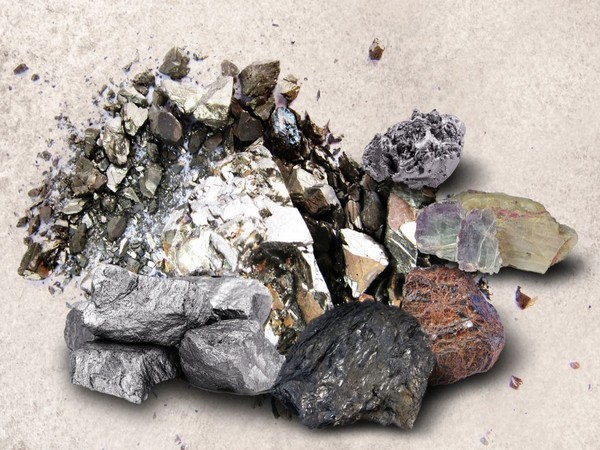
Critical minerals, encompassing lithium, cobalt, rare earth elements, silicon, gallium, and more, are the lifeblood of sectors ranging from solar and wind energy to electric vehicles and digital infrastructure. Recognizing this dependency, India’s Ministry of Mines formally identified thirty such minerals, with twenty-four included under the MMDR Act, granting the Center exclusive rights to auction these vital resources.
To anchor domestic supply resilience, the NCMM places exploration at its core. The Geological Survey of India (GSI) has embarked on over 1,200 domestic exploration projects, targeting mineral-rich zones across the country, including off-shore deposits such as polymetallic nodules. while nearly 100 critical mineral blocks are on the path to auction. This intensification of exploration signals a strategic pivot away from dependency on external sources, especially amid rising geopolitical tensions over mineral access.
Beyond domestic extraction, NCMM actively promotes overseas acquisition of mineral assets. Public and private players are being encouraged to secure stakes in global projects, notably in countries like Argentina and Australia, significantly broadening India’s international footprint. Complementing these efforts, a fast-track regulatory framework has been introduced to expedite approvals, supported by enhanced financial incentives under the Atmanirbhar Bharat initiative.
NCMM also invests in the circular economy. A dedicated ₹1,500 crore incentive scheme now underpins mineral recycling efforts, enabling recovery from e-waste, lithium-ion battery scrap, and end-of-life vehicles. The scheme is designed to build a 270 kiloton per annum recycling capacity, recover 40 kilotonnes of critical minerals, attract ₹8,000 crore in investment, and generate approximately 70,000 skilled jobs.
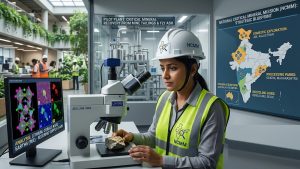
Innovation remains central to the Mission’s success. NCMM aims to pioneer 1,000 patents by 2030–31 across the exploration-to-extraction value chain. Seven Centres of Excellence (CoEs), located within premier institutions like IITs and CSIR laboratories, will spearhead research, supported through project-based funding and industry partnerships.
Complementing these efforts, Region-based mineral processing parks, pilot projects tapping secondary sources like fly-ash and red mud, capacity-building exercises, and the establishment of strategic mineral stockpiles further highlight the holistic design of NCMM.