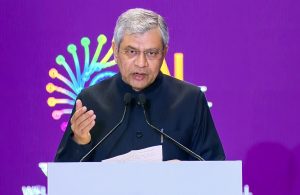







External Affairs Minister S. Jaishankar on Wednesday said India’s election to the United Nations Human Rights Council (UNHRC) reflects the trust and expectations of the international community, particularly the Global South, as he addressed the 61st session of the Council virtually.
In his remarks at the 61st session of the United Nations Human Rights Council, Jaishankar underlined India’s commitment to advancing human rights through dialogue, capacity-building and genuine partnerships, while cautioning against politicisation, selectivity and double standards.
“As an elected member, India’s mandate reflects the trust and expectations of the international community, especially of partners in the Global South,” he said, adding that as the world’s largest democracy, India remains firmly committed to promoting and protecting all human rights for all people based on equality, openness and respect.
Jaishankar said that for India, human rights are not abstract ideals but an integral part of its civilisational ethos of Vasudhaiva Kutumbakam – the belief that the world is one family. He stressed that deliberations at the Council must translate into tangible improvements in the daily lives of the most vulnerable.
Highlighting global challenges such as the pandemic, climate change, geopolitical tensions and economic stress, he noted that these factors have exacerbated inequalities, eroded food and fuel security, and placed mounting debt burdens on developing nations. Such pressures, he said, threaten progress on the Sustainable Development Goals (SDGs).
Drawing from India’s own development journey, Jaishankar said the country has invested heavily in expanding human capacities and strengthening inclusion.
The Minister pointed to India’s Digital Public Infrastructure (DPI) — including digital identity systems, interoperable payment platforms and inclusive service delivery mechanisms — as a transformative tool that has enabled hundreds of millions to access welfare benefits and financial services with transparency and minimal leakage.
He emphasised that India has shared its DPI experience as a global public good, reaffirming that technology should serve as a force multiplier for human rights rather than create new divides.
In a world marked by conflict and polarisation, Jaishankar said India advocates dialogue over confrontation, consensus over division and human-centric development over narrow interests.
“Our vision is rooted in the understanding that the insecurity of any region, or the marginalisation of any group, eventually undermines the rights and well-being of all,” he stated.
He reiterated that India believes human rights are best advanced through constructive engagement and partnerships, not through politicisation or selective approaches.
Jaishankar also underscored India’s firm stance against terrorism, calling it one of the most egregious violations of human rights.
“There can be no justification, especially when innocent lives are targeted,” he said, urging the Council and the broader United Nations system to advocate zero tolerance for terrorist acts and demonstrate collective resolve in confronting the threat.
Concluding his address, the External Affairs Minister reaffirmed India’s commitment to contributing, drawing from its democratic experience, to the promotion and protection of human rights for all.