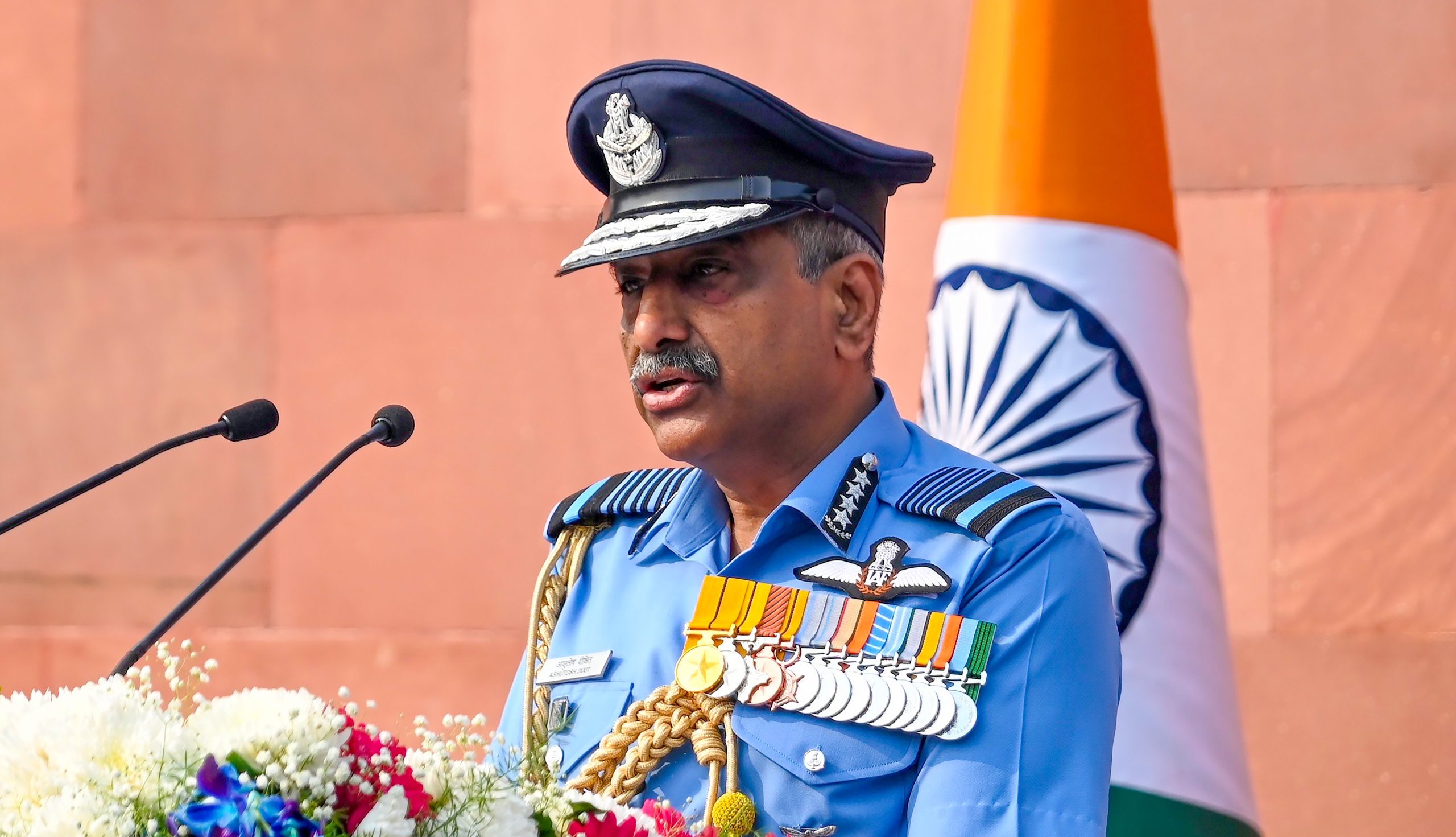
The Indian Air Force (IAF) is expected to induct a squadron of indigenous Light Combat Aircraft (LCA) Mark 1A within the current financial year, while the rollout of the next-generation LCA Mark 2 is likely next year, Chief of the Air Staff, Air Chief Marshal Ashutosh Dixit said on Monday.
Addressing the ANI National Security Summit 3.0 in New Delhi, Air Chief Marshal Dixit said development work on the LCA Mark 2 and the Advanced Medium Combat Aircraft (AMCA) was also progressing.
“Very shortly, we will have LCA Mark 1A joining the Indian Air Force; within this financial year we will have a squadron,” he said.
Highlighting the scale of the indigenous fighter aircraft programme, Dixit said designing, developing, testing and manufacturing a combat aircraft domestically was a complex undertaking that only a handful of countries had successfully achieved.
“Every area of physics, chemistry, and whatever you have of the sciences, including life sciences, is utilised in developing an aircraft,” he said.
He said the development of the LCA Tejas involved around 600-700 work centres and laboratories across the country, including IITs, railway laboratories and those under the Council of Scientific and Industrial Research (CSIR).
“So when LCA was developed, and they started, there were six to seven hundred work centres and laboratories spread across India. Every IIT is involved. A large number of railway labs and CSIR labs are involved. It is a national effort,” he said.
Recalling the testing phase, the Air Chief said the IAF identified four areas requiring improvement in the initial LCA Tejas aircraft and worked with Hindustan Aeronautics Limited (HAL) to address the shortcomings.
He said the Air Force also provided one aircraft from its inventory to support the development of the upgraded Mark 1A variant.
“So that we have done, we have designed the aircraft, we gave them one LCA from our inventory and created LCA Mark 1A,” he said.
Dixit said improvements in the four identified areas were almost complete. The integration of new weapons developed by the Defence Research and Development Organisation (DRDO), along with extensive flight testing, had also formed part of the development process.
He explained that testing often revealed additional areas requiring improvement, making aircraft development an ongoing process.
“So this kept slipping in a manner of speaking because when you do test you find some other area which you need to improve and you improve. So this kind of development we keep doing, and we are there now,” he said.
The Air Chief said the LCA Mark 2 was expected to roll out next year, while work on the AMCA programme was continuing.
“And then we will continue developing, and we will take it further, not only LCA Mark 1A. Now LCA Mark 2 will roll out maybe next year, and we are working very hard for AMCA also,” he said.
Emphasising the continuity of indigenous aerospace development, Dixit said technologies developed for one platform would contribute to subsequent aircraft programmes, including future stealth platforms.
He said the process would involve further technological advancements, including work on manned-unmanned teaming (MUM-T), before being carried forward to future stealth aircraft.
“So one the technologies we have developed goes into the other to develop new technologies maybe MUM-T census future and they go further onto the stealth platform. So it’s a continuum, and we are working very hard,” he said.
(ANI Inputs)