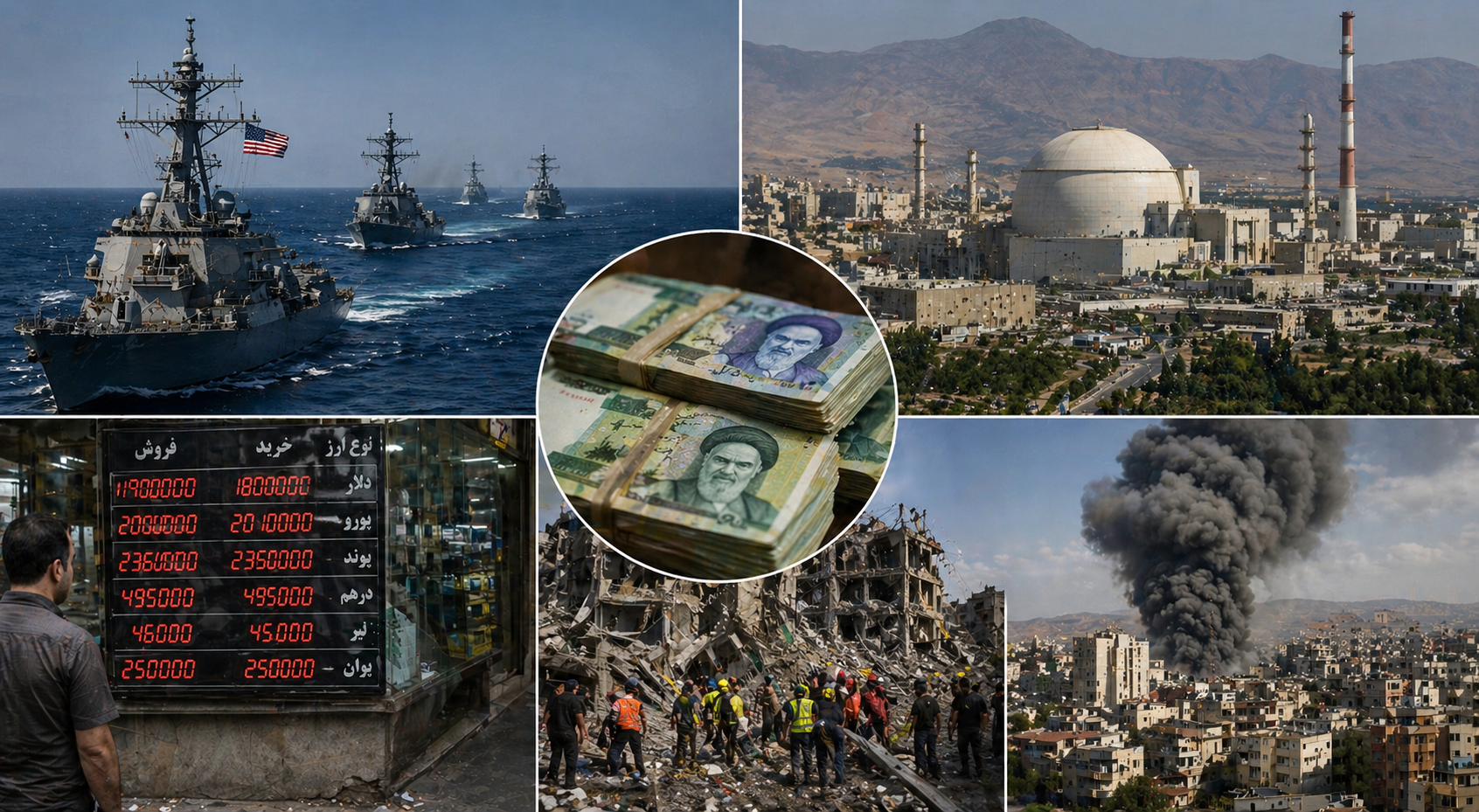
Tensions between the United States and Iran continue to escalate, with Washington signalling it is prepared to sustain a naval blockade of Iranian ports for an extended period, even as the financial cost to the US has crossed 25 billion dollars, according to a Pentagon assessment.
US President Donald Trump issued a sharp warning on social media, urging Iran to “get smart,” effectively rejecting a recent peace proposal conveyed through backchannel contacts.
Deadlock Over Nuclear Programme
The latest developments indicate a widening diplomatic stalemate. Washington has maintained that Iran’s nuclear programme must be included in any ceasefire framework, while Tehran has refused to negotiate under pressure.
Adding to global concern, the head of the International Atomic Energy Agency has indicated that Iran’s stockpile of highly enriched uranium is believed to be located at the Isfahan nuclear facility, keeping governments across Europe and Asia on alert.
Economic Strain Inside Iran
The economic impact within Iran is intensifying. The Iranian rial has plunged to a record low, trading at around 1.8 million against the US dollar in the open market, compared to roughly 811,000 a year ago.
The sharp depreciation reflects mounting pressure from sanctions and the ongoing blockade, which has disrupted key trade routes. Maritime traffic through the Strait of Hormuz has reportedly dropped significantly, affecting trade flows with major partners.
Despite an official exchange rate of about 42,000 to the dollar, multiple currency tiers remain in place, with market rates reflecting far weaker valuations. The widening gap underscores structural economic stress driven by restricted access to foreign currency and fiscal imbalances.
Iranian lawmakers, however, struck a defiant note, asserting that the country retains sufficient drone and missile capabilities to sustain a prolonged confrontation.
Rising Costs for Washington
While the blockade continues to pressure Iran’s economy, it is also imposing a growing financial burden on the United States, now estimated at over 25 billion dollars. This has increased pressure on the Trump administration to demonstrate tangible outcomes alongside strategic resolve.
Humanitarian Concerns and Regional Spillover
The humanitarian situation across West Asia is also worsening. In Lebanon, aid agencies report that more than 1.2 million people are facing acute hunger due to disrupted supply chains and damaged infrastructure.
The Israeli military has stated that it carried out at least twenty strikes targeting Hezbollah positions in recent hours. Although a truce remains officially in place, continued hostilities on the ground are raising fears of further regional escalation.
Uncertain Road Ahead
With Washington linking any ceasefire to nuclear concessions and Tehran rejecting negotiations under coercion, the absence of a diplomatic breakthrough is fuelling uncertainty. The prolonged blockade, deepening economic crisis in Iran, and widening regional impact together signal a volatile phase with no immediate resolution in sight.