










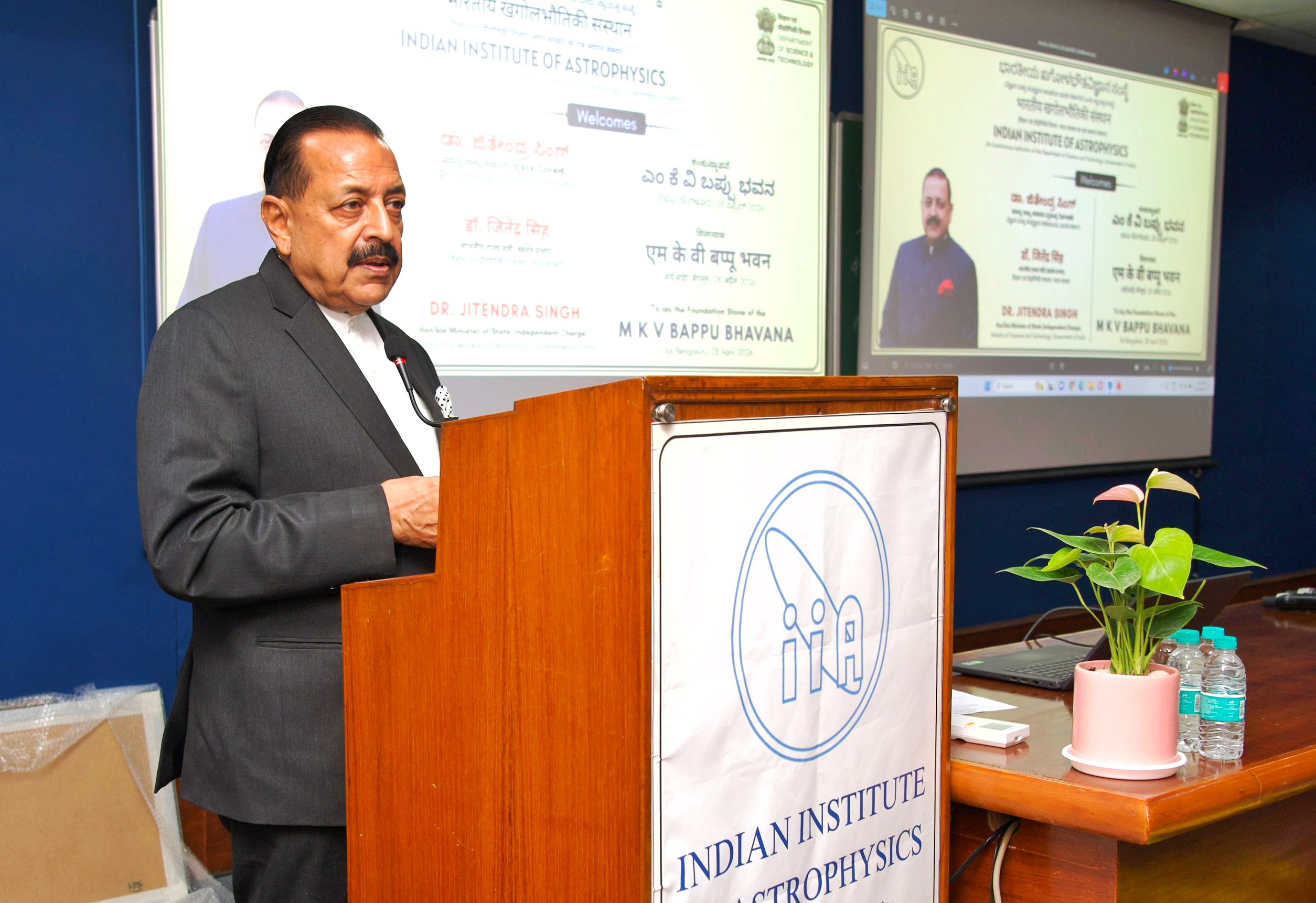
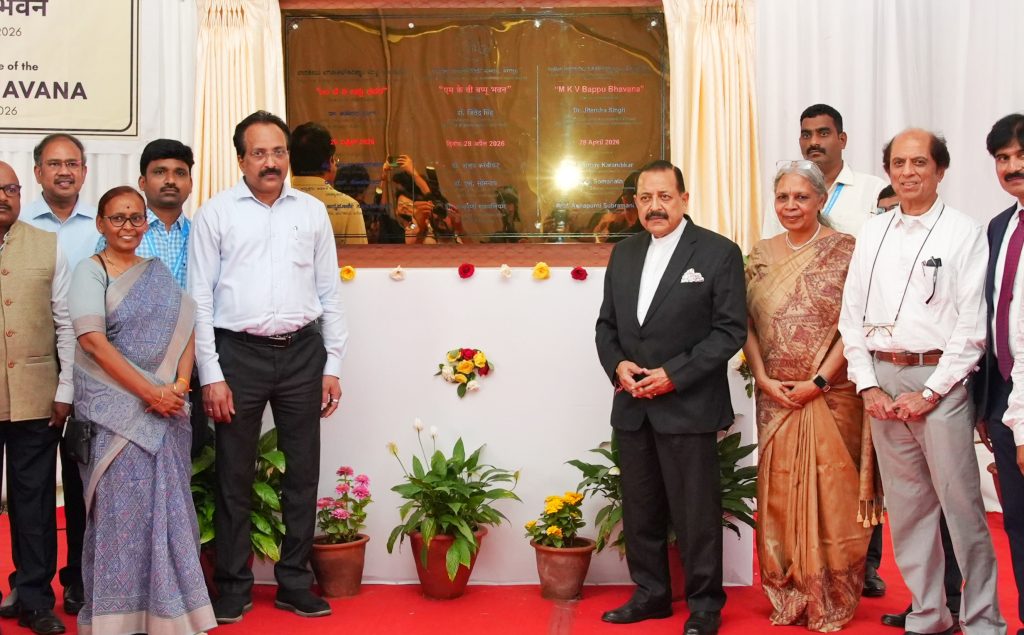


Union Minister Dr. Jitendra Singh on Tuesday laid the foundation stone for a ₹75 crore state-of-the-art additional building at the Indian Institute of Astrophysics in Bengaluru, marking a significant step toward strengthening India’s capabilities in astronomy and space science.
The upcoming seven-storey facility, with a built-up area of nearly one lakh square feet, is expected to serve as a key scientific hub, supporting advanced research, modern laboratories, classrooms, and conference infrastructure. The project, to be executed by the Central Public Works Department, is slated for completion within two years.
Speaking at the event, Singh described the initiative as a move toward building “world-class, future-ready” infrastructure for astronomy and astrophysics. He highlighted that technologies developed at IIA are already contributing to national and international space missions, including those of the Indian Space Research Organisation (ISRO).
The Minister noted that IIA’s indigenous expertise in space instrumentation is being leveraged across sectors such as defence and international collaborations, underscoring the institute’s growing global relevance.
Singh also referred to major announcements in the Union Budget 2026, which include the development of four world-class facilities by IIA-National Large Solar Telescope, National Large Optical-Infrared Telescope, an upgrade of the Himalayan Chandra Telescope, and the COSMOS-2 Planetarium. These projects are expected to significantly expand India’s observational and research capabilities in space science.
The foundation ceremony, held at the institute’s Koramangala campus, was attended by former ISRO Chairman Dr. S. Somanath, IIA Director Dr. Annapurni Subramanian, and senior scientists and officials. The event also featured the inauguration of a medium-size aspheric grinder and polisher in the optics laboratory, along with presentations on ongoing research and upcoming projects.
Highlighting the institute’s legacy, Singh traced its origins to the historic Madras Observatory and noted its extensive network of facilities across Kodaikanal, Kavalur, Gauribidanur, and Hanle, which support both solar and night-time astronomy research.
He emphasized the importance of expanding outreach efforts to engage young minds in science and innovation, while also citing recent initiatives such as increased research funding, public-private partnerships, and the establishment of the National Research Foundation.
The new building, proposed to be named “M.K.V. Bappu Bhavana” in honour of the institute’s founding director Prof. M.K.V. Bappu, is expected to enhance India’s scientific infrastructure and contribute to future discoveries in astronomy and space exploration.







