Union Minister Jitendra Singh on Wednesday proposed the concept of a “BRICS Space Economy” as the next frontier of global growth, urging member nations to work collectively to unlock new opportunities in innovation, investment, entrepreneurship and sustainable development through space cooperation.
Addressing the valedictory session of the BRICS Heads of Space Agencies (HOSA) Meeting in Bengaluru, the minister said BRICS countries possess the scientific expertise, technological capabilities and industrial strength needed to become a major force in the rapidly expanding global space economy.
“The future of the space economy will not be shaped by nations working in isolation. It will be shaped by partnerships, shared innovation and collective ambition,” he said, adding that BRICS nations have the potential to emerge as one of the strongest pillars of the global space ecosystem.
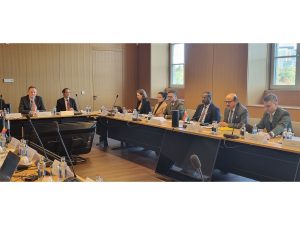
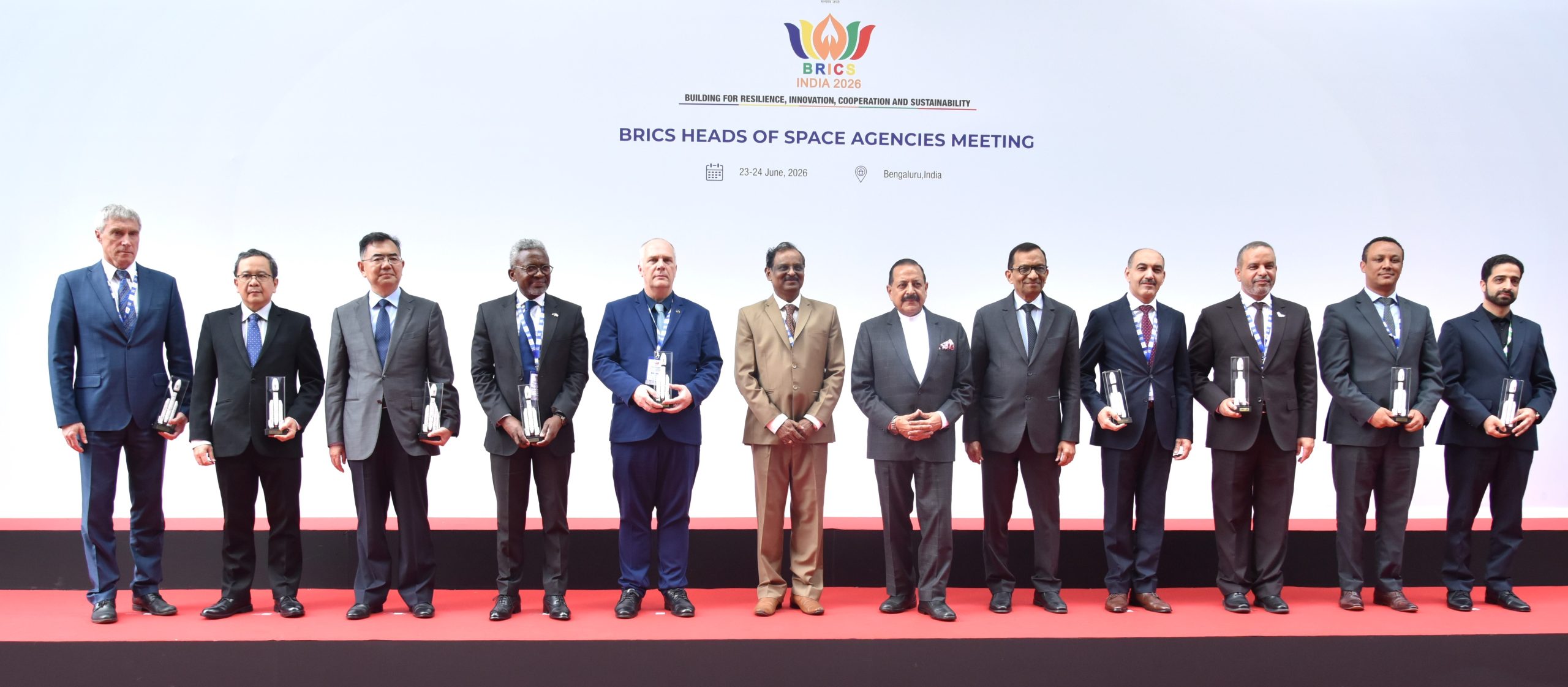
Hosted by the Indian Space Research Organisation (ISRO) under India’s BRICS Chairship 2026, the two-day meeting brought together heads of space agencies and senior officials from Brazil, China, Egypt, Ethiopia, Indonesia, Iran, Russia, South Africa and the United Arab Emirates. ISRO Chairman Dr. V. Narayanan, IN-SPACe Chairman Dr. Pawan Goenka, senior officials from the Department of Space, industry representatives and NewSpace startups also participated.
The meeting reviewed progress in BRICS space cooperation and discussed issues such as space sustainability, debris-free missions, strengthening the BRICS Remote Sensing Satellite Constellation (RSSC), expanding participation of new BRICS members and advancing discussions on the proposed BRICS Space Council. Delegates also explored opportunities for collaboration in disaster management, Earth observation, capacity building and knowledge sharing.
Singh highlighted the growing role of space technology in driving economic transformation, improving communication, navigation, disaster preparedness, agriculture, healthcare and environmental monitoring. He said challenges such as climate change, food security, natural disasters and sustainable urbanisation increasingly require collective solutions supported by advanced space technologies.
The minister noted that the BRICS Remote Sensing Satellite Constellation has already demonstrated the benefits of collaborative space applications through satellite data sharing among member countries. He expressed confidence that institutional mechanisms such as the proposed BRICS Space Council would provide greater momentum to future cooperation.
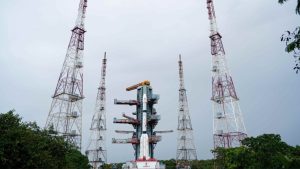
Highlighting India’s recent achievements, including Chandrayaan-3, Aditya-L1 and the ongoing Gaganyaan mission, Jitendra Singh said the country’s space reforms under Prime Minister Narendra Modi have opened new opportunities for private industry, startups, academia and international partnerships, creating one of the world’s fastest-growing space ecosystems.
Emphasising sustainability, he called for greater international cooperation, transparency and responsible behaviour to address rising concerns over space traffic and orbital debris. He welcomed discussions on debris-free missions and sustainable space operations as important steps toward preserving outer space for future generations.
Calling for a more ambitious approach, the minister said BRICS nations should move beyond consultation and focus on co-development, co-innovation and co-creation. He reaffirmed India’s commitment to working closely with partner countries to ensure space remains a powerful tool for development, resilience, innovation and shared prosperity.