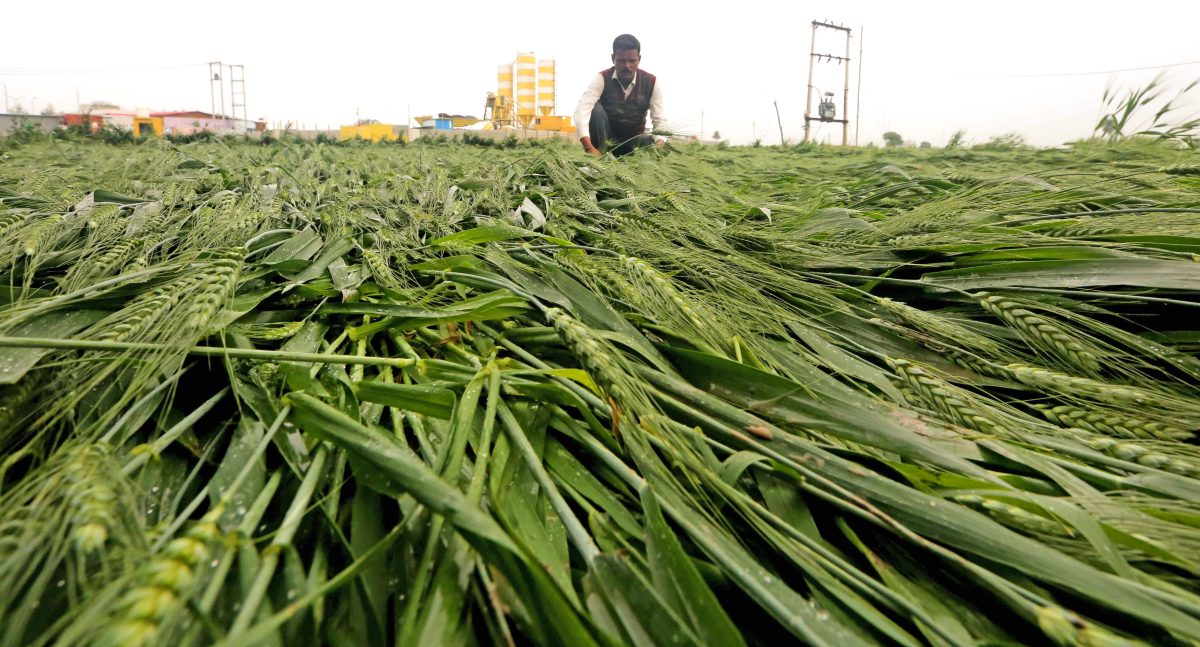
India has seen a rise in Kharif crop sowing this year, with farmers planting crops across 1,104.63 lakh hectares, a 1.5% increase from last year’s 1,088.26 lakh hectares. This year’s sown area also exceeds the average cultivated land during the period from 2018-19 to 2022-23.
According to the latest data, paddy, pulses, oilseeds, millets, and sugarcane have shown a year-on-year increase in sowing, while crops such as cotton and jute/mesta have seen a slight decline. Within the pulse category, crops like arhar, moong, kulthi, and moth bean have recorded growth, though urad bean sowing has lagged.
India, a major consumer and producer of pulses, supplements its domestic needs with imports. Among the most commonly consumed pulses are chana, masur, urad, kabuli chana, and tur. The government has been actively encouraging pulse cultivation to support domestic production.
In the 2023 Kharif season, the total cultivated area stood at 1,107.15 lakh hectares. The normal Kharif area for the previous five-year period (2018-19 to 2022-23) is 1,096 lakh hectares.
India follows three main cropping seasons: Summer, Kharif, and Rabi. Kharif crops, which are sown in June and July and depend on the monsoon rains, are harvested in October and November. Rabi crops, planted in October and November, are harvested by January, while summer crops are cultivated between the two seasons.
Indian agriculture, particularly during the Kharif season, relies heavily on the monsoon. The Indian Meteorological Department (IMD), in its long-range forecast, predicted above-normal southwest monsoon rains (June-September) this year. Skymet, a private forecasting agency, also projected a normal monsoon. Recently, IMD forecast that September 2024 rainfall will likely be above normal, at 109% of the Long Period Average.
The favorable monsoon conditions have aided farmers in expanding crop sowing this Kharif season, which is expected to positively impact the agricultural sector’s gross value added (GVA), according to rating agency ICRA.
(ANI)