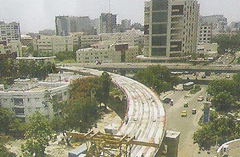
Kolkata Metro Railway is embracing change by shifting from steel Third Rail to composite Aluminium Third Rail. Kolkata Metro Railway, India’s first Metro built by Indian Railways on 24th October 1984, has been serving as a lifeline for Kolkata, the city of Joy for nearly 40 long years.
Kolkata Metro Railway has now decided to use composite Aluminium Third Rail in all the upcoming corridors being undertaken for construction along with retro fitment in existing corridors with steel Third Rail. With this Metro Railway, Kolkata would become the member of elite clubs of London, Moscow, Berlin, Munich, and Istanbul Metro who have also shifted from steel Third Rail to Aluminium Third Rail.
In Kolkata Metro Railway, the power to Metro Rake is supplied to rolling stock at 750V DC through steel Third Rail. The Third Rail Current Collector (TRCC) made of steel fitted on metro rake collects the current from Third Rail. Kolkata Metro Railway using steel Third Rail for the last 40 years.
First phase to cover the section between Dumdum to Shyambazar. In the second phase work would be taken up from Shyambazar to Central and J D Park to Tollygunge. In the third phase, the section between Mahanayak Uttam Kumar (Tollygunge) to Kavi Subhash (New Garia) shall be taken up. So, total 35 RKm main line steel Third Rail shall be replaced in stages.
Benefits of using composite Aluminium Third Rail would be improvement in the efficiency of train operations, huge improvement in energy efficiency and reduction in carbon footprint. Estimated energy saving using composite Aluminum Third Rail may be approximately 6.7 million units per annum.