






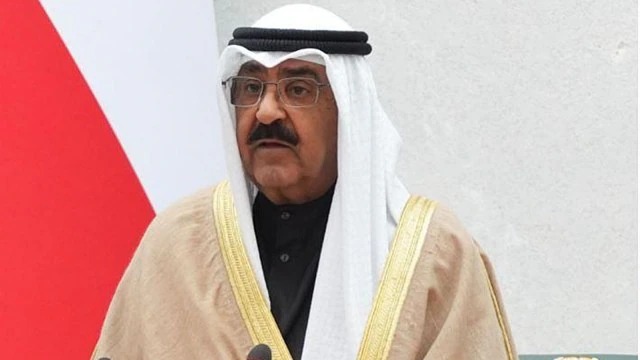
Voting began on Thursday in Kuwait’s first election since Sheikh Meshal al-Ahmad al-Sabah assumed power late last year determined to push through economic reforms after protracted deadlock between appointed governments and elected parliaments.
The new Emir strongly criticised the National Assembly and the government in his first speech before parliament after taking office in December, saying they were “harming the interests of the country and its people”.
Years-old feuding between appointed governments and the elected parliament has impeded fiscal reform, including passage of a debt law that would allow Kuwait to tap international markets and mitigate its heavy dependence on oil revenues.
The polls opened at noon in the election, the fourth since December 2020, and will close at midnight local time. Kuwait bans political parties and candidates run as independents.
Sheikh Meshal, 83, succeeded his late brother Sheikh Nawaf Al-Ahmad in December and dissolved parliament on Feb. 15, less than two months into his tenure.
His decree cited the assembly’s “violation of the constitutional principles” as a reason for dissolution.
Kuwait’s assembly packs more influence than similar bodies in other Gulf monarchies. Political deadlock, however, has led to endless cabinet reshuffles and dissolutions of parliament, paralysing policy-making, but the Emir holds the upper hand.
The government of Sheikh Ahmed Al-Nawaf resigned hours after the Emir’s December speech and Sheikh Mohammad Sabah Al-Salem Al-Sabah formed a new one that included new ministers of oil, finance, foreign affairs, interior, and defence.
Kuwait became the centre of world attention in August 1990 when it was invaded by then-Iraqi leader Saddam Hussein and a U.S.-led coalition came to its rescue.
Since the U.S.-led invasion of Iraq in 2003 and U.S. calls for change in the Middle East, Kuwait’s ruling family has come under pressure from both Islamists and pro-Western liberals to loosen its grip and share power.
Its legislature has the power to pass and block laws, question ministers and submit no-confidence motions, giving it more democratic essentials than other Gulf monarchies but posing the frequent risk of political deadlock.
Two hundred candidates were competing in Thursday’s elections, the lowest number in over five decades, and the number of voters was estimated at 835,000.
Kuwait consists of five electoral districts, each with 10 lawmakers. Candidates who secure the top 10 positions in each district win parliamentary seats.
(Reuters)