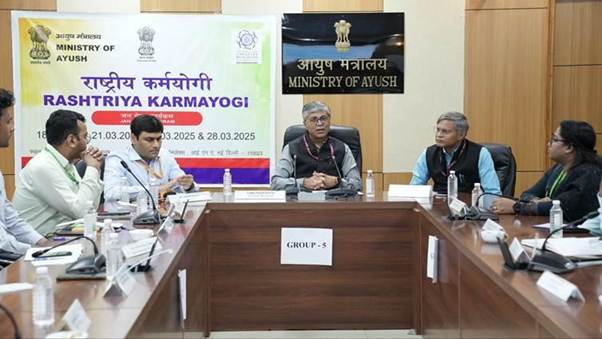
The Ministry of Ayush launched the first batch of the Rashtriya Karmayogi Jan Seva Programme on Wednesday, aiming to build a more accountable, compassionate, and citizen-centric workforce, according to an official statement. Vaidya Rajesh Kotecha, Secretary of the Ministry of Ayush, inaugurated the program, which is part of the broader Capacity Building Commission initiative designed to transform the mindset of Central Government employees toward public service.
The Rashtriya Karmayogi Jan Seva Programme emphasizes the spirit of “Seva Bhav” (service) and encourages public servants to view their roles as opportunities to bring meaningful change to people’s lives. It seeks not only to promote service but also to upskill employees, broadening their perspectives on their responsibilities.
Kotecha explained that the program aims to help participants recognise the privileges they hold and inspire them to contribute to the well-being of others through both their professional duties and personal growth. He highlighted the dual focus on service and self-improvement, urging employees to integrate these principles into their work.
Satyajit Paul, Deputy Director General and Head of the Capacity Building Unit, also underscored the importance of adopting the right approach to public service. He explained that by doing so, employees could perform their duties more efficiently, reduce stress, and ensure timely service delivery, fostering a more organized and peaceful work environment.
Dr. Subodh Kumar, the program director, and Shipra Singh, the program coordinator, led the training sessions, which involved active participation from attendees. The sessions aimed to give participants a deeper understanding of their roles within the Ministry of Ayush and the Ministry’s collective contributions to national development, particularly through promoting traditional medicine systems and improving public health.
The training takes a hands-on approach, replacing traditional lecture-based methods with structured discussions, teamwork exercises, and problem-solving activities. Through four concise sessions, employees will have the opportunity to reflect on their roles, engage in dialogue about enhancing citizen services, and participate in self-discovery exercises inspired by leadership stories and experiences.