On the eve of Rashtriya Ekta Diwas, the foundation stone for the Museum of Royal Kingdoms of India was laid at Ekta Nagar, Gujarat, near the Statue of Unity. The event marked a reflection on India’s journey of integration and heritage. During the ceremony, Prime Minister Narendra Modi underlined the purpose of the project, noting that the museum will inspire future generations with the nation’s legacy of unity and sacrifice. He said the initiative aims to connect young citizens with India’s past and the values that shaped the country.
India’s history stands on the efforts made after Independence, when more than 550 princely states became part of the Indian Union. Under the leadership of Sardar Vallabhbhai Patel, this merger shaped the foundation of a unified nation. The museum seeks to revisit that time when India transitioned from multiple kingdoms to one republic, ensuring citizens remember how diplomacy, trust, and collective resolve helped build a united country.
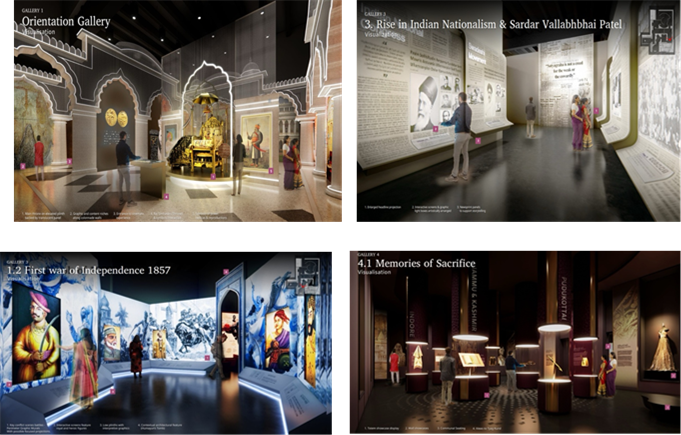
The upcoming museum, to be built on five acres at a cost of ₹367 crore, will showcase regalia, artifacts, manuscripts, textiles, and archival materials from royal families and princely states. With four thematic galleries, the experience will be immersive and interactive, allowing visitors to understand the governance styles, welfare traditions, and culture of various royal houses. A dedicated digital and experiential gallery aligned with the National Education Policy 2020 will help younger audiences learn in an engaging way.
Alongside royal heritage, the museum will focus heavily on the story of political integration. Documents, events, and decision-making moments from 1947 to 1949 will be displayed to help visitors understand how princely states acceded to India. This emphasis aims to highlight the significance of peaceful unification and encourage appreciation for democratic values and national solidarity.
The museum’s design blends modern construction with traditional aesthetics. Natural water features, courtyards, and royal-inspired gardens will welcome visitors, while the viewing deck will offer panoramic sights of the Statue of Unity and the Narmada River. The journey through the museum will conclude at a café offering royal-inspired cuisine, adding a cultural experience to the historical exploration.
Looking ahead, the museum is expected to serve as a center for research, learning, and preservation. Beyond tourism, its purpose is to educate citizens, encourage archival studies, and highlight the role of princely states in India’s cultural and political evolution. By documenting contributions and sacrifices of royal families, the museum will strengthen understanding of unity in diversity, an important theme in nation-building.
Once complete, the Museum of Royal Kingdoms of India will not only protect historical treasures but also nurture awareness of the values that shaped independent India. It aims to create a space where history becomes relatable, especially for youth, helping them connect national pride with knowledge. The initiative reflects a long-term commitment to preserving heritage and continuing the spirit of unity that defines the nation.