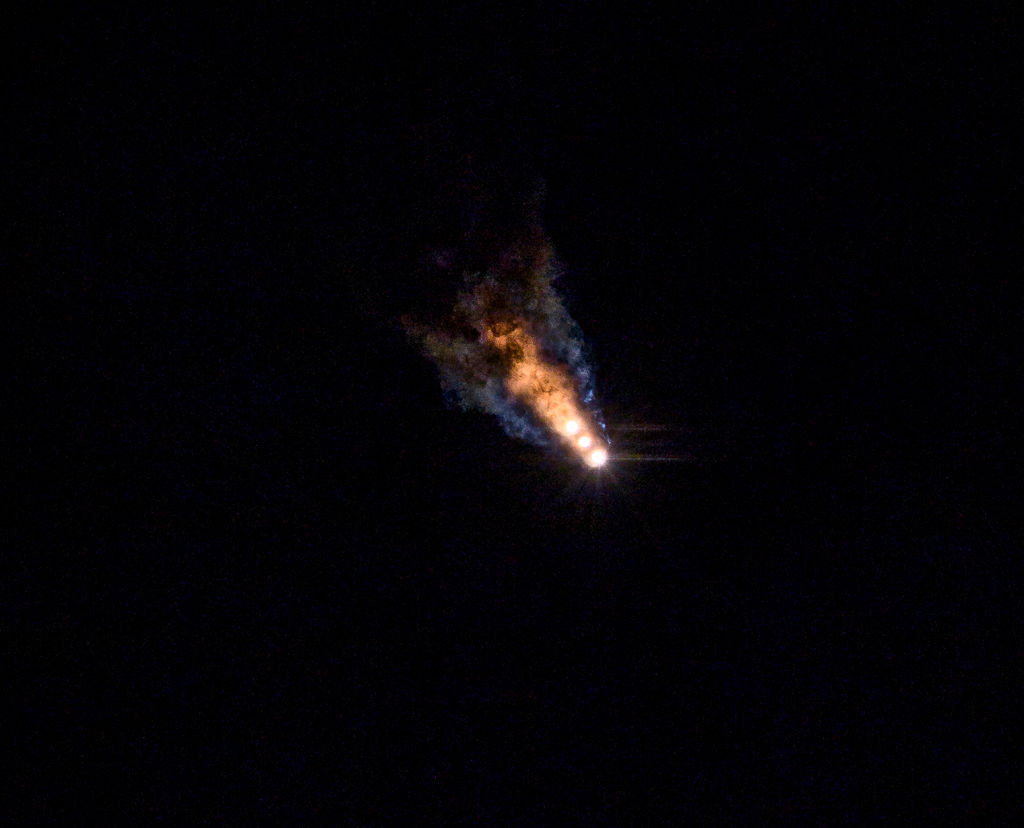
NASA confirmed on Friday that its Parker Solar Probe is “safe” after becoming the first human-made object in history to fly dangerously close to the Sun.
The US space agency stated that the probe, which made its record-setting close approach of just 6.1 million kilometers (3.8 million miles) from the solar surface on December 24, transmitted a beacon tone on Friday to confirm its health following the flyby.
During its closest approach, known as the perihelion, the spacecraft was not in contact with mission operations on Earth due to its proximity to the Sun. At the time, it was traveling at a staggering speed of approximately 700,000 kilometers per hour (430,000 miles per hour), making it the fastest human-made object in history.
“Parker Solar Probe has confirmed its safe status following its historic solar flyby,” NASA announced on the social media platform X. Michael Buckley, part of the mission operations team at Johns Hopkins Applied Physics Laboratory, added in a NASA blog post that the beacon signal was received just before midnight EST on December 26.
“This close approach marks a significant milestone in our efforts to unlock the mysteries of the Sun. The detailed telemetry data, expected to arrive by January 1, will provide invaluable insights,” Buckley said.
Launched in 2018, the Parker Solar Probe’s mission is to explore the Sun’s outer atmosphere and uncover the origins of phenomena such as the solar wind, which is a continuous flow of charged particles from the Sun. This flyby is the first of the probe’s three final and closest approaches to the Sun’s surface.
“These unprecedented observations will allow scientists to better understand how material in this region heats up to millions of degrees, trace the origins of the solar wind, and study how energetic particles accelerate to near-light speeds,” Buckley explained.
The probe has completed 21 close approaches to the Sun so far, with the most recent perihelion occurring on September 30. These flybys have helped researchers identify the origins of structures in the solar wind and map the outer boundary of the Sun’s atmosphere.
Additionally, the spacecraft used Venus’ gravity to refine its trajectory for the close solar flybys. On November 6, Parker executed its seventh and final gravity-assist maneuver, passing just 387 kilometers above Venus’ surface to set up its record-breaking solar approach.
(Inputs from IANS)