








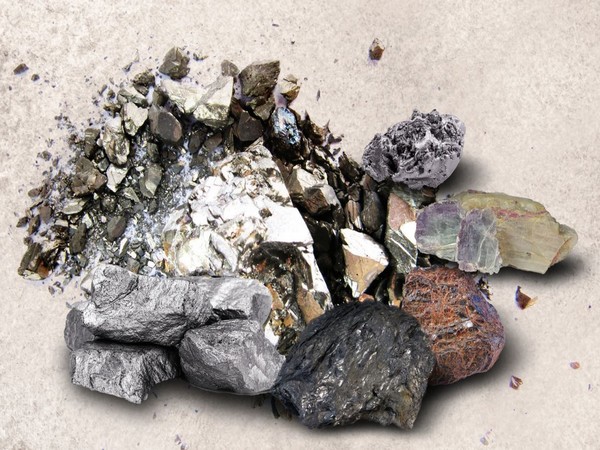
India’s push towards clean energy, electric mobility and advanced manufacturing has placed critical minerals at the centre of its economic and strategic planning. As global supply chains become increasingly vulnerable to geopolitical tensions and concentrated production, access to these minerals has emerged as a decisive factor in national security and technological competitiveness. Against this backdrop, India launched the National Critical Mineral Mission in January 2025, marking a shift from viewing minerals merely as raw resources to treating them as strategic assets.
The National Critical Mineral Mission, or NCMM, is a seven-year programme running from 2024–25 to 2030–31. It carries a proposed government expenditure of ₹16,300 crore and is expected to attract investments of around ₹18,000 crore from public sector undertakings and other stakeholders. The mission aims to secure domestic and international supply chains of critical minerals while strengthening every link of the value chain, from exploration and mining to processing, recycling, research and human resource development.
Critical minerals are those that are essential for economic growth and national security but are exposed to supply risks due to limited availability or high import dependence. These minerals are indispensable for clean energy technologies, electronics, transport, telecommunications and defence systems. Recognising their importance, the Ministry of Mines identified 30 critical minerals for India in 2023, based on national priorities and industrial requirements. The list includes lithium, cobalt, nickel, copper, graphite, rare earth elements, tungsten, titanium, gallium, germanium, vanadium and several others that underpin modern technologies.
The relevance of critical minerals becomes most evident in India’s clean energy transition. Solar photovoltaic cells rely on silicon, tellurium, indium and gallium to convert sunlight into electricity. With India’s installed solar capacity standing at 64 GW and expanding rapidly, uninterrupted access to these minerals is essential. Wind energy presents a similar challenge. High-performance wind turbines depend on rare earth elements such as neodymium and dysprosium for permanent magnets. As India plans to scale up wind power capacity from 42 GW to 140 GW by 2030, demand for these minerals is expected to rise sharply.
Electric mobility is another sector driving mineral demand. Lithium, nickel and cobalt form the backbone of electric vehicle batteries, enabling energy storage and long driving ranges. With the government targeting 30 per cent electric vehicle penetration by 2030, the need for secure and affordable supplies of these minerals will multiply. Energy storage systems, critical for integrating renewable power into the grid, also rely heavily on lithium-ion technologies, reinforcing the strategic importance of these resources.
The legal and policy framework of the NCMM is anchored in amendments to the Mines and Minerals (Development and Regulation) Act. Under the revised framework, the central government has exclusive powers to auction 24 of the 30 identified critical minerals. The mission’s core objective is to reduce India’s vulnerability to supply disruptions by diversifying sources, encouraging domestic production and building resilient value chains.
A distinctive feature of the mission is its emphasis on unconventional sources of minerals. The government has allocated ₹100 crore for pilot projects aimed at recovering critical minerals from mine tailings, overburden, fly ash and red mud. By extracting value from industrial waste and by-products, the initiative seeks to reduce environmental impact while turning discarded materials into strategic assets.
Recycling forms another major pillar of the mission. The Union Cabinet has approved a ₹1,500 crore incentive scheme to boost India’s recycling capacity for critical minerals sourced from e-waste, lithium-ion battery scrap and end-of-life vehicles. The initiative aims to build an annual recycling capacity of 270 kiloton, produce 40 kiloton of critical minerals, attract investments of around ₹8,000 crore and generate nearly 70,000 jobs. By strengthening secondary sourcing, the scheme is expected to significantly reduce import dependence.
Innovation and research are central to the NCMM’s long-term vision. The mission targets the filing of 1,000 patents across the critical minerals value chain by 2030–31, covering exploration technologies, extraction processes, advanced materials and energy storage applications. Progress is already visible, with a steady rise in patent filings and grants related to lithium, nickel, tungsten, vanadium, titanium and rare earth-based technologies.
To institutionalise research efforts, the Ministry of Mines has designated seven Centres of Excellence under the mission. These include IIT Bombay, IIT Hyderabad, IIT (ISM) Dhanbad, IIT Roorkee, CSIR–IMMT Bhubaneswar, CSIR–NML Jamshedpur and NFTDC Hyderabad. These institutions are expected to drive cutting-edge research, supported through government R&D schemes, industry partnerships and venture capital funding.
Critical minerals are increasingly being described as the oil of the 21st century, scarce, strategic and geopolitically contested. For India, securing access to these resources is essential to achieving its climate goals, including reducing the emissions intensity of GDP by 45 per cent by 2030, sourcing half of its power capacity from non-fossil fuels and reaching net-zero emissions by 2070. The National Critical Mineral Mission represents a decisive step towards mineral security, technological independence and India’s integration into global supply chains that will shape the industries of tomorrow.