The National Handloom Designers’ Conclave 2026 brought together policymakers, designers, textile experts, academicians, master weavers and industry stakeholders in the national capital on Monday to discuss ways to strengthen India’s handloom sector through design innovation and market-oriented product development.
Organised by the Office of the Development Commissioner (Handlooms), Ministry of Textiles, at the Dr Ambedkar International Centre, the conclave focused on enhancing the value, competitiveness and sustainability of Indian handloom products while preserving the country’s rich weaving traditions.
Addressing the inaugural session, Textiles Secretary Neelam Shami Rao said the future of the handloom sector depended on both institutional support and the skills of India’s weavers.
She highlighted that the sector provides livelihoods to more than 35 lakh people and noted that the Ministry has established an ecosystem comprising 29 Weavers Service Centres and 357 Handloom Cluster Development Programmes to strengthen production, capacity building and market linkages.
Rao said 80 design-potential clusters had been taken through a structured design process during the year, with around 80 designers directly engaged to help transform design interventions into premium pricing and higher incomes for weavers.
Development Commissioner (Handlooms) M Beena said design was an important catalyst for improving the value, competitiveness and long-term sustainability of Indian handloom products.
She stressed the need for greater collaboration between designers and weavers so that traditional crafts could adapt to changing consumer preferences and evolving market requirements.
Design contest recognises innovation
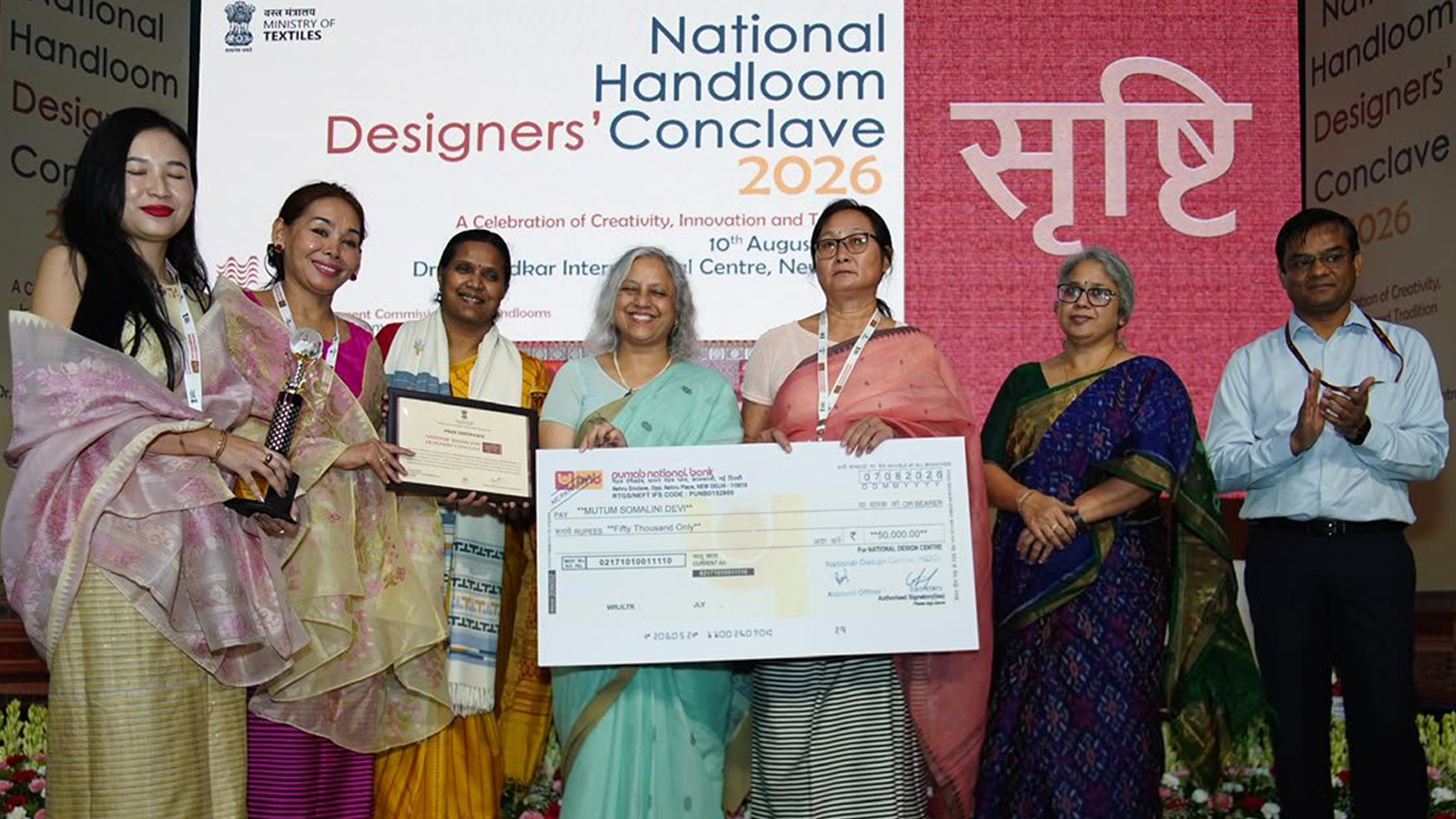
A key highlight of the conclave was the prize ceremony of the National Handloom Design Contest 2026, where outstanding cluster designers were recognised in categories including Apparel, Home Furnishing, Craft Revival and Jury’s Special Recognition.
The winning designs showcased how traditional weaving techniques can be combined with contemporary aesthetics and changing market preferences to create high-value products.
An exhibition at the venue displayed shortlisted products developed under the National Handloom Design Contest 2026. The exhibits featured design interventions and contemporary products created across nine handloom clusters from eight states.
The participating clusters included Miranchak and Purba Bardhaman in West Bengal, Vanitha, Dev Bhoomi Bharari, Dwarka and Ridrol, as well as Khurkul, Imphal East and Kondapalakala clusters from the Northeast and other regions.
Experts discuss future of handlooms
The conclave also featured three thematic panel discussions covering design innovation and market competitiveness, sustainable cluster development and the future of Indian handlooms, and design thinking for value creation.
Designers, academics and industry experts discussed emerging consumer trends, sustainability, branding, exports, technology integration and ways to improve the competitiveness of Indian handloom products in both domestic and international markets.
The exhibition received an enthusiastic response from participants and highlighted the potential of designer-weaver partnerships in creating contemporary, high-value products without compromising India’s diverse weaving heritage.
The conclave reaffirmed the Ministry’s focus on making design a key driver of innovation, value addition and market expansion in the handloom sector.