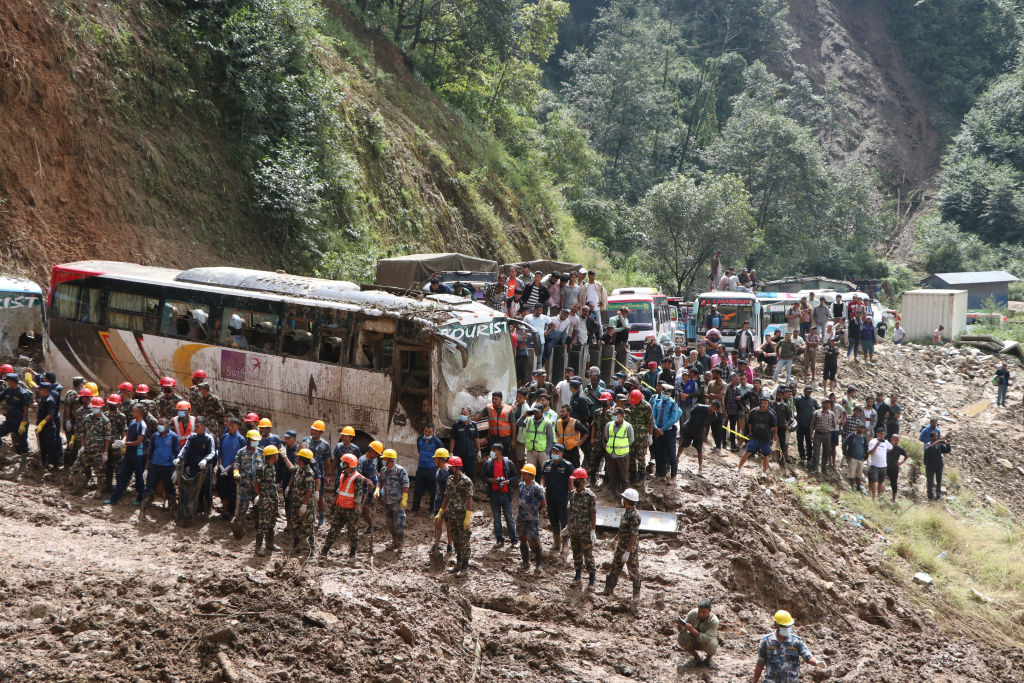
Nepal began on Monday to grapple with damage wrought by deadly floods and landslides triggered by heavy rains as residents faced the daunting task of cleaning homes and extracting their broken belongings from mud.
At least 192 people died and 32 were still missing in two days of incessant rains caused by a low-pressure system in the Bay of Bengal and over areas in India bordering Nepal.
In the northern areas of Bangladesh, separated from Nepal by a thin strip of Indian territory, more than 100,000 people were stranded following heavy rains and the onrush of water from upstream, officials said.
Hill-ringed Kathmandu Valley, which is home to four million people and the capital, alone saw 56 deaths and suffered one of its worst devastations in recent years where rivers spilled over banks and flooded homes, hospitals, roads, bridges and markets.
Prithvi Subba Gurung, a senior minister and cabinet spokesperson, said the government was assessing the extent of damage and the cost of rebuilding.
Some weather stations in Kathmandu recorded the highest 24-hour rainfall for decades, officials said.
Surya Raj Acharya, an infrastructure and urban planning expert, said haphazard construction and urbanisation in Kathmandu without basic engineering and planning had contributed to the huge damage.
“River banks are encroached by people for construction of houses, ignoring the basic enforcement of engineering and planning, without provisions for drainage and sewage system,” he said.
“There is no adequate outlet for river water during the rainy season which causes the flood water to enter homes,” Acharya said.
Nepal’s geography, terrain, river systems, monsoon patterns and the potential for extreme climate events must be taken into consideration for such planning, Acharya said.
Climate scientists echoed his view.
“Climate change played a significant role in exacerbating the disaster, compounded by poor urban planning and infrastructure,” said Arun Bhakta Shrestha, a climate and environmental risks expert at the Kathmandu-based International Centre for Integrated Mountain Development (ICIMOD).
In Bangladesh, vast areas of land in five northern districts have been submerged after the sudden swelling of the Teesta River, which crossed its danger mark at several points, district officials said.
The rising waters have devastated large areas of farmland, washing away crops such as paddy and vegetables, along with fish farms, leaving many farmers facing severe losses. Homes, roads, and critical infrastructure have also been inundated, forcing people to flee to higher ground for safety.
The situation could worsen in the coming days, with the Bangladesh weather office warning of more rain.
(Reuters)