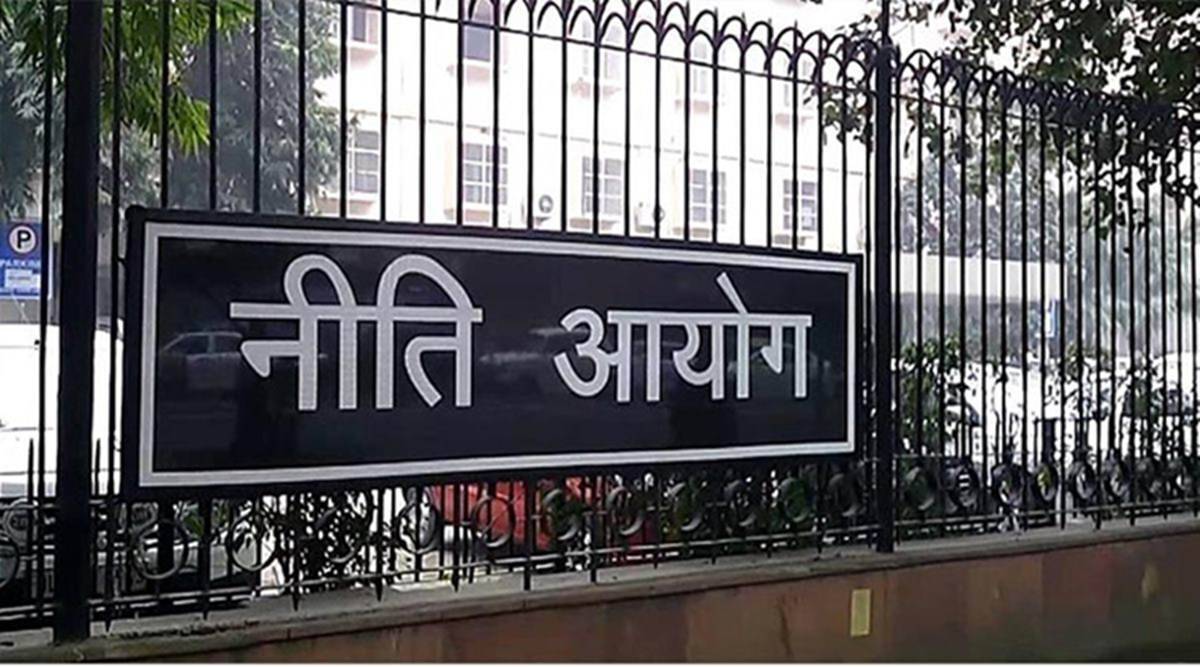
NITI Aayog has released the second edition of its report titled “From Borrowers to Builders: Women and India’s Evolving Credit Market”, highlighting a significant rise in women’s participation in the country’s formal credit ecosystem.
The report, published in collaboration with the Women Entrepreneurship Platform (WEP), TransUnion CIBIL, and MicroSave Consulting, reveals that women borrowers now account for a credit portfolio of ₹76 lakh crore – constituting 26% of India’s total system credit.
Launched in New Delhi by NITI Aayog CEO Nidhi Chhibber on April 7, the report underscores a major shift in women’s financial participation – from basic access to more advanced engagement within formal credit systems.
Strong Growth in Women’s Credit Participation
According to the report, women’s total outstanding credit has grown nearly 4.8 times – from ₹16 lakh crore in 2017 to ₹76 lakh crore in 2025. During the same period, the number of credit-active women borrowers grew at a compound annual growth rate (CAGR) of 9%, while credit penetration among women increased from 19% to 36%.
With an estimated 45 crore credit-eligible women in India, the report highlights vast untapped potential for further expansion.
Speaking at the launch, Chhibber emphasized that broader participation in financial systems is key to economic growth. She noted that the integration of digital public infrastructure with formal credit systems has enabled women to move beyond entry-level borrowing into retail and business-oriented lending, reflecting improved financial capability and deeper economic integration.
Rise in Business and Commercial Credit
A key finding of the report is the rapid growth in commercial credit among women entrepreneurs. Credit to women business borrowers recorded a CAGR of 31% between 2022 and 2025, significantly outpacing the overall commercial credit growth rate of 17%.
The report also points to a gradual transition among microfinance borrowers, with 19% of active borrowers now accessing individual retail and commercial loans—indicating upward mobility within the credit ecosystem.
Expanding Geographic and Sectoral Reach
Women’s access to credit is expanding geographically, with northern states such as Bihar and Uttar Pradesh witnessing notable growth alongside traditionally strong regions in southern and western India.
In terms of credit products, personal and gold loans remain the most widely used, while housing loans are gaining traction—suggesting a rise in asset ownership among women.
Digital Push Driving Inclusion
The report highlights the role of rapid digitization across identity systems, payments, underwriting, and loan servicing in reducing barriers to credit access. These advancements are helping women transition from informal borrowing channels to formal financial systems.
Prepared using credit bureau data of around 16 crore women, along with primary research involving rural nano-entrepreneurs, the report provides both quantitative and behavioural insights. It also incorporates microfinance data this year, making it one of the most comprehensive assessments of women’s credit access in India.
The study builds on efforts under WEP’s Financing Women Collaborative (FWC), launched in 2025 to address gaps in gender-disaggregated financial data and improve understanding of women’s financial behaviour.
A Shift from Borrowers to Builders
Commenting on the findings, WEP Mission Director Anna Roy said the growing scale and diversification of women’s credit participation signals a meaningful transformation in India’s economic landscape. She stressed the need to strengthen enabling conditions so that increased access translates into resilient enterprises and sustained economic contribution.
The report ultimately highlights a clear shift – women in India are no longer just borrowers, but are increasingly emerging as builders of businesses and contributors to economic growth.