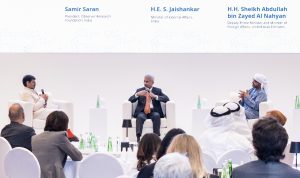
Nobel laureate and former United States Secretary of Energy Steven Chu said nuclear energy will remain critical to the global clean energy transition as renewable power expands, while warning that rapidly rising electricity demand from artificial intelligence and data centres is already placing additional strain on power systems in the short term. He was speaking at the inaugural day of the World Government Summit in Dubai.
Chu said the main obstacles facing nuclear power are public acceptance and high construction costs, despite evidence that it is “about a thousand times safer than burning coal” and significantly safer than biomass. He noted that while many recent nuclear projects in advanced economies have suffered from cost overruns, nuclear plants offer long operating lives of up to 80 years, making them economically attractive if costs can be controlled through standardised construction and repeated deployment.He said nuclear energy would be essential for countries that lack the land or natural resources needed to generate very high shares of renewable power, and as a reliable backup in electricity systems dominated by solar and wind.
Turning to renewables, Chu said the past decade has seen extraordinary progress, with the cost of solar power falling nearly 30-fold and wind power costs dropping four times. However, he cautioned that large-scale deployment brings new challenges. Energy storage remains expensive, with batteries required to support high levels of renewables costing tens of trillions of dollars and providing only limited days of backup. Grid stability is another concern, as renewable systems lack the natural inertia of conventional power plants and depend on complex, fast-response electronics.Chu also flagged growing pressure on electricity systems from electric vehicles, electrified heating and artificial intelligence, as well as shortages of key materials such as copper. He said while solutions are emerging, the transition will require a balanced mix of technologies rather than reliance on renewables alone.
World Government Summit 2026 will continue over the coming days with discussions on future energy systems, governance and technology, bringing together global leaders and experts to shape policy responses to emerging economic and environmental challenges.