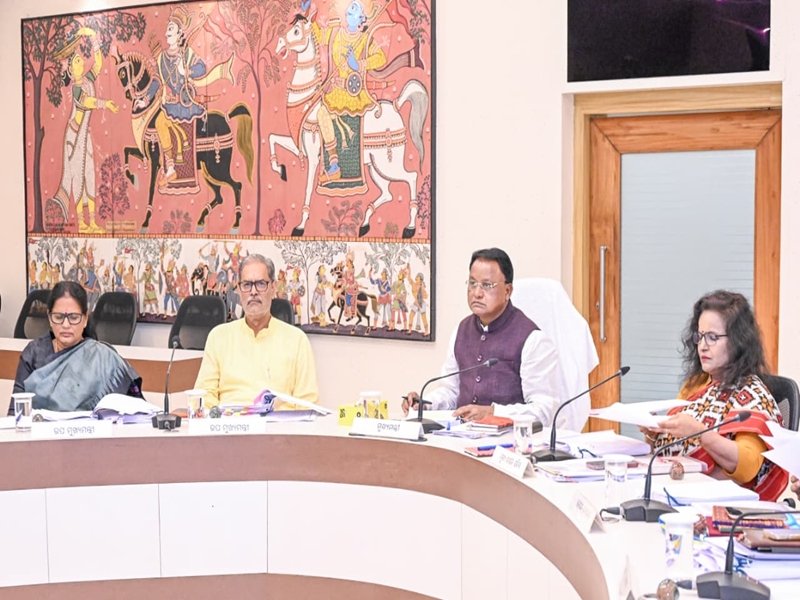
The Odisha Cabinet on Wednesday approved 10 key proposals across seven departments, including Law, Energy, and Fisheries and Animal Resources Development, during a meeting chaired by Chief Minister Mohan Charan Majhi.
Among the major decisions was the approval for enactment of the Odisha Marine Fishing (Prohibition and Regulation) Act, 2026 (OMFRA, 2026), which will replace the existing Odisha Marine Fishing Regulation Act, 1982. The proposed legislation aims to create a modern and inclusive legal framework for the state’s marine fisheries sector.
Addressing reporters after the Cabinet meeting, Odisha Chief Secretary Anu Garg said marine fishing forms an important part of the state’s economic growth strategy.
“The Chief Minister has announced in the budget that there will be a deep sea fishing mission and a shrimp export mission. Therefore, it was very important to enact this legislation, whereby emphasis will be laid on marine resource conservation, coastal security, and ensuring that seaweed development and mariculture, which hitherto were not included, will also be introduced. We are hopeful that this will give a boost to the marine economy,” she said.
The state government expects the Odisha Marine Fishing Regulation Bill, 2026, to strengthen the marine fisheries sector and help achieve the target of Rs 25,000 crore in seafood exports by 2036 under the “Viksit Odisha Vision 2036-47” and the state’s Blue Economy initiatives.
The Cabinet also approved a proposal from the Law Department to repeal 358 Acts enacted between 1974 and 2025 that have become redundant or obsolete.
According to an official statement, many of these laws were amendment Acts that ceased to have independent relevance once their provisions were incorporated into principal legislation. Some were enacted as one-time measures for specific purposes and are no longer applicable.
Acting on recommendations of the Odisha State Law Commission, the Cabinet approved steps for enactment of the Odisha Repealing Bill, 2026, to formally repeal the 358 Acts.
In the energy sector, the Cabinet approved amendments to the Odisha Thermal Power Policy, 2008, reducing the mandatory power allocation by Independent Power Producers (IPPs) to the state government from 12-14 per cent to 5 per cent. The move aligns with recommendations of the Government of India and practices followed in states such as Chhattisgarh.
Several other proposals were also cleared during the Cabinet meeting.
(IANS Inputs)