Oil prices jumped on Monday to their highest since January as the United States’ weekend move to join Israel in attacking Iran’s nuclear facilities stoked supply concerns.
Brent crude futures were up $1.52 or 1.97% to $78.53 a barrel as of 0503 GMT. U.S. West Texas Intermediate crude advanced $1.51 or 2.04% to $75.35.
Both contracts jumped by more than 3% earlier in the session to $81.40 and $78.40, respectively, touching five-month highs before giving up some gains.
The rise in prices came after U.S. President Donald Trump said he had “obliterated” Iran’s main nuclear sites in strikes over the weekend, joining an Israeli assault in an escalation of conflict in the Middle East as Tehran vowed to defend itself.
Iran is OPEC’s third-largest crude producer.
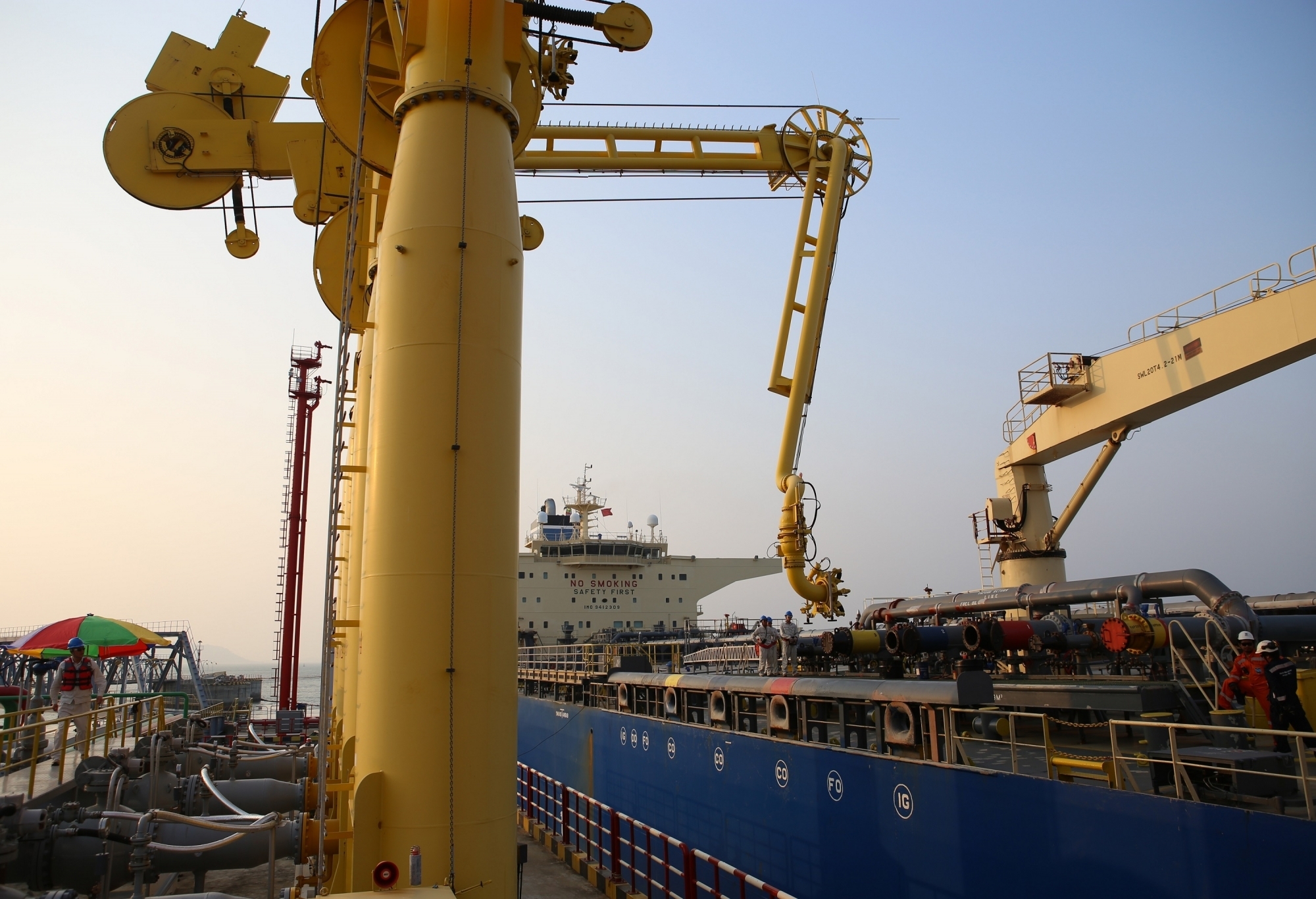
Market participants expect further price gains amid mounting fears that an Iranian retaliation may include a closure of the Strait of Hormuz, through which roughly a fifth of global crude supply flows.
“The current geopolitical escalation provides the fundamental catalyst for (Brent) prices to traverse higher and potentially spiral towards $100, with $120 per barrel appearing increasingly plausible,” said Sugandha Sachdeva, founder of New Delhi-based research firm SS WealthStreet.
Iran’s Press TV reported that the Iranian parliament had approved a measure to close the strait. Iran has in the past threatened to close the strait but has never followed through.
Iran and Israel exchanged air and missile strikes on Monday, as global tensions rose over Tehran’s expected response to a U.S. attack on its nuclear facilities.
“The risks of damage to oil infrastructure … have multiplied,” said Sparta Commodities senior analyst June Goh.
Although there are alternative pipeline routes out of the region, there will still be crude volume that cannot be fully exported out if the Strait of Hormuz becomes inaccessible. Shippers will increasingly stay out of the region, she added.
Goldman Sachs said in a Sunday report that Brent could briefly peak at $110 per barrel if oil flows through the critical waterway were halved for a month, and remain down by 10% for the following 11 months.
The bank still assumed no significant disruption to oil and natural gas supply, adding global incentives to try and prevent a sustained and very large disruption.
Brent has risen 13% since the conflict began on June 13, while WTI has gained around 10%.
Given the Strait of Hormuz is indispensable for Iran’s own oil exports, which are a vital source of its national revenues, a sustained closure would inflict severe economic damage on Iran itself, making it a double-edged sword, Sachdeva added.
Meanwhile, Japan on Monday called for de-escalation of the conflict in Iran, while a South Korean vice industry minister voiced concern over the potential impact of the strikes on the country’s trade.
(Reuters)