Google on Thursday announced that its Project Suncatcher is scheduled to embark on its first test in orbit, launching a prototype satellite to evaluate how Google Tensor Processing Units (TPUs) perform in space.
Tensor Processing Unit (TPU) is a custom application-specific integrated circuit (ASIC) designed by Google Cloud to accelerate artificial intelligence and machine learning workloads.
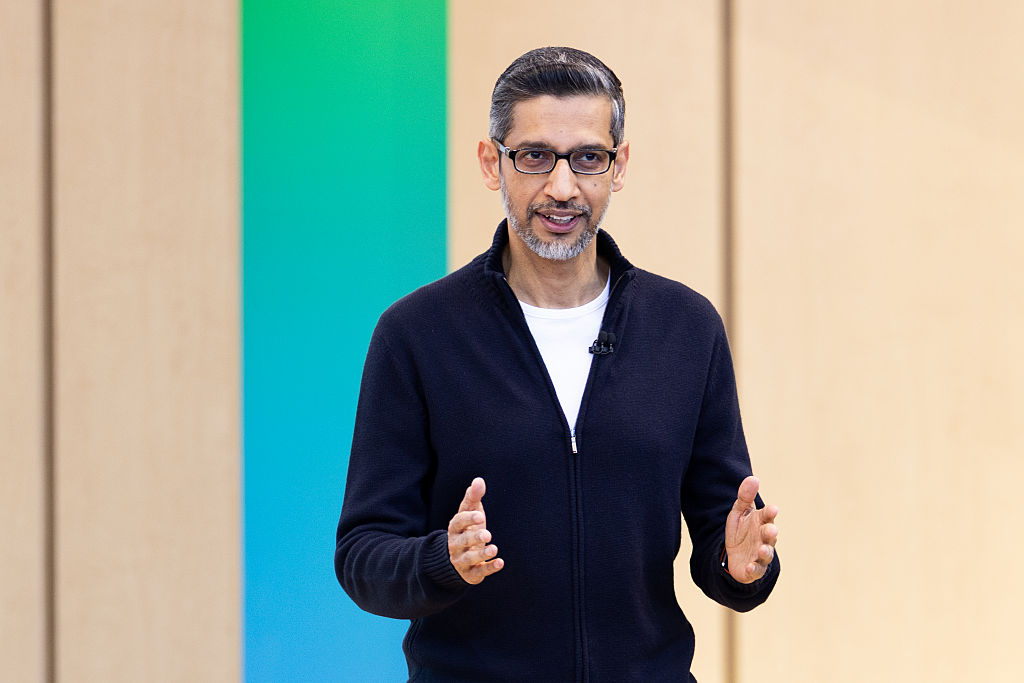
Google CEO Sundar Pichai in a post on X said, “Can our TPUs survive and operate in space? Well, we’re going to find out. Project Suncatcher is hitching a ride aboard @SpaceX’s Transporter-18 mission, testing a prototype satellite built in partnership with @planet. One small step for TPUs….”
According to Google, Project Suncatcher is a long-term, research moonshot exploring whether space could one day host scalable machine learning infrastructure. In low Earth orbit, satellites can access near-constant sunlight, generating up to eight times more solar power than on Earth. Google says that eventually, it could be possible to link together multiple constellations of satellites, allowing them to manage larger AI workloads while in orbit.
“Big breakthroughs happen when you work backwards from an end goal. In our case, it’s to ensure AI’s profound benefits in key areas, from healthcare to scientific discovery, can reach everyone, far into the future,” the Tech giant said in its blog.
Google says that exploring space as a viable location for scalable AI compute won’t happen all at once. It takes methodical engineering, starting with proving our hardware can handle the physical and unpredictable realities of operating in orbit. According to Google, this first launch is about seeing what works, identifying points of failure, and applying those findings to future missions.
“Every transformative technology we’ve built at Google began with an audacious goal — and the discipline of working backward to solve hard problems all along the way. As our latest moonshot heads to the launchpad, our team is excited to share what we learn and the science driving this work forward,” Google said in its blog.
Space X and Tesla boss Elon Musk has backed this future of compute claiming that most of it will move into outer space.
Sharing a video featuring Google’s Senior Director, Paradigms of Intelligence Travis Beals, Musk said, “The amount of compute in space will obviously round up to 100% of all compute.”
For now, with the launch of Project Suncatcher expected for October 1, the world watches on as the tech giants seek to take the future of AI compute to outer space.
-ANI