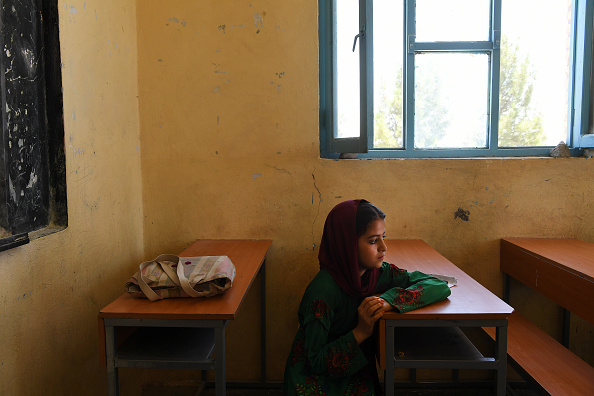
The education crisis in Pakistan is a “national shame”, a leading rights group said on Thursday, emphasising that millions of children out of school reflect untapped potential, lost hope, and a system failing its most vulnerable.
Citing United Nations International Children’s Emergency Fund (UNICEF) data, the Voice of Pakistan Minority (VOPM) mentioned an estimated 25.1 million children aged 5–16 are out of school, making the country the second-worst in the world for children missing out on education.
The finding revealed a deepening crisis across the provinces in Pakistan. Punjab tops the list with 9.7 million out-of-school children, followed by Sindh with 7.4 million, representing 44 per cent of its school-age population.
Additionally, Khyber Pakhtunkhwa records 34 per cent of children out of school, while Balochistan is the worst affected, with nearly 69 per cent of children aged 5–16 denied education.
Even in Islamabad, the rights body noted that 90,000 children remain out of school, highlighting that “no region is immune to this national failure”.
Emphasising the gender gap as “another layer of injustice”, the VOPM cited UNICEF reports which documented that in Sindh and Khyber Pakhtunkhwa, more girls than boys are out of school, “revealing deep-rooted social and cultural barriers that continue to deny girls the right to learn”.
“Early marriage, safety concerns, and entrenched gender norms leave millions of girls trapped in a cycle of illiteracy and poverty, their potential squandered before it can even emerge,” the rights body noted.
According to the VOPM, the crisis stems from a chronically underfunded education system. It highlighted that Pakistan has historically spent around 1.5 per cent of GDP on education, already far below the United Nations Educational, Scientific and Cultural Organisation (UNESCO) and Sustainable Development Goal 4 benchmark of 4–6 per cent.
The rights group further cited the Pakistan Economic Survey 2024–25 reports, which show a record low of 0.8 per cent of GDP, with nearly 90 per cent of the budget “consumed by teacher salaries, leaving almost nothing for infrastructure, learning materials, teacher development, or systemic reforms”.
“The result is a system that fails to reach the most disadvantaged children, with schools overcrowded, under-resourced, and inaccessible,” the VOPM mentioned.
“The consequences are devastating. Millions of children, particularly girls and those in marginalised regions, are being denied education, pushing them toward early labour, exploitation, and lifelong poverty. UNICEF emphasises that without urgent investment and policy reform, Pakistan risks losing an entire generation,” it added.
The VOPM asserted that Pakistan’s slow progress on enrolment and learning outcomes is not inevitable but rather a “failure of leadership, planning, and prioritisation”.
–IANS