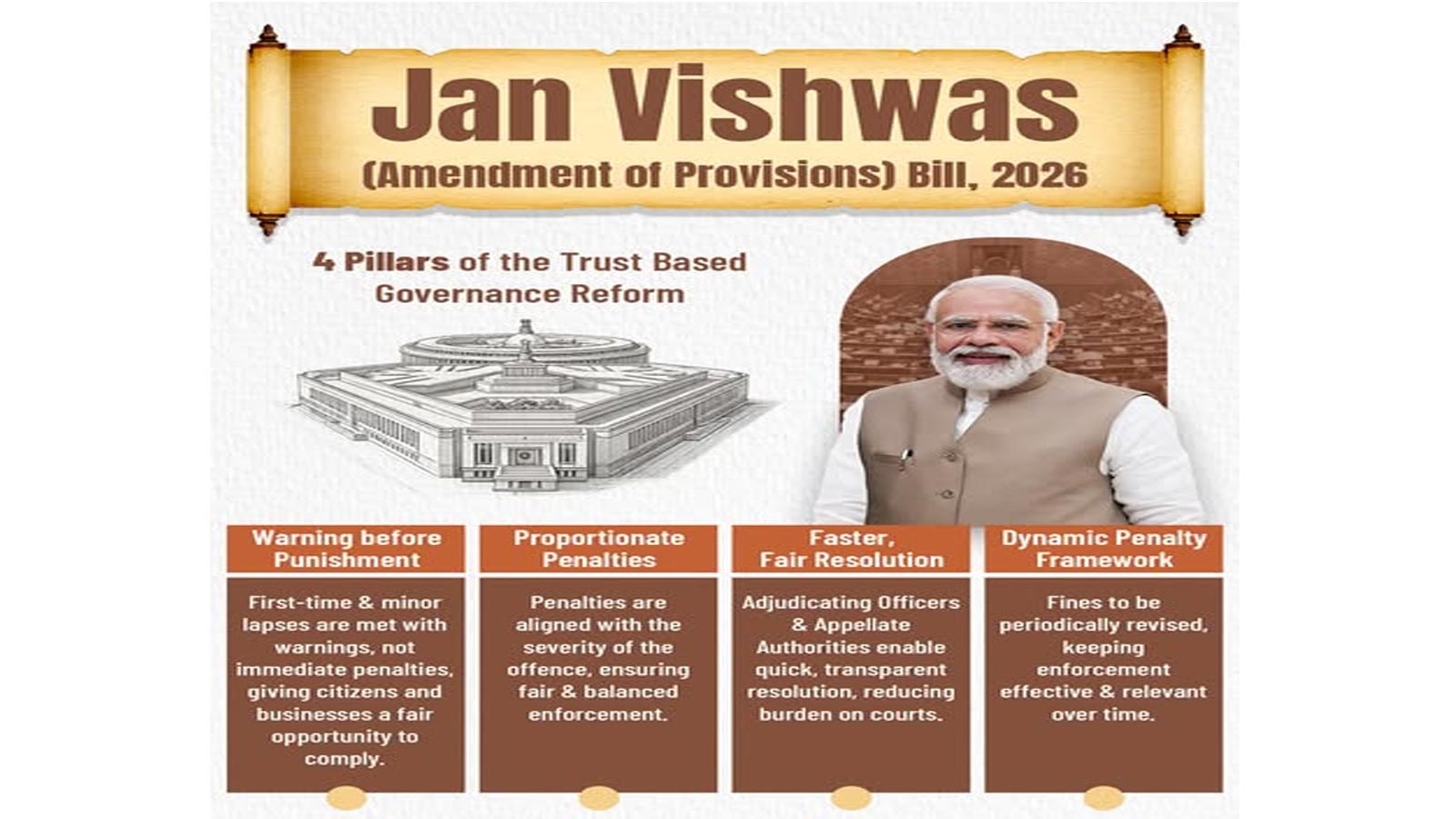

In a major reform aimed at improving the regulatory environment, Parliament has passed the Jan Vishwas (Amendment of Provisions) Bill, 2026, ushering in sweeping changes to reduce compliance burdens and decriminalise minor offences across sectors, particularly in healthcare.
The legislation, cleared by both Houses, is being seen as a key step towards strengthening ease of doing business and promoting a trust-based governance framework. By rationalising over 1,000 offences and decriminalising 717 provisions across 79 Central Acts, the Bill seeks to replace punitive legal provisions with a more balanced and facilitative approach.
Shift from Criminality to Compliance
A defining feature of the reform is the move away from criminal penalties – especially imprisonment – for minor procedural violations. Instead, the law introduces graded monetary penalties and adjudication mechanisms, ensuring that minor lapses are handled through civil processes rather than lengthy court proceedings.
The Ministry of Health and Family Welfare (MoHFW) said that this transition is expected to significantly reduce litigation, unclog courts, and enable faster resolution of compliance-related issues, while maintaining strict penalties for serious violations that may endanger public health.
Wide-Ranging Impact on Health Sector Laws
The reforms span several key legislations in the health sector, including the Drugs and Cosmetics Act, 1940, Pharmacy Act, 1948, Food Safety and Standards Act, 2006, Clinical Establishments (Registration and Regulation) Act, 2010, and the National Commission for Allied and Healthcare Professions Act, 2021.
Under these amendments, offences such as non-maintenance of records or procedural lapses – previously punishable by fines or imprisonment – will now be addressed through structured civil penalties. The reforms aim to strike a balance between regulatory oversight and ease of compliance.
New Adjudication Framework
For the first time, a formal adjudication mechanism has been introduced in several laws, allowing designated authorities at the central and state levels to handle minor violations. The process includes issuance of show-cause notices, opportunities for personal hearings, and an appellate system.
The MoHFW said that this mechanism is expected to particularly benefit industries such as cosmetics and pharmaceuticals, where minor procedural lapses can now be resolved efficiently without resorting to prolonged litigation.
Consistency Across Regulatory Landscape
The Ministry said that the bill reflects a broader effort to harmonise regulatory frameworks across ministries, with 23 ministries involved in implementing the reforms. This broad-based participation reflects the Government’s strong resolve to advance Ease of Doing Business and Ease of Living across sectors, ensuring that reforms are comprehensive, coordinated and impactful.
Overall, these measures are expected to improve compliance, reduce litigation and build greater trust between stakeholders and regulatory authorities, while continuing to safeguard public health and public interest.