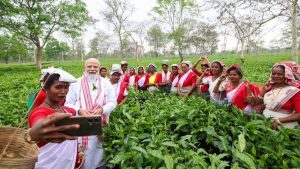
Prime Minister Narendra Modi on Tuesday inaugurated and laid the foundation stone for multiple development projects worth over Rs 20,000 crore in the Vav-Tharad region of Banaskantha district in north Gujarat, with Gujarat Chief Minister Bhupendra Patel, Assembly Speaker Shankar Chaudhary, Deputy Chief Minister Harsh Sanghavi and other senior ministers present.
Addressing a large gathering, the Prime Minister paid obeisance to Mother Amba, Lord Dharnidharji and Lord Mahavir on the occasion of Mahavir Jayanti. He extended greetings to women attendees, noting that Navratri had just concluded.
Highlighting strategic infrastructure, PM Modi said he was delighted to land directly at the newly operational Deesa Airbase, located about 130 km from the international border.
Describing the facility as both a developmental milestone and a key strategic asset for the country, he said that although the project had been delayed for decades, “it is our government that completed this work on priority.”
The Prime Minister recalled his deep personal bond with north Gujarat, remembering his early organisational days when he used to travel on a scooter and was greeted warmly by families with bajra rotis, ghee, jaggery and garlic chutney. He expressed joy at seeing many familiar elderly faces during the roadshow and appreciated both veteran and young BJP workers for continuing the development work.
Recalling the difficult decades when north Gujarat frequently faced drought and severe water shortage, PM Modi remembered how women had to walk long distances to fetch water and farmers often struggled to get fair returns for their hard work. He praised the determination of the people of Gujarat for deciding to change their fate and highlighted the Sujalam Sufalam Yojana and the arrival of Narmada water as game-changing steps. “Today, farmers here are no longer dependent on just one crop. Banaskantha’s rise as a major potato-producing region is proof of this transformation,” he said.
Reflecting on Gujarat’s 25-year continuous development journey, PM Modi noted that the state has kept breaking its own records. He recalled starting the Urban Development Year in 2005 with a budget of ₹650 crore, which has now crossed ₹33,000 crore. He mentioned approvals for nearly 300 proposals worth ₹2,300 crore for nine new municipal corporations, upgradation of 72 municipalities, and the state budget exceeding ₹4 lakh crore. “As long as your trust remains from Panchayat to Parliament, the superfast express of development will continue at this pace,” the Prime Minister said.
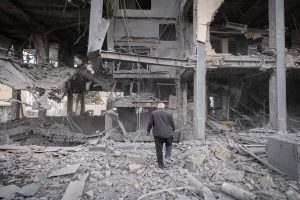
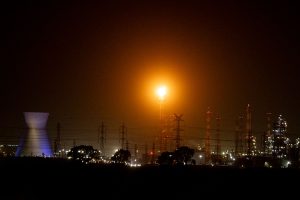
Turning to the global scenario, PM Modi pointed out that many countries are battling war, instability and sharp increases in fuel prices, with diesel and petrol costs rising by 10 to 25 per cent even in powerful nations. He said India has successfully managed the situation through prudent foreign policy and the unity of its citizens. Recalling the collective spirit shown during the COVID pandemic, he called upon people to stay united in the current difficult times. “While the world is struggling, India is not only maintaining stability but also progressing steadily. Today’s projects are a clear example of this resolve,” he added.
Among the major projects announced were road upgrades such as four-laning of the Idar-Vadali bypass and improvements on the Dholavira-Santalpur highway. The Ahmedabad-Dholera Expressway corridor was dedicated to the region. In railways, gauge conversion of the Himatnagar-Khedbrahma line and a new train service connecting Khedbrahma, Himatnagar and Asarwa were highlighted.
In the energy sector, PM Modi stressed the importance of transmission projects linked to the Khavda Renewable Energy Park, which is expected to generate 4.5 GW of power. He recalled launching Gujarat’s first solar park at Charanka in 2010 and expressed hope that the state would emerge as a leading global hub for renewable energy.
The Prime Minister also mentioned that around 40,000 families in Gujarat have received permanent houses under the Pradhan Mantri Awas Yojana.
PM Modi said these initiatives in roads, railways, energy and housing sectors will bring a major transformation to Vav-Tharad, Banaskantha and the entire north Gujarat region.