











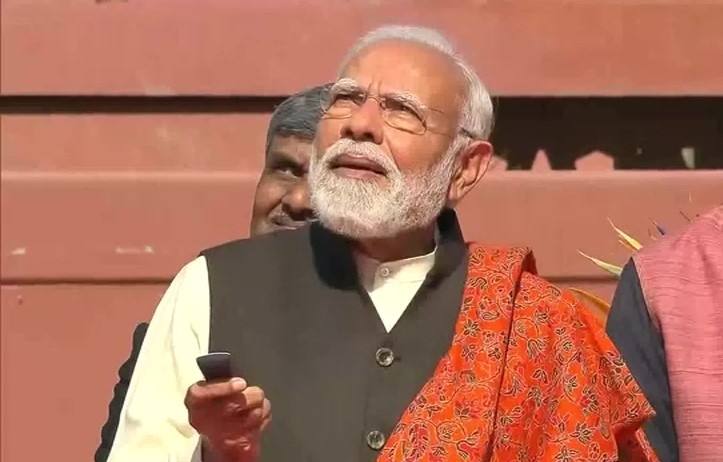
Prime Minister Narendra Modi formally inaugurated the Seva Teerth complex on Friday, the new building that houses the Prime Minister’s Office, the National Security Council Secretariat, and the Cabinet Secretariat.
Later in the day, the Prime Minister will inaugurate Kartavya Bhavan-1 and Kartavya Bhavan-2, which now accommodate several key ministries. He is also scheduled to address a public programme at Seva Teerth at around 6 pm.
According to the PMO, the ministries relocated to Kartavya Bhavan-1 and 2 include the Ministry of Finance, Ministry of Defence, Ministry of Health and Family Welfare, Ministry of Corporate Affairs, Ministry of Education, Ministry of Culture, Ministry of Law and Justice, Ministry of Information and Broadcasting, Ministry of Agriculture and Farmers Welfare, Ministry of Chemicals and Fertilizers, and the Ministry of Tribal Affairs.
The PMO described the inauguration as a “transformative milestone” in India’s administrative governance architecture, reflecting the Prime Minister’s vision of building a modern, efficient, accessible, and citizen-centric governance ecosystem.
The relocation of ministries was necessitated by what the PMO termed “fragmented and ageing infrastructure spread across multiple locations in the Central Vista area.” According to the statement, this dispersion had led to operational inefficiencies, coordination challenges, escalating maintenance costs, and suboptimal working environments.
“The new building complexes address these issues by consolidating administrative functions within modern, future-ready facilities,” the PMO said.
Both complexes feature digitally integrated offices, structured public interface zones, and centralised reception facilities. These measures are expected to enhance collaboration, improve efficiency, streamline governance processes, strengthen citizen engagement, and promote employee well-being.
Designed to meet 4-Star GRIHA standards, the buildings incorporate renewable energy systems, water conservation measures, waste management solutions, and high-performance building envelopes.
“The building complexes also include comprehensive safety and security frameworks, such as smart access control systems, surveillance networks, and advanced emergency response infrastructure, ensuring a secure and accessible environment for officials and visitors,” the PMO added.
Since 2014, the Modi government has taken steady steps to move away from symbols of India’s colonial past and usher in a mindset shift.
Some of the key changes include the relocation of the Prime Minister’s Office from South Block to the newly built Seva Teerth complex, the Central Secretariat being renamed Kartavya Bhavan, Rajpath being rechristened Kartavya Path, Race Course Road becoming Lok Kalyan Marg, and various Raj Bhavans and Raj Niwas across the country now being designated as Lok Bhavan or Lok Niwas.












