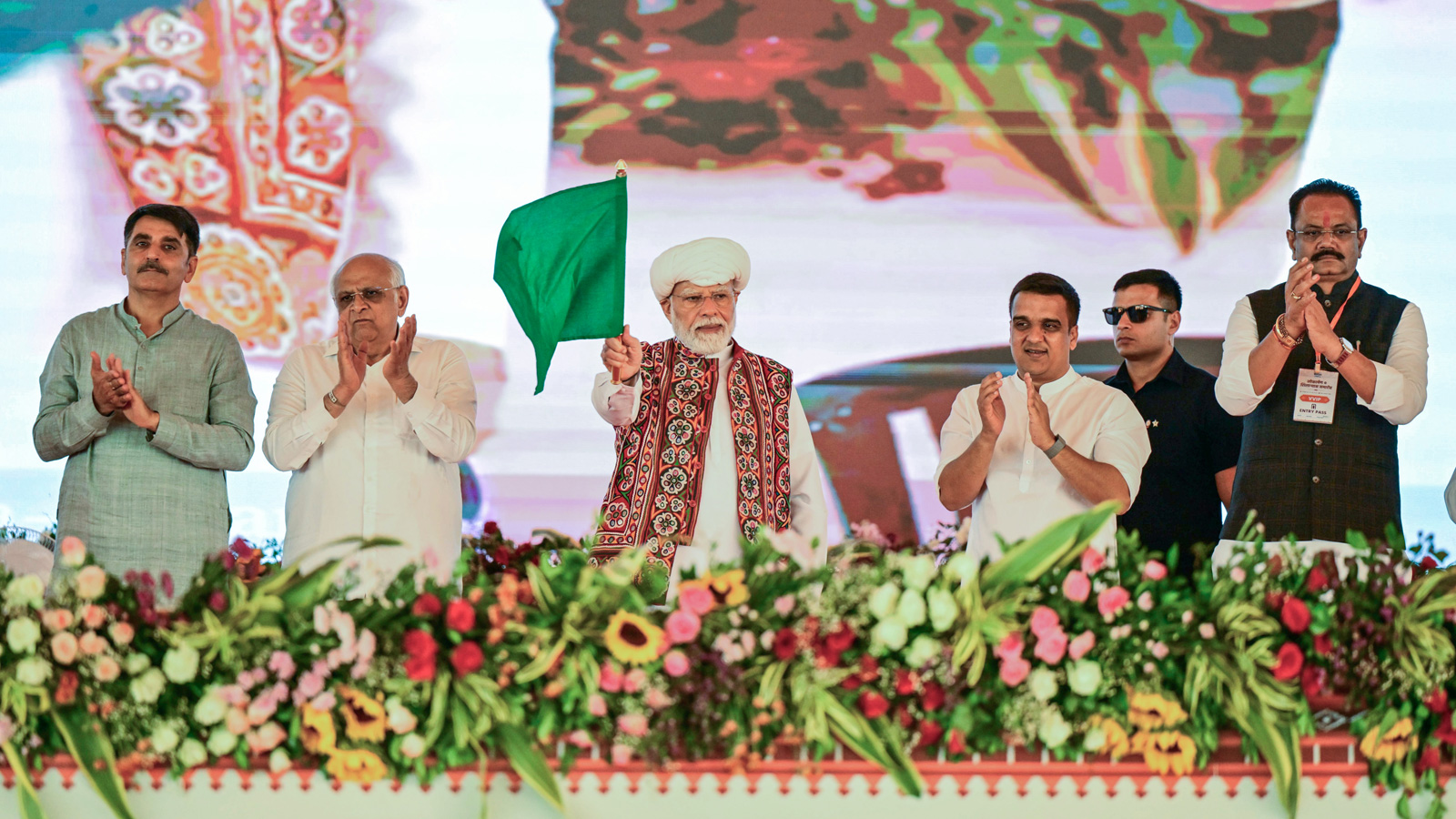
Prime Minister Narendra Modi on Friday inaugurated, dedicated and laid the foundation stones for development projects worth over Rs 14,000 crore in Gujarat’s Banaskantha and released more than Rs 18,000 crore to about 10 crore farmers under PM-KISAN.
Addressing a public gathering, he described farmers as among the strongest pillars of a Viksit Bharat and said their welfare and empowerment remained a government priority.
More than Rs 1,000 crore from the latest PM-KISAN instalment reached over 50 lakh farmers in Gujarat, including nearly Rs 50 crore for farming families in Banaskantha, he said.
The projects unveiled during the visit covered agriculture, dairy, livestock development, transport connectivity and facilities for women and children.
PM Modi said the national agriculture budget had increased more than fivefold compared with 2013–14. Nearly Rs 4.5 lakh crore had been transferred directly to small farmers under PM-KISAN, he said, adding that small farmers constituted more than 85 per cent of the farming community.
He said government policies and schemes had collectively delivered benefits or savings exceeding Rs 50 lakh crore to farmers over recent years.
Outlining these measures, the Prime Minister said the government had spent about Rs 16 lakh crore to shield farmers from rising global fertiliser prices. Wheat and paddy farmers had received more than Rs 24 lakh crore through minimum support price payments over the past 12 years, while crop insurance compensation under the PM Fasal Bima Yojana had exceeded Rs 2 lakh crore over the past 10–12 years.
He also highlighted the distribution of nearly 12 lakh solar pumps under PM-KUSUM, saying these had reduced irrigation expenses and saved farmers the cost of purchasing more than 80 crore litres of diesel.
On the use of science in agriculture, PM Modi said more than 26 crore Soil Health Cards had helped farmers assess their fields’ fertiliser requirements. About 3,000 new seed varieties had been made available in recent years as part of efforts to address challenges including changing weather patterns.
The Prime Minister highlighted animal husbandry as a vital pillar of the rural economy, with substantial participation by women. Better breeds, timely vaccination and veterinary care could improve milk yields and reduce losses, he said.
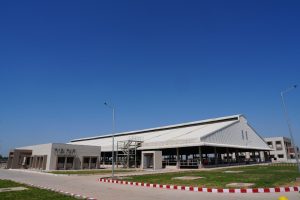
The newly built research centre in Banaskantha would strengthen the Rashtriya Gokul Mission by supporting the conservation and improvement of indigenous cattle breeds such as Gir, Sahiwal and Kankrej, along with buffalo breeds including Mehsana, Murrah and Jaffarabadi. He described it as the country’s first such facility for the Kankrej breed.
Modern reproductive technologies, including IVF, would help pass desirable traits to future generations of livestock and directly benefit farmers, he said.
PM Modi said approximately 150 crore vaccine doses had been administered under the nationwide free livestock vaccination drive, covering animals belonging to more than eight crore farmers.
He said average daily milk yield per cow or buffalo had risen from less than five litres in 2013–14 to nearly eight litres, and described India as the world’s largest milk producer.
The Prime Minister also laid the foundation stones for two Bio-CNG plants, highlighting efforts to help livestock rearers earn from cattle dung as well as milk. Institutions such as Banas Dairy were supporting the production of biogas, Bio-CNG and organic fertiliser from dung and agricultural residue, he said.
“We are making animal husbandry not just a tradition, but a powerful instrument for increasing farmers’ income and enriching villages,” he said.
Referring to other sources of rural income, PM Modi said seafood exports had more than doubled and honey production had doubled over the past 12 years. He praised women’s self-help groups for their contribution to beekeeping and said India had become the second-largest exporter of natural honey.
The Prime Minister credited Narmada water and technologies such as drip irrigation with transforming agriculture in Banaskantha. He said the expansion of a potato processing plant producing French fries would enable greater procurement from farmers.
He also highlighted the approval of 12 horticulture clusters covering crops including tomatoes, potatoes, chillies, grapes, bananas, onions, oranges, pomegranates and cocoa. Farmers would receive subsidies for establishing new orchards and rejuvenating existing ones, he said.
Two clusters in North Gujarat would particularly benefit potato growers in Banaskantha and Sabarkantha.
Among the connectivity initiatives, PM Modi flagged off the Ahmedabad (Sabarmati)-Varanasi Express and the Mehsana-Becharaji-Sabarmati MEMU services. He also laid the foundation stones for Ahmedabad Metro extensions connecting the airport and GIFT City and highlighted the proposed widening of the Ahmedabad-Mehsana highway from four to eight lanes.
Anganwadi infrastructure formed another component of the programme, with the initiatives expected to benefit about four lakh children and pregnant women.
Reflecting on completing 25 years as the head of a government on October 7, PM Modi thanked the people of Gujarat for their support since he first took oath as Chief Minister in 2001.
He said citizens had entrusted a person from a poor family with the responsibility of serving Gujarat and later the country, and credited them for his achievements.
“For this, I will remain indebted to you for life, and until the last moment of life, I will remain engaged in your service,” he said.
Recalling the region’s earlier water and electricity shortages, he urged residents to continue conserving both resources.
PM Modi also accused unnamed groups of spreading rumours about fertiliser and cooking gas shortages amid the conflict around Iran and Gulf countries. He said the government had prevented shortages of agricultural inputs and protected farmers from higher international prices.
A bag of urea costing Rs 3,000 globally was being supplied in India for under Rs 300, while a bag of DAP costing more than Rs 5,000 internationally was available for Rs 1,350, he said.
Ahead of National Unity Day on October 31, the Prime Minister appealed to citizens, particularly young people, to participate in the Run for Unity.
He said the celebrations at Ekta Nagar would take place at 5.30 pm on Saturday, featuring police and security force parades and tableaux, and urged people to honour Sardar Vallabhbhai Patel and reaffirm their commitment to national unity.
(PIB)