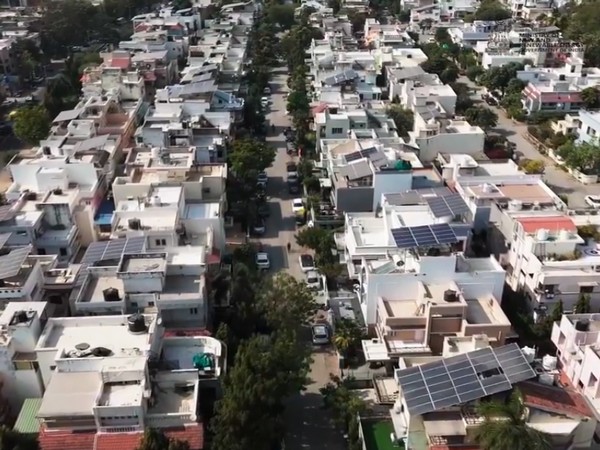
The PM Surya Ghar Muft Bijli Yojana (PM-SGMBY) is set to unlock a massive Rs 1.2 trillion opportunity in India’s solar power sector, according to a report by SBI Capital Markets. The scheme aims to promote residential rooftop solar installations with an ambitious target of achieving 30 GW capacity.
Offering substantial capital cost subsidies, the scheme significantly reduces payback periods by 4-5 years, encouraging widespread adoption of solar energy. According to the report, “The scheme possesses the potential to catalyze a Rs. 1.2 trillion ecosystem, with manufacturers of essential components, including modules, inverters, mounting equipment, and electrical components, anticipated to be primary beneficiaries alongside project developers and EPC players.”
Breaking down the Rs 1.2 trillion opportunity, solar modules account for the largest share at Rs 480 billion, followed by inverters at Rs 275 billion, electrical components at Rs 200 billion, and mounting structures at Rs 90 billion. Project developers and EPC players are also poised to benefit significantly, leveraging the capital expenditure model where customers finance and own installations to avail of subsidies.
The report highlights that residential rooftop solar installations are expected to lead the sector’s growth, supported by strong policies, particularly in states with high residential electricity tariffs and favorable net metering policies. Non-utility solar segments, including residential, commercial, and industrial (C&I) installations, are also gaining momentum due to declining costs of solar modules and EPC services.
With cheaper solar cells creating new off-grid opportunities, annual additions in non-utility solar installations are projected to reach 20 GW by FY27.
Currently, five states dominate India’s solar rooftop capacity, accounting for 70 percent of the total. Gujarat leads with 4,822 MW, followed by Maharashtra (2,847 MW), Rajasthan (1,415 MW), Kerala (966 MW), and Tamil Nadu (876 MW).
The growth in solar adoption is driven by factors such as industrialization, tariff differences, state-level incentives, and favorable metering policies.
(Inputs from ANI)