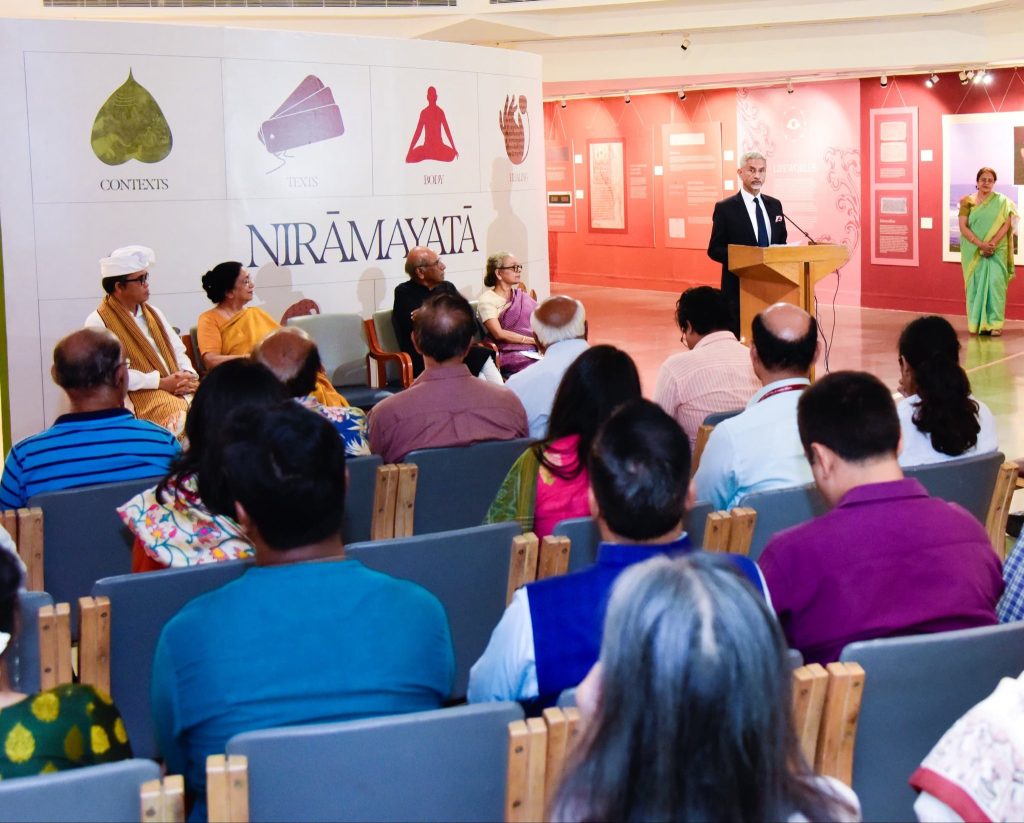
External Affairs Minister S. Jaishankar has emphasised that preserving manuscripts is an investment in India’s intellectual resources, stressing that technology and tradition must work together as the country advances towards the vision of Viksit Bharat.
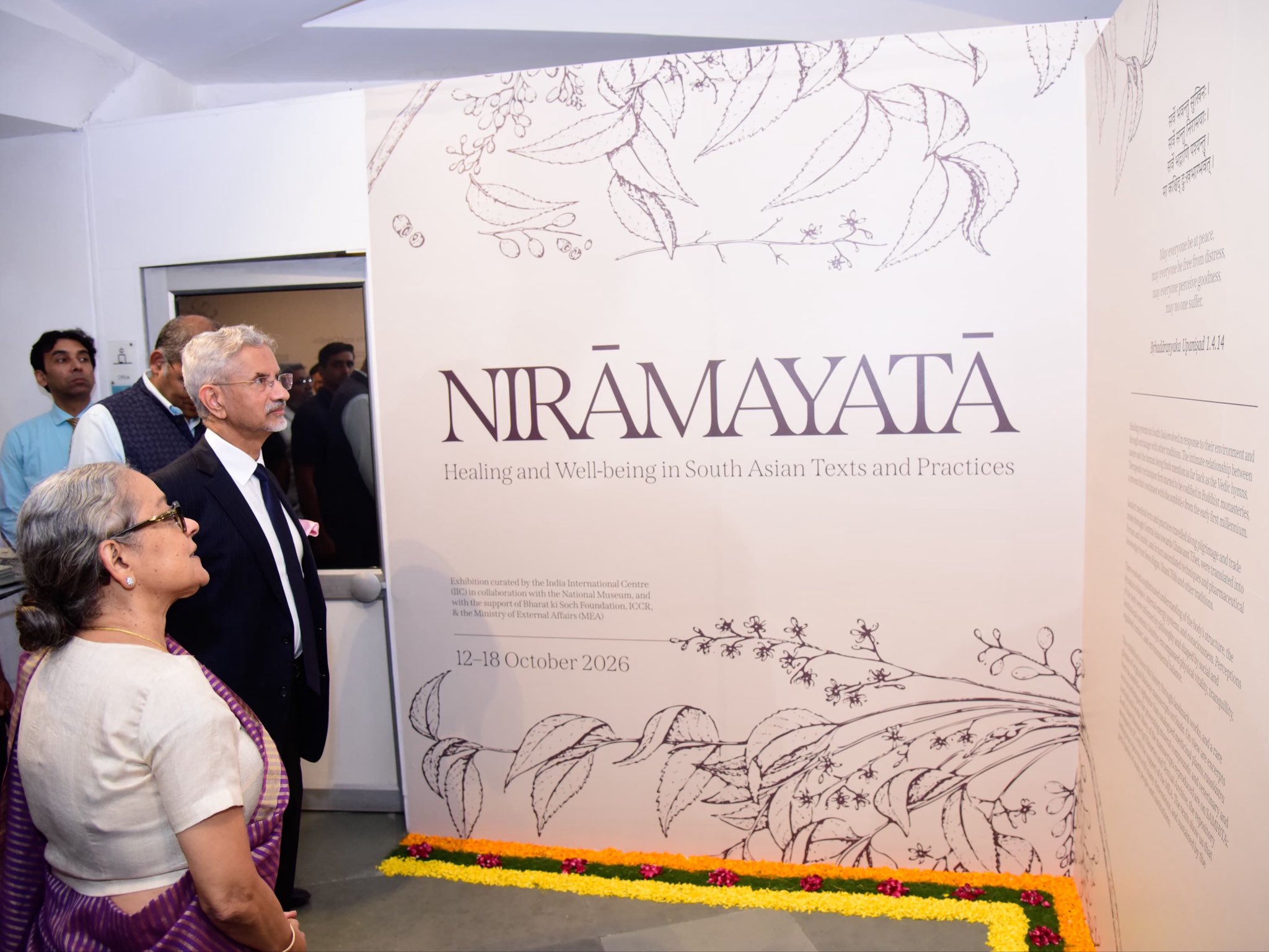
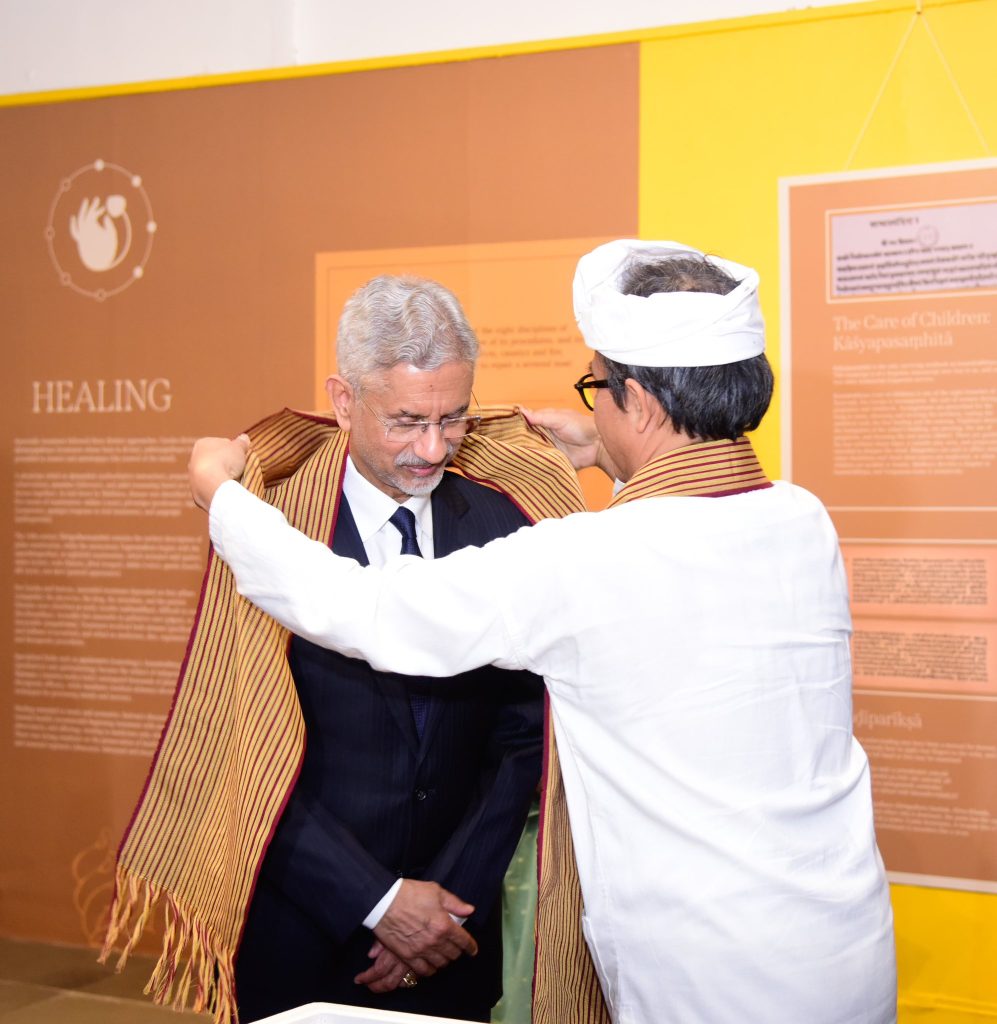
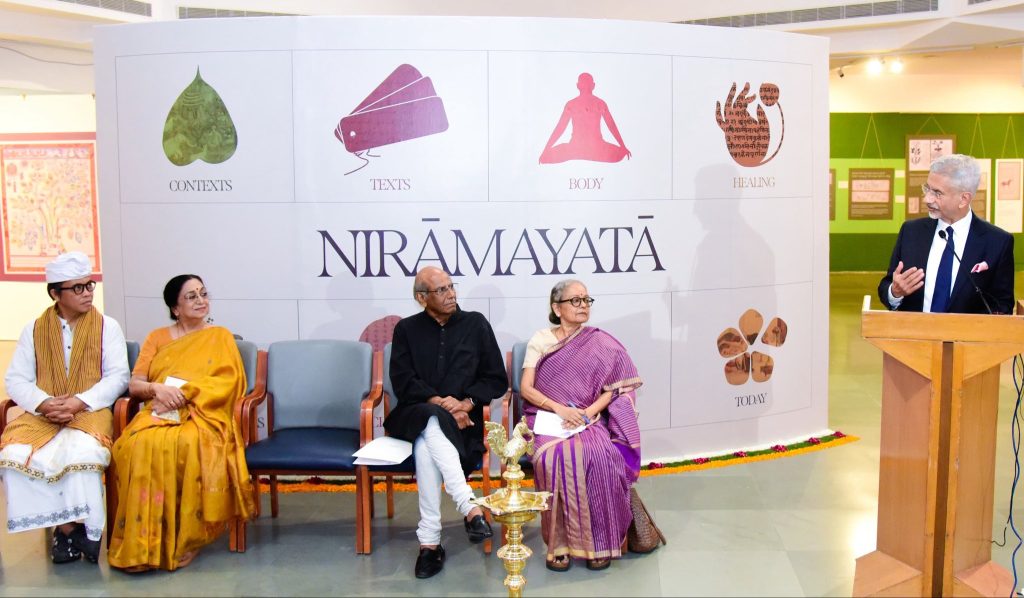
Speaking at the inauguration of the exhibition ‘Nirāmayatā: Healing and Wellbeing in South Asian Texts and Practices’ at the India International Centre (IIC) in New Delhi on Monday, Jaishankar highlighted the importance of safeguarding traditional knowledge and ensuring that historical experiences inform contemporary understanding.
He said manuscript preservation was not an exercise in nostalgia but an investment in intellectual resources, adding that the country’s progress required technology and tradition to move together. He described this approach through the phrase, “Vikas Bhi, Virasat Bhi.”
The exhibition explores healing and wellbeing in South Asian texts and practices, highlighting the region’s intellectual and cultural heritage.
India’s Cultural Heritage and Diplomacy
Highlighting the role of Indian diplomacy in protecting cultural heritage, Jaishankar said restoration, restitution and access to heritage remained important areas of engagement for the Ministry of External Affairs.
He cited India’s involvement in heritage conservation projects at the Mỹ Sơn complex in Vietnam, Preah Vihear and the Ananda Temple in Myanmar.
The External Affairs Minister also highlighted the government’s efforts to examine the provenance of cultural objects held outside India and facilitate their return through diplomatic engagement. He cited the recent return of the Leiden copper plates as a notable achievement in these efforts.
Jaishankar noted that the restitution of cultural heritage had gained international attention, particularly among countries of the Global South. He said Ghana was leading an initiative focusing on reparations and the return of cultural heritage.
Emphasising the importance of public awareness, he said people needed to understand their past as a starting point for efforts towards restoration, restitution and improved access to cultural heritage.
Traditional Knowledge and Contemporary Relevance
In a post on X, Jaishankar described the Nirāmayatā exhibition as an exploration of the relationship between individuals, society and the natural world.
He highlighted the significance of the saṃhitās in systematising traditional health knowledge so that it could be studied, taught and transmitted across generations. He also traced the history of healing in the subcontinent from Vedic hymns and Buddhist monastic traditions to specialised texts on surgery, pharmacology and therapeutics.
Jaishankar said medical knowledge had travelled across linguistic, geographical and cultural boundaries, developing through experience and exchanges among societies. He stressed the need to recognise the contributions of vaidyas, surgeons, hakims, monks and herbalists who preserved and transmitted traditional knowledge.
He called for greater use of digitisation, artificial intelligence, cataloguing, scholarly collaboration and public exhibitions to preserve manuscripts and make them accessible to contemporary audiences.
The Minister also assured the India International Centre and its partners of the Ministry of External Affairs’ support for the Samhita Initiative, highlighting the scope for expanding its international reach.
His remarks underscored the importance of safeguarding India’s cultural and intellectual heritage while ensuring that traditional knowledge remains accessible and relevant to contemporary research, development and international cultural engagement.