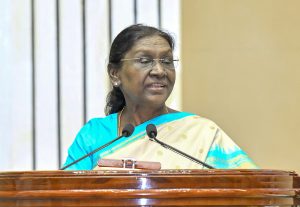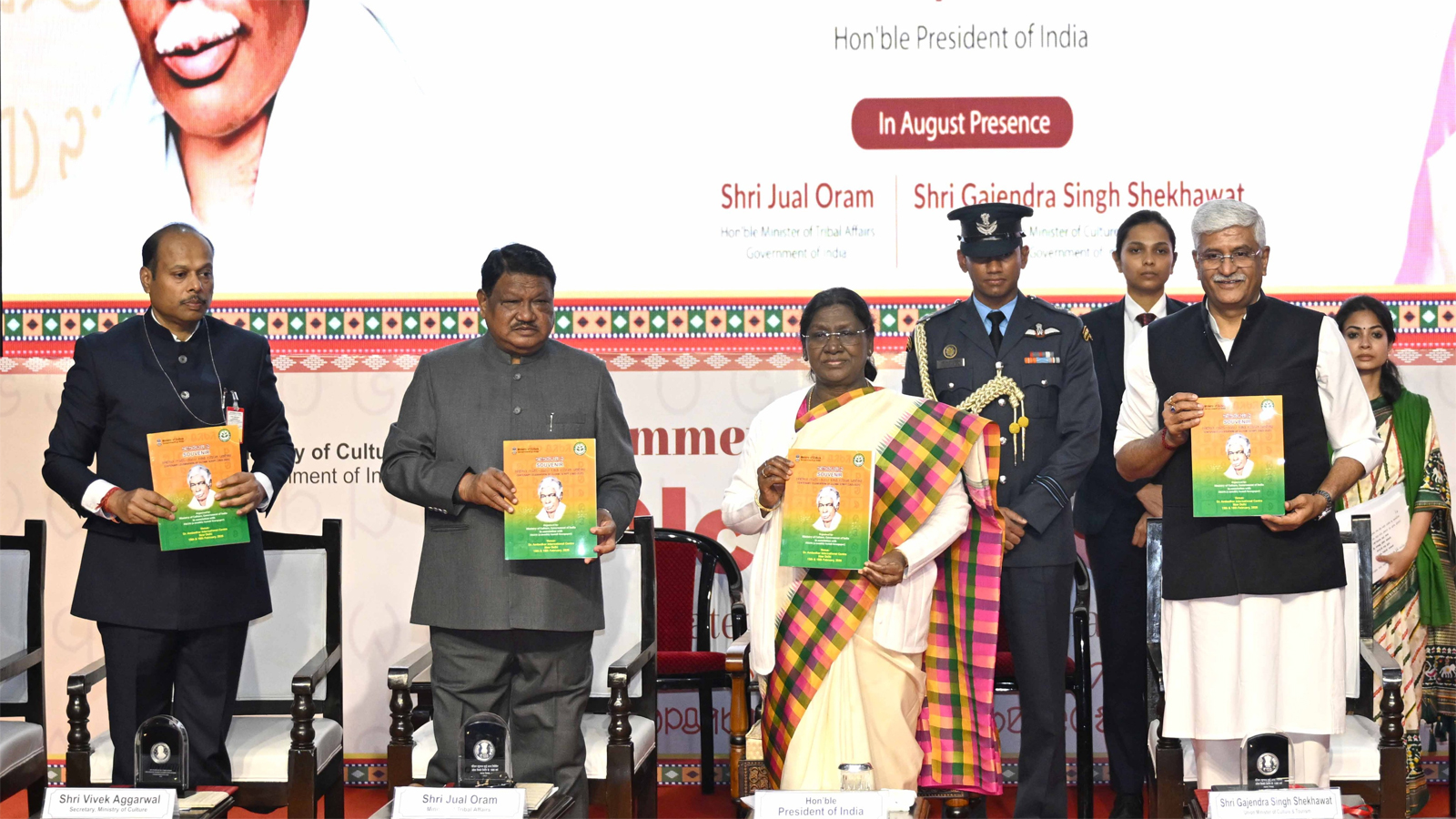
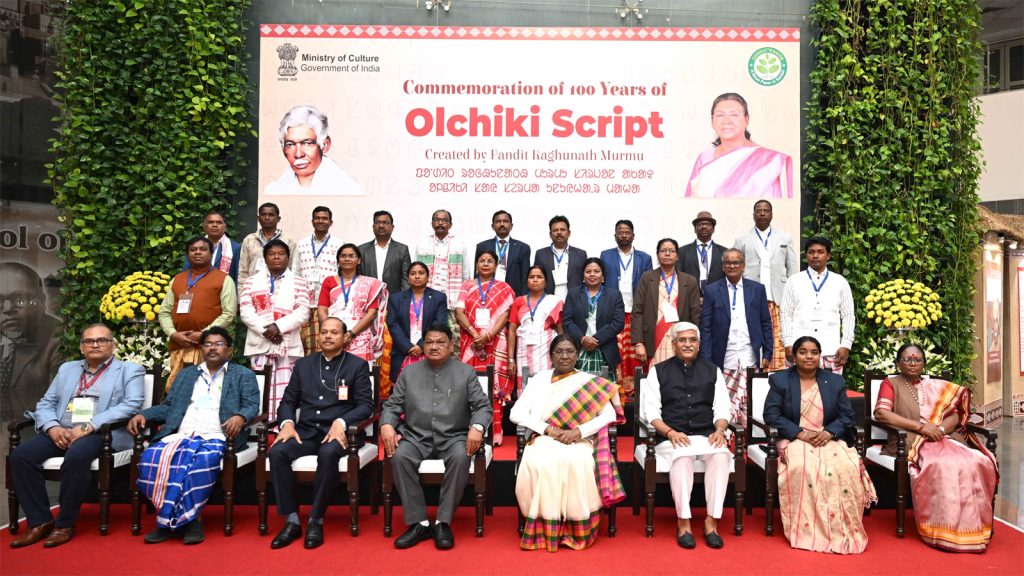
President Droupadi Murmu on Monday inaugurated the centenary celebrations of the Ol Chiki script at an event organised by the Ministry of Culture in New Delhi, highlighting its role as a powerful symbol of Santal identity and linguistic pride.
Addressing the gathering, the President said the Santal community possesses a rich language, literature and culture. However, in the absence of its own script, the Santhali language was earlier written in Roman, Devanagari, Oriya and Bengali scripts. Members of the community residing in Nepal, Bhutan and Mauritius also used the scripts prevalent in those countries.
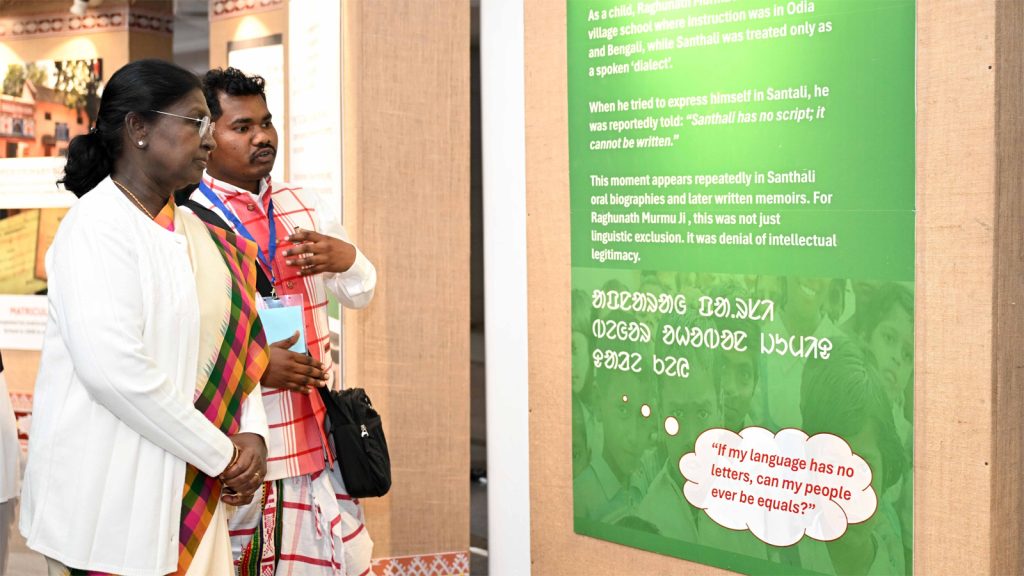
She noted that these scripts were not fully suited to accurately represent the original sounds and words of the Santhali language. In 1925, Raghunath Murmu invented the Ol Chiki script, which has since become the standard writing system for the Santhali language and a unifying force for the Santal community worldwide.
The President said the centenary celebration should serve as an opportunity to reaffirm commitment towards promoting the script. While children may pursue education in Hindi, English, Odia, Bengali or other languages, she emphasised the importance of learning their mother tongue, Santhali, in the Ol Chiki script.
Expressing satisfaction over the growing body of Santhali literature, President Murmu appreciated writers who are enriching the language through their works and urged them to continue inspiring and awakening society through literature.
Describing India as an orchard of many languages, she said language and literature act as threads that bind communities together. She called for greater translation efforts to make Santhali literature accessible to speakers of other languages and vice versa, thereby fostering mutual enrichment.
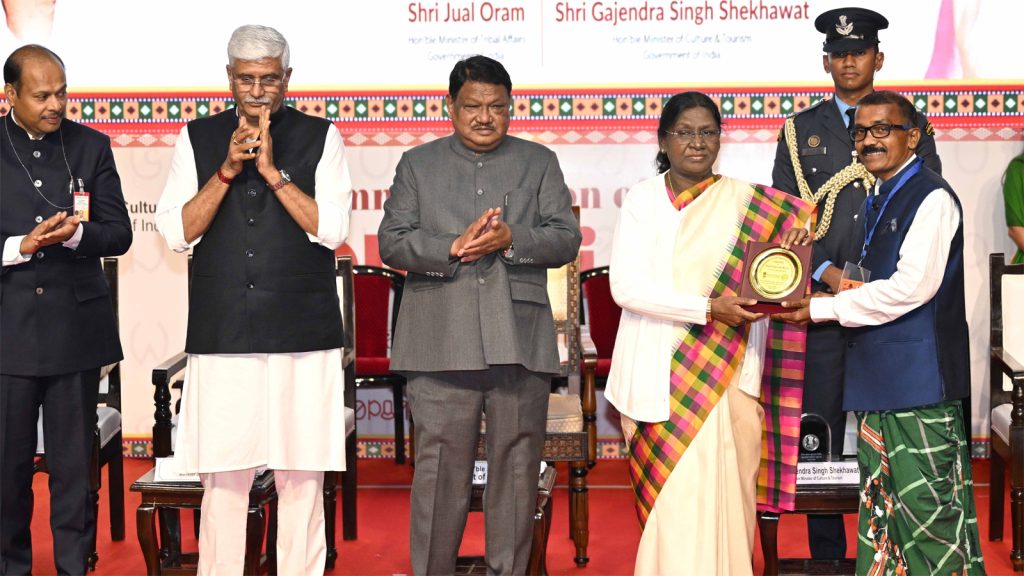
On the occasion, the President released a commemorative coin and a postage stamp marking 100 years of the Ol Chiki script. She also felicitated 10 achievers from the Santal community for their contributions to promoting the widespread use of the script among Santhali speakers.