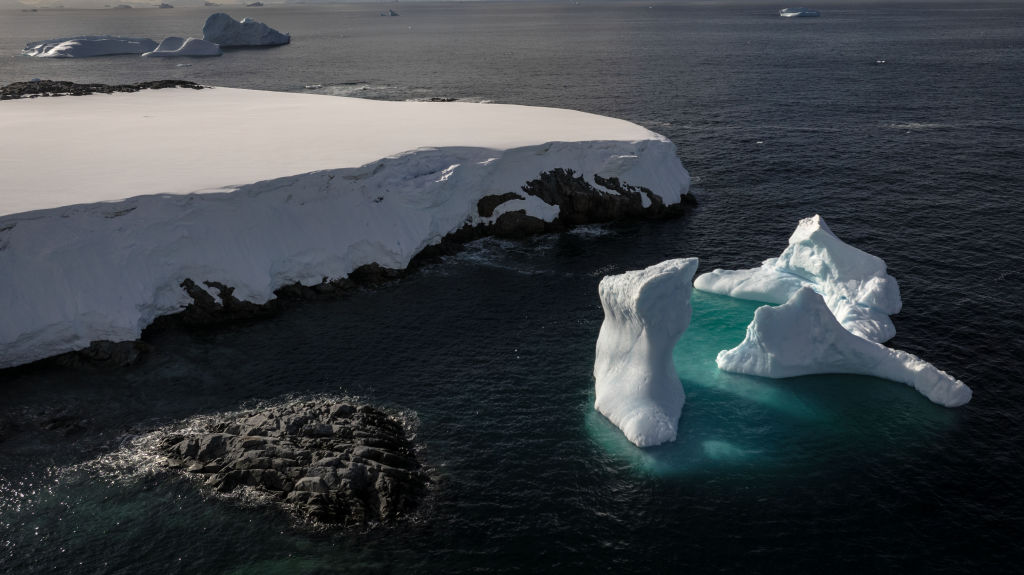
Rapid loss of Antarctic sea ice could be a tipping point for the global climate, causing sea level rises, changes to ocean currents and loss of marine life that are impossible to reverse, a scientific study published on Thursday said.
The paper in the journal Nature aimed to describe in previously unseen detail the interlocking effects of global warming on the Antarctic, the frozen continent at the planet’s South Pole.
“Evidence is emerging for rapid, interacting and sometimes self-perpetuating changes in the Antarctic environment,” it said.
The study gathered data from observations, ice cores, and ship logbooks to chart long-term changes in the area of sea ice, putting into context a rapid decline in recent years.
“A regime shift has reduced Antarctic sea-ice extent far below its natural variability of past centuries, and in some respects is more abrupt, non-linear and potentially irreversible than Arctic sea-ice loss,” it said, referring to melting at the North Pole.
Changes are having knock-on effects across the ecosystem that in some cases amplify one another, said Nerilie Abram, the study’s lead author.
A smaller ice sheet reflects less solar radiation, meaning the planet absorbs more warmth, and will probably accelerate a weakening of the Antarctic Overturning Circulation, an ocean-spanning current that distributes heat and nutrients and regulates weather.
Loss of ice is increasingly harming wildlife, including emperor penguins, which breed on the ice, and krill, which feed below it.
And warming surface water will further reduce phytoplankton populations that draw down vast quantities of carbon from the atmosphere, the study said.
“Antarctic sea ice may be one of those tipping points in the Earth’s system,” said Abram, a former professor at the Australian National University (ANU) and now chief scientist at the Australian Antarctic Division.
Reining in global carbon dioxide emissions would reduce the risk of major changes in the Antarctic but still may not prevent them, the study said.
“Once we start losing Antarctic sea ice, we set in train this self-perpetuating process,” Abram said. “Even if we stabilise the climate, we are committed to still losing Antarctic sea ice over many centuries to come.”
(Reuters)