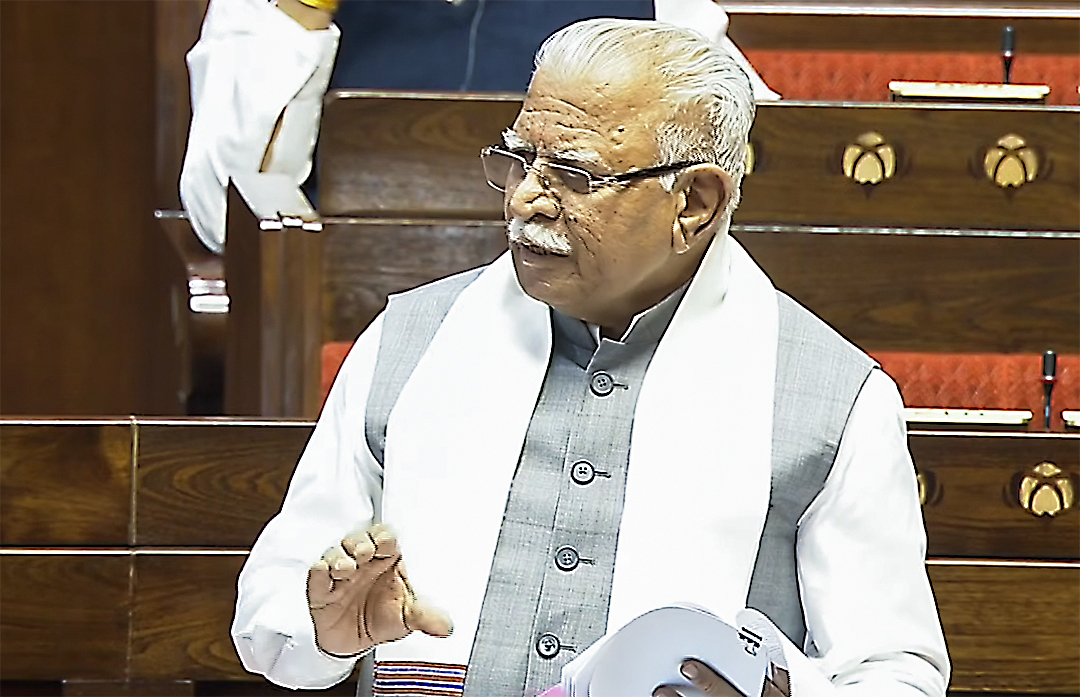
Union Minister Manohar Lal on Friday called for the development of robust urban infrastructure through the Transit-Oriented Development (TOD) model for housing, making housing more accessible and sustainable.
Speaking at a conference here, the minister underscored the importance of bringing together all stakeholders to make housing finance more accessible, affordable, and inclusive for every citizen.
He emphasised the need for integrated urban planning, including transport-linked housing development and forward-looking policy innovations.
Lal also proposed exploring innovative solutions such as a National Housing Exchange–like mechanism, backed by comprehensive data on available housing across locations, to help citizens identify suitable homes closer to their workplaces and facilitate mutually beneficial property exchanges to reduce commute time.
Highlighting findings from a joint study conducted by NITI Aayog and Ministry of Housing and Urban Affairs (MoHUA), which estimated India’s urban population at 500 million in 2021 and projected it to surpass 850 million by 2050, the minister said this demographic shift will significantly increase the demand for affordable housing across the country.
Furthermore, he urged financial institutions — including banks, housing finance companies, and the National Housing Bank — to collaborate and extend greater credit support to expand the housing stock nationwide.
Lal also reiterated the vision of Prime Minister Narendra Modi — ensuring that every eligible citizen has access to a dignified home, reflecting the Government’s unwavering commitment to Housing for All.
According to the ministry, the conference served as a platform for dialogue, knowledge exchange, and strategic collaboration, reaffirming India’s commitment to addressing the challenges and opportunities in affordable housing and urban development.
Meanwhile, the promise of building India’s urban future lies in making our cities economically dynamic, socially inclusive, environmentally sustainable, and institutionally capable, the Economic Survey 2025-26 has said.
According to the Survey, future urban policy must prioritise system performance over standalone projects — integrating housing, mobility, sanitation, climate resilience, and finance — while designing liveable, climate-ready cities that support inclusion and long-term economic efficiency. “India is far more urban in economic and functional terms than official definitions suggest,” it noted.
–IANS