











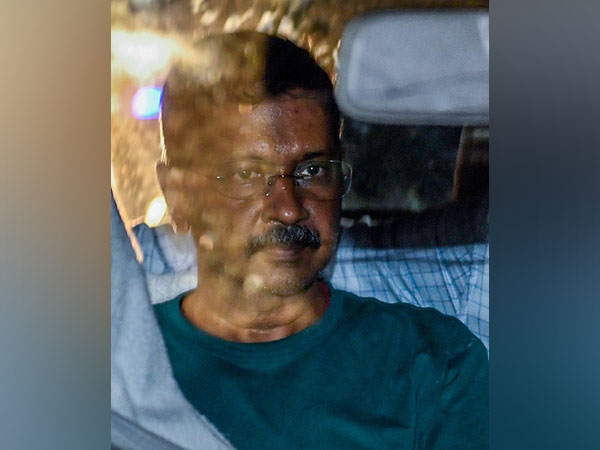
The Supreme Court on Friday granted bail to Delhi Chief Minister Arvind Kejriwal in a corruption case registered by the CBI in the alleged excise policy scam.
A bench of Justices Surya Kant and Ujjal Bhuyan granted bail to Kejriwal saying prolonged incarceration amounts to unjust deprivation of liberty. The apex court granted bail to Kejriwal, subject to bail bonds of Rs 10 lakh.
It also put certain conditions on the release of Kejriwal on bail, saying he shall not make any public comments about this case. He shall be present for all hearings before the trial court unless exempted.
Justice Ujjal Bhuyan, in a separate judgement, questioned the CBI for arresting Kejriwal, saying that such action by CBI raises serious questions on the timing of the arrest and such an arrest by CBI only fractured the bail granted in the ED case.
Justice Bhuyan said that it would be a travesty of justice to keep Kejriwal incarcerated when he is on bail in the ED case. He further said Kejriwal was granted bail in the ED case and further detention in the CBI case is wholly untenable.
Justice Bhuyan also said that bail is the rule and jail is an exception. “The process of trial or steps leading to arrest should not become harassment,” said the judge.
CBI arrest is unjustified and thus Kejriwal should be released forthwith, said Justice Bhuyan.
Earlier, the apex court had reserved the verdict on September 5 after hearing counsels representing Kejriwal and CBI.
During the hearing of the case, Additional Solicitor General SV Raju, appearing for CBI, objected to Kejriwal for not approaching the trial court for bail.
Kejriwal had directly approached the Delhi High Court for bail and then moved to the apex court. On August 5, the Delhi High Court upheld the arrest of the Chief Minister as “legal.” It had dismissed Kejriwal’s plea challenging his arrest, saying it was only after sufficient evidence was collected and sanction was obtained in April 2024 that the CBI proceeded with further probe against him.
The High Court had said there was no malice in the acts of the CBI, which demonstrated how Kejriwal could influence witnesses who could muster the courage to depose only after his arrest. It had said Kejriwal is not an ordinary citizen but a distinguished recipient of the Magsaysay Award and the convenor of the Aam Aadmi Party.
“The control and the influence which he has on the witnesses is prima facie borne out from the fact that these witnesses could muster the courage to be a witness only after the arrest of the petitioner, as highlighted by the special prosecutor,” it had said in its order.
Kejriwal was arrested by the ED on March 21, 2024, in connection with a money laundering probe relating to alleged irregularities in the now-cancelled Delhi excise policy 2021-22. On June 26, 2024, AAP Chief Arvind Kejriwal was arrested by CBI while he was in custody of the Enforcement Directorate in the excise case.
(ANI)







