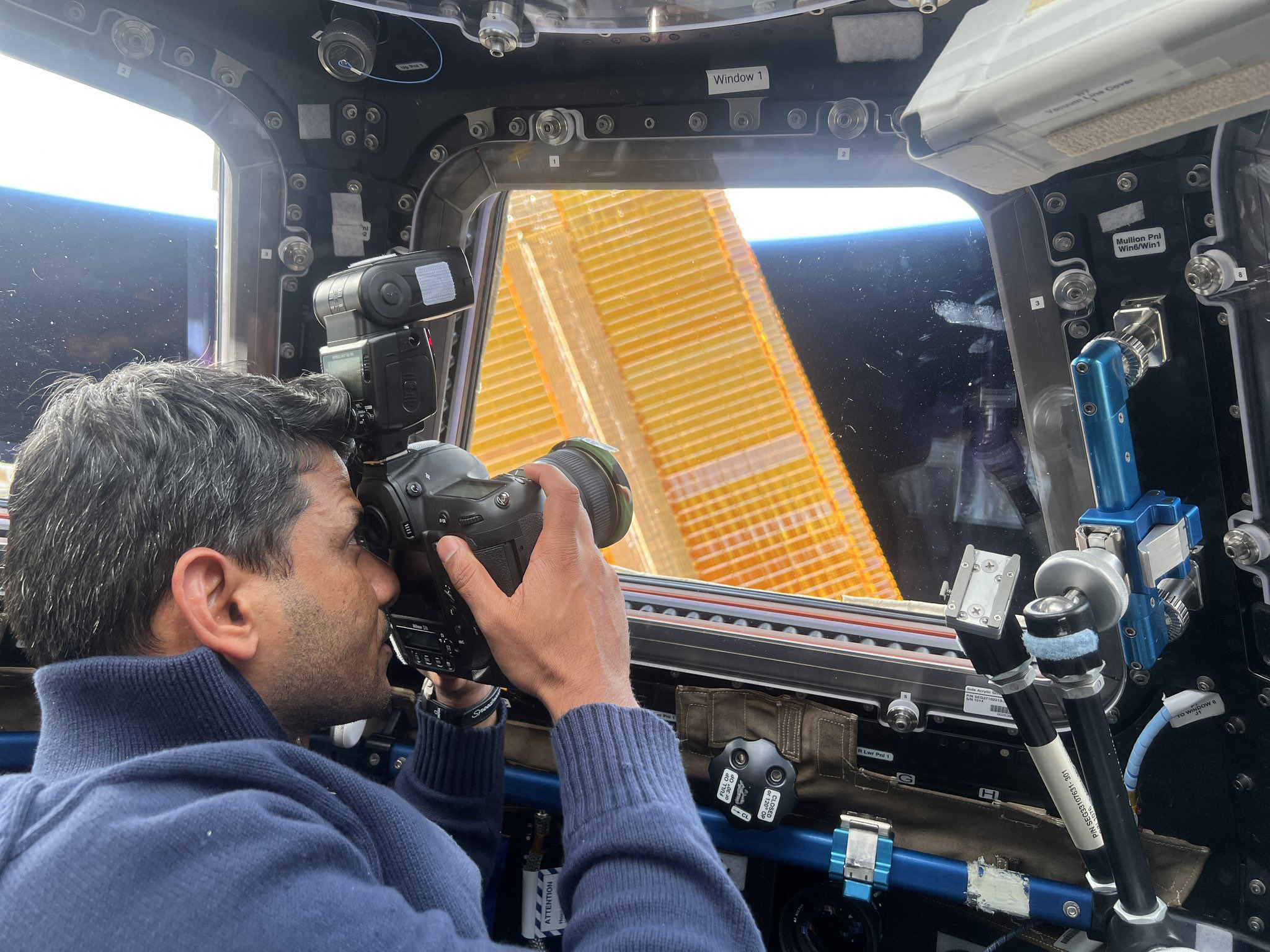
Indian astronaut Shubhanshu Shukla, who is currently aboard the International Space Station (ISS), is expected to begin his journey back to Earth on July 14, Axiom Space announced on Friday.
Shukla, along with three other crew members — Peggy Whitson, Sławosz Uznański-Wiśniewski, and Tibor Kapu — will undock from the Harmony module’s space-facing port inside the SpaceX Dragon spacecraft for their return to Earth.
“The #Ax4 crew is scheduled to undock from the @Space_Station no earlier than Monday, July 14, at 7:05 a.m. ET (4:35 pm IST),” Axiom Space said in a post on social media platform X.
A splashdown is expected several hours after undocking, near the coast of California in the Pacific Ocean.
“We are working with the station programme, watching the Axiom-4 progress carefully. I think we need to undock that mission, and the current target to undock is July 14,” Steve Stitch, Manager of NASA’s Commercial Crew Program, said at a press conference.
IAF Group Captain Shukla is on a 14-day mission to the ISS. He is the first Indian to visit the ISS and the second Indian astronaut in space after Wing Commander Rakesh Sharma, who flew in 1984.
During his time aboard the orbital outpost, Shukla carried out seven India-specific experiments, marking an important step for India’s Gaganyaan human spaceflight programme. His experiments focused on topics such as decoding muscle loss in microgravity, developing a brain-computer interface, and sprouting green gram and fenugreek seeds in space.
Shukla also interacted with students from Kerala and Lucknow via video conferencing from the ISS. The students asked him about life in space — from what astronauts eat and how they sleep, to what happens if someone falls sick.
They also wanted to know about the benefits of India’s space programme and which part of the mission he found most enjoyable.
Describing the launch experience of Axiom Mission 4, Shukla told the students it was “amazing” and “dynamic”.
“It is fun actually, because in space there is no floor and no ceiling. So if you were to visit the station, you would find someone sleeping on the walls and someone on the ceiling,” he told them with a smile.
—IANS