South Africa’s G20 presidency this year will prioritise efforts to help developing countries finance their shift to a low-carbon economy, President Cyril Ramaphosa said, even as the United States radically scales back its support.
President Donald Trump’s administration, whose top officials have skipped two meetings of the Group of 20 nations held in South Africa this week and last, has cut overseas aid programmes, raising concerns of a potential clean energy funding shortfall.
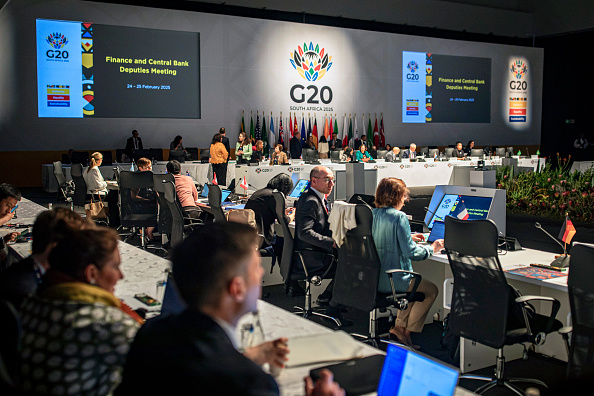
“Significantly more funding is required to limit (the) global temperature rise in line with the goals of the Paris Agreement, and to do so in a manner that is equitable and just,” Ramaphosa said on Wednesday at the opening of a G20 finance ministers and central bankers’ meeting in Cape Town.
Despite being the first country to agree a so-called Just Energy Transition Partnership (JETP) deal, to help it shift away more quickly from burning climate-damaging coal for energy, South Africa has struggled to get the money it needs.
Launched at the U.N. climate conference in 2021, JETPs aim to bring together money from governments, multilateral lenders and the private sector to renewable energy projects in a way that benefits local communities.
Similar deals have been struck with countries including Indonesia and Vietnam.
However, the U.S. move to cut development funding, and similar actions in Europe where some governments including the United Kingdom are redirecting overseas development cash to defence budgets, has been weighing on minds at the gathering in Cape Town. Major energy companies are also slashing investment in renewables, refocusing on oil and gas.
Annual global climate financing has risen since 2018, but the share going to poorer nations in, for example, Africa has lagged, with officials estimating the continent’s share at under 5%.
AMBITIOUS TARGETS FOR COP30
South Africa will push G20 members to spearhead the drive to set ambitious targets for climate action for the next round of U.N. climate talks in Brazil later this year, Ramaphosa said.
“We continue to advocate for greater concessional and grant funding to support the energy transition in developing economies,” he said.
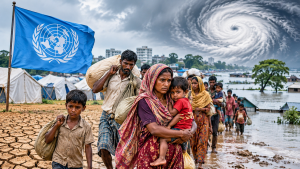
As droughts, floods and other extreme weather events pick up in frequency and severity, he called for more funding to cushion the least-polluting countries from the worst impacts of climate change, and further development of carbon markets.
South Africa will also push for an agreement to harness critical minerals – which are key to the world’s energy transition – to support economic growth and decarbonisation, Ramaphosa said.
Africa, which has about 30% of the world’s critical minerals reserves but attracts only 3% of global energy investments each year, wants to rely on that wealth to fund climate action.
“As minerals extraction accelerates to match the needs of the energy transition, the countries and local communities endowed with these resources must be the ones to benefit the most,” Ramaphosa said.
(Reuters)