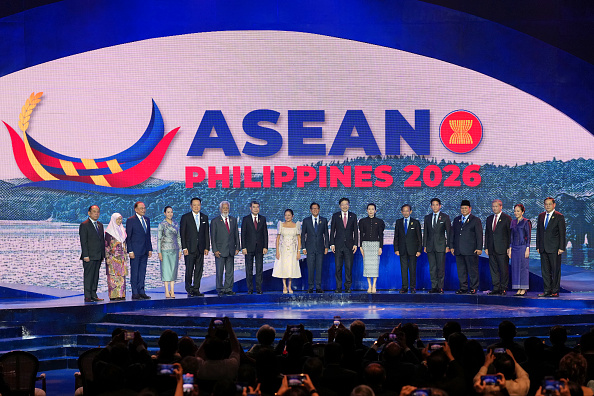
Leaders of Southeast Asian countries holding a summit on Friday are expected to thrash out a coordinated response to the impacts of the Middle East crisis, as they aim to ease pressure from an energy shock that has rattled their oil import-reliant economies.
Meeting on the Philippine island of Cebu, leaders of the Association of Southeast Asian Nations are expected to press for a harmonised strategy to ensure energy and food security in a region particularly exposed to a nearly 70-day blockade of the critical Strait of Hormuz.
In opening remarks as chair of ASEAN, Philippine President Ferdinand Marcos Jr said ASEAN was standing together to demonstrate its capacity to respond with unity and resolve, but must remain agile.
“We must ensure regional energy security and resilience,” he said.
“At a time of heightened volatility, ASEAN must strengthen coordination and reinforce preparedness, pursue practical collective measures to safeguard a stable energy supply and improve interconnectivity.”
COORDINATION CHALLENGE
ASEAN economic ministers met in Cebu on Thursday and “identified practical, concrete response measures” to ensure energy and food security, according to a chair statement, but the proposals lacked specific details.
They included diversifying suppliers and routes and developing a crisis communication protocol, but it was unclear what, if any, action might be taken.
The region, with a population of nearly 700 million people and economies worth a combined $3.8 trillion, faces significant risks from the fallout of the Iran war, and the Philippines – among the first countries in the world to declare an energy emergency – has pushed for approval of a voluntary, commercial-based ASEAN oil-sharing framework agreement.
But coordination remains a big challenge for ASEAN. Despite rapid growth of its individual economies, integration has been slow, with vast differences between its 11 members and no central authority to ensure compliance with ASEAN agreements and initiatives.
The ASEAN leaders will hold a retreat on Friday and are expected to call for a negotiated settlement between the United States and Iran as well as a reopening of the Strait of Hormuz, a conduit for about 130 vessels a day and a fifth of the world’s oil and gas supplies prior to the conflict.
Leaders will urge ASEAN members to complete the domestic processes required to approve a fuel-sharing pact, ensuring its “earliest possible entry into force”, according to a working draft of a statement seen by Reuters on Thursday.
PEACE PROGRESS
Though the war has dominated talks in Cebu so far, progress was made in other areas on Thursday, with Marcos calling a meeting of the leaders of Thailand and Cambodia amid a fragile ceasefire, resulting in an agreement to restart engagement after two rounds of deadly border conflict last year.
Foreign ministers also agreed to hold a virtual meeting with their counterpart from Myanmar, which is eager to normalise ties with ASEAN and allow its leadership to participate in its summits following a ban imposed after a 2021 military coup led to nationwide demonstrations that spiraled into civil war.
The crisis in Myanmar has long divided the bloc, with some members seeking engagement with a new, nominally civilian government led by former junta chief Min Aung Hlaing, who became president recently after a one-sided election swept by a pro-military party.
(Reuters)