May 8, 2026 4:22 PM

Astronomers get the best look yet at the surface of an exoplanet

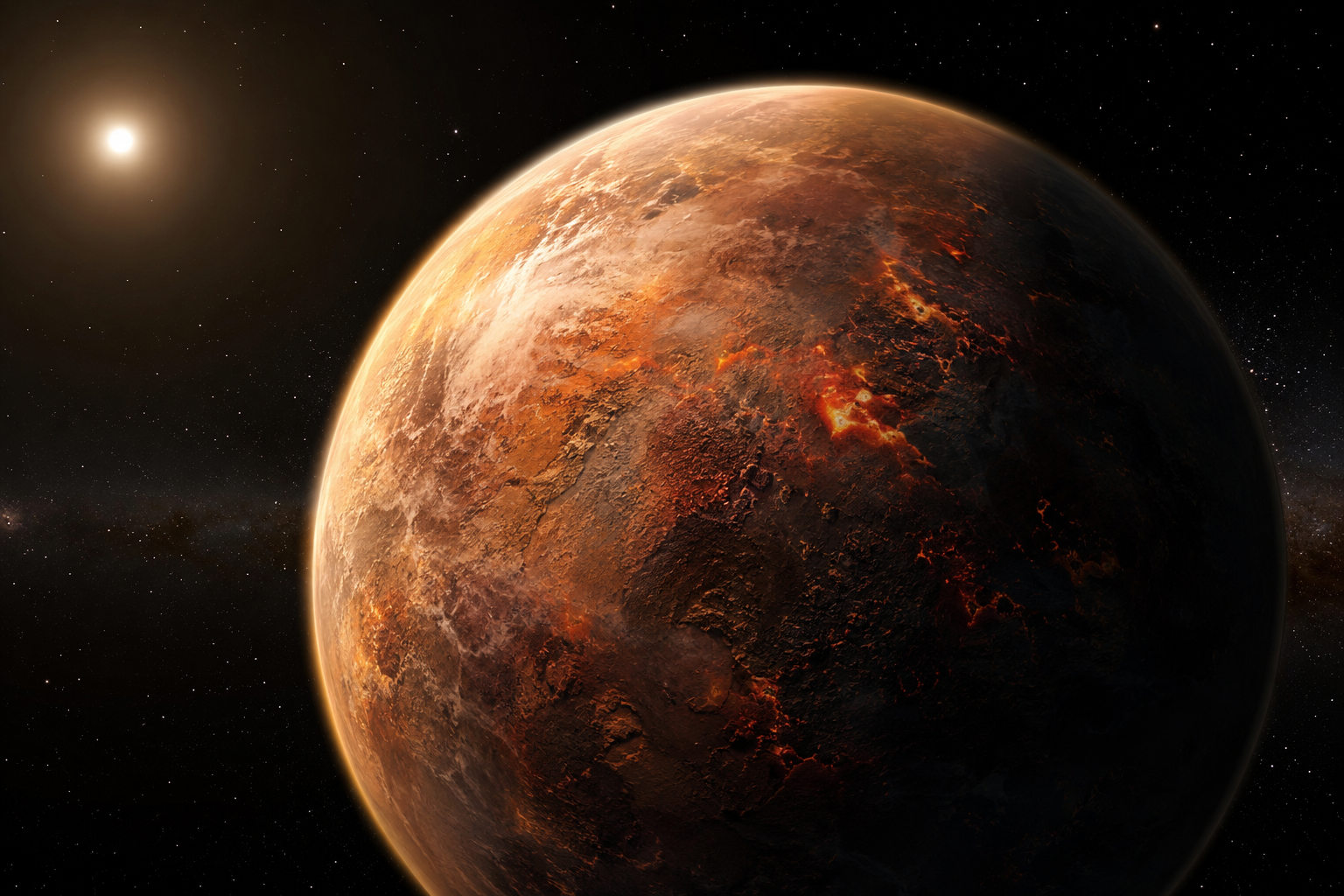
Astronomers have gotten their clearest look yet at the surface of an exoplanet - a planet beyond our solar system - thanks to NASA's James Webb Space Telescope. Webb gathered data on a rocky exoplanet with a diameter about 30% larger than Earth that indicates it is a desolate and airless world whose surface may resemble that of Mercury, our solar system's innermost planet. Its lack of a discernible atmosphere and its extreme temperatures - fiercely hot on one side and frigid on the other - seem...

January 30, 2026 3:51 PM

Intense geomagnetic storm linked to stealth solar eruption, say astronomers

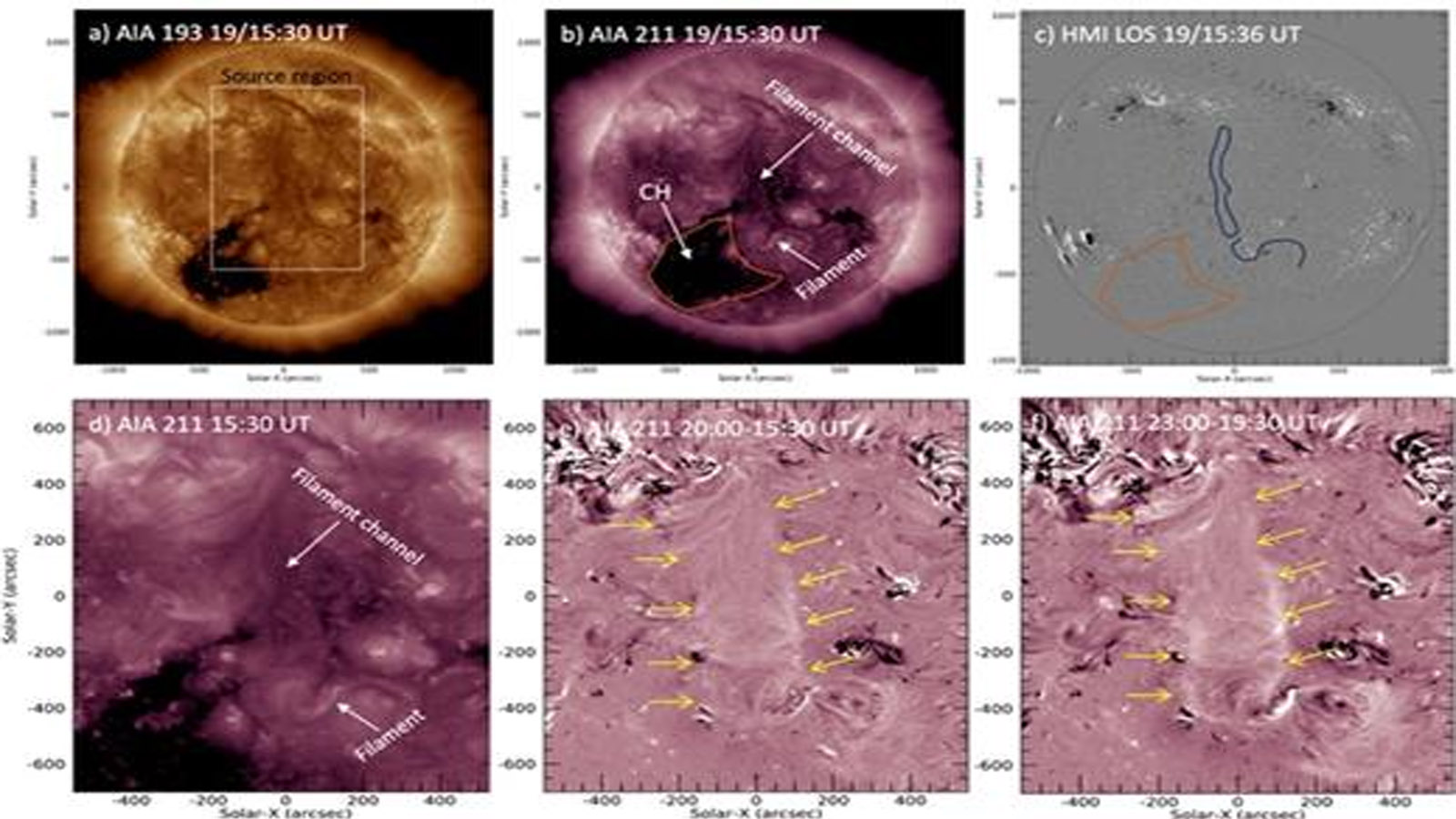
Astronomers have identified a subtle solar eruption known as a Stealth Coronal Mass Ejection (CME) as the cause of an intense geomagnetic storm that impacted Earth in March 2023, highlighting new challenges in forecasting space weather events. The study found that the CME travelled from the Sun to Earth through a coronal hole—an opening in the Sun’s magnetic field that allows high-speed solar wind to escape—enabling the otherwise weak eruption to reach Earth and trigger a powerful geomagn...

January 19, 2026 10:11 PM

Astronomers spot mysterious ‘iron bar’ in well-known Ring Nebula

The Ring Nebula, a stunning celestial structure residing in our neighborhood of the Milky Way galaxy, was discovered by French astronomer Charles Messier in 1779 and has been studied extensively ever since. But that does not mean we have it all figured out. Researchers have spotted a large cloud of iron atoms in the shape of a bar stretching about 3.7 trillion miles (6 trillion km) long across the face of the nebula, which is a glowing shell of gas and dust expelled by a dying star, and are sea...

January 13, 2026 3:35 PM

Astronomers spot white dwarf star creating a colorful shockwave

Astronomers have observed a white dwarf - a highly compact Earth-sized stellar ember - that is creating a colorful shockwave as it moves through space, leaving them searching for an explanation. The highly magnetized white dwarf is gravitationally bound to another star in what is called a binary system. The white dwarf is siphoning gas from its companion as the two orbit close to each other. The system is located in the Milky Way about 730 light-years from Earth - relatively nearby in cosmic te...

November 19, 2025 6:38 PM

Century-old Kodaikanal Observatory data offers new insights into the Sun’s magnetic future

Astronomers have tapped into more than a century’s worth of solar observations from the Kodaikanal Solar Observatory (KoSO) to reconstruct the Sun’s past polar magnetic behaviour—paving the way for better predictions of its future activity. For decades, scientists across the world have tried to decode the Sun’s rhythmic patterns of sunspots, flares, and magnetic storms, which directly impact Earth’s environment, satellites, and power grids. A key to understanding these solar cycles li...

October 10, 2025 10:35 PM

Astronomers capture first-ever image of two black holes orbiting each other

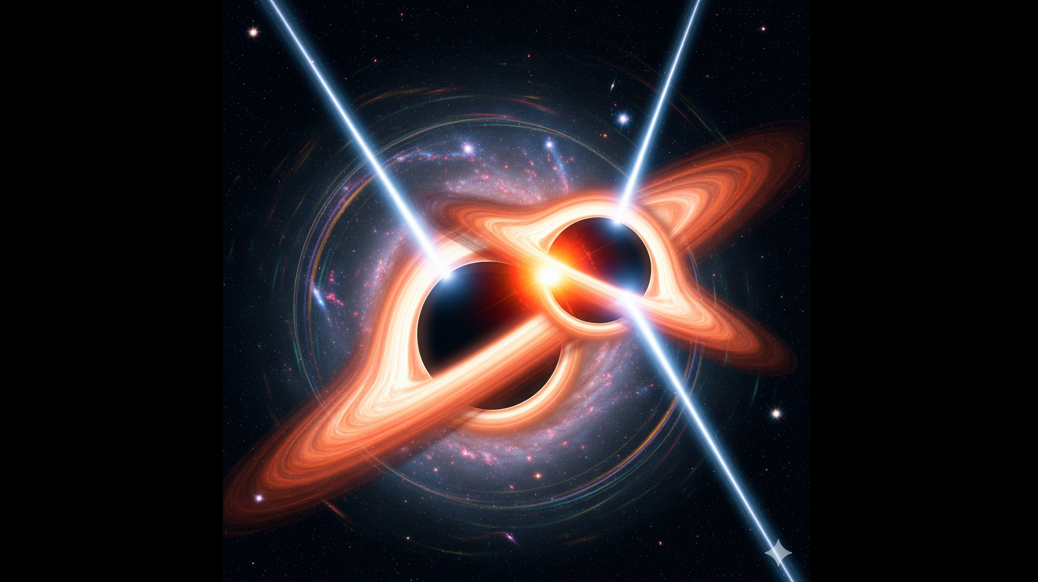
In a historic breakthrough, astronomers have for the first time captured two black holes locked in orbit around each other - a cosmic dance that has long been theorized but never before seen. The discovery, published in the Astrophysical Journal, confirms decades of predictions about the quasar OJ287, a distant galaxy powered by not one but two supermassive black holes circling each other every 12 years. The international research team included scientists Alok C. Gupta and Shubham Kishore from ...

September 11, 2025 11:01 AM

Astronomers get best view yet of two merging black holes

The merger of two black holes is a momentous event, revealing the wildest and most extreme configurations of space, time and gravity known to science. Researchers have now gotten their best look yet at such an event based on the detection of ripples in space-time called gravitational waves in an observation that lends strong support to hypotheses from eminent physicists Albert Einstein and Stephen Hawking. The collision occurred 1.3 billion light-years from Earth in a galaxy beyond our Milky W...

August 15, 2025 3:09 PM

New type of supernova detected as black hole causes star to explode

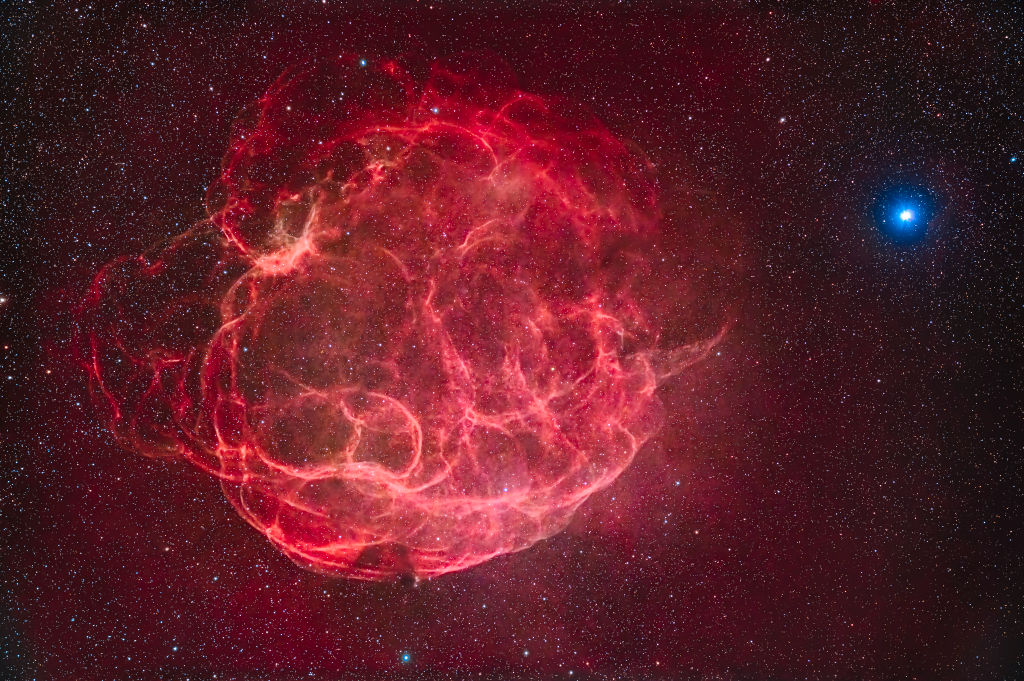
Astronomers have observed the calamitous result of a star that picked the wrong dance partner. They have documented what appears to be a new type of supernova, as stellar explosions are known, that occurred when a massive star tried to swallow a black hole with which it had engaged in a lengthy pas de deux. The star, which was at least 10 times as massive as our sun, and the black hole, which had a similar mass, were gravitationally bound to one another in what is called a binary system. But as...