



August 6, 2026 5:55 PM

Indian scientists develop new protocol to make future quantum networks more efficient

Scientists at the Bose Institute, Kolkata, have developed a new theoretical framework that could significantly improve the efficiency of future quantum communication networks by enabling stronger long-distance connections while using fewer network resources. The study, published in the journal Physical Review A, introduces a new protocol called General Concurrence Percolation (GCP), which provides a more efficient and sustainable approach to establishing quantum communication links than existin...
November 19, 2025 11:21 AM

Indian scientists help rewrite 50-year-old biological rule

Indian scientists, in collaboration with researchers from Rutgers University, have challenged a fundamental biological concept that has shaped textbook understanding of bacterial gene regulation for nearly five decades. Their findings could open new possibilities for developing antibiotics and studying bacterial evolution. For years, biology textbooks have described the “sigma cycle,” a model based primarily on Escherichia coli σ70, which suggested that sigma factors bind to RNA polymerase...

April 17, 2025 7:56 PM

Bose Institute team shares $3 million breakthrough prize for contributions to CERN’s ALICE

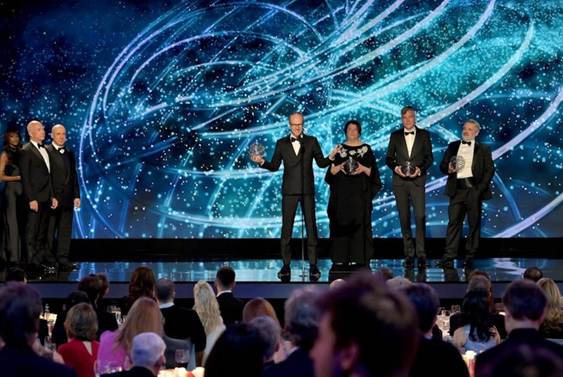
Scientists from the Bose Institute’s Experimental High Energy Physics (HEP) group have been awarded the prestigious 2025 Breakthrough Prize in Fundamental Physics. The recognition comes as part of their contribution to the ALICE collaboration at CERN's Large Hadron Collider (LHC), the world’s largest and most powerful particle accelerator. The $3 million prize has been jointly awarded to over 13,500 researchers across four LHC experiments—ATLAS, CMS, ALICE and LHCb—for their collective ...