











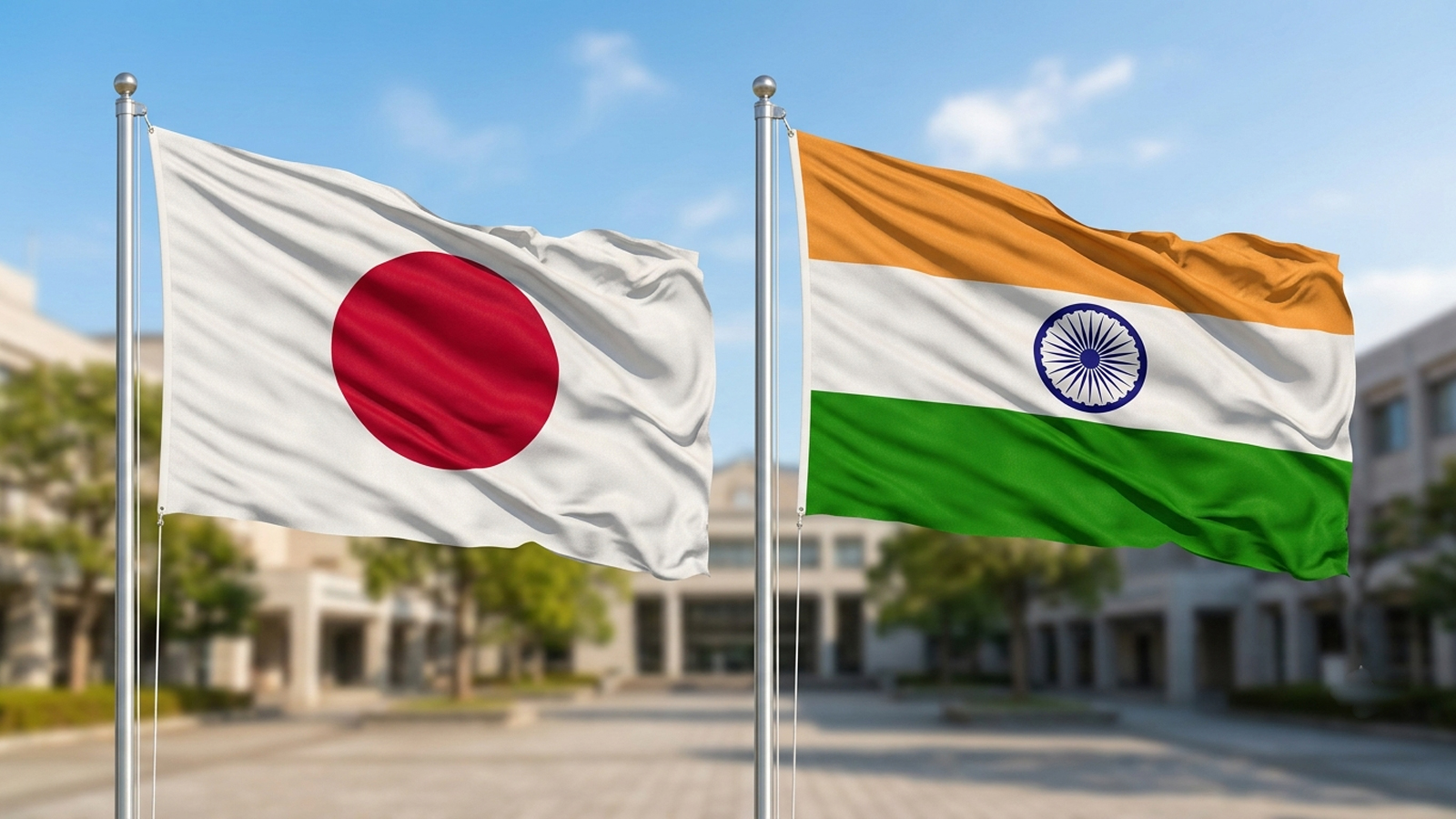
Economic cooperation has become one of the strongest pillars of India-Japan relations. The India-Japan Comprehensive Economic Partnership Agreement (CEPA) came into force on 1 August 2011, covering trade in goods and services, investments, movement of professionals, intellectual property rights and customs procedures. Under CEPA, tariffs were reduced on approximately 94 per cent of traded items by 2021.
According to the Ministry of External Affairs (MEA), India-Japan bilateral trade has witnessed consistent growth. During FY 2025-26, total trade reached US$27.48 billion, with India’s exports to Japan at US$6.04 billion and imports at US$21.44 billion. India’s key exports include organic chemicals, automobiles, aluminium products and seafood, while imports primarily comprise machinery, electrical equipment, copper, iron and steel, inorganic chemicals and nuclear reactor components.
Japan remains one of India’s largest investors. The MEA said that between April 2000 and March 2026, cumulative Japanese FDI in India stood at approximately US$48.14 billion, making Japan India’s fifth-largest source of foreign direct investment. Investments are concentrated in automobiles, electrical equipment, telecommunications, chemicals, financial services and pharmaceuticals. Nearly 1,500 Japanese companies operate in India through around 5,000 business establishments, while more than 100 Indian companies have established operations in Japan.
Major economic initiatives include the India-Japan Industrial Competitiveness Partnership, India-Japan Digital Partnership, cooperation in semiconductors, critical minerals, clean energy, artificial intelligence and supply chain resilience.
The MEA said that the two countries also launched an Economic Security Initiative in 2025 to strengthen collaboration in strategic sectors including semiconductors, telecom, pharmaceuticals and clean energy.
Japan is also India’s largest bilateral development partner. Since 1958, it has extended Official Development Assistance (ODA) supporting infrastructure, transport, energy and environmental projects. ODA disbursements during 2024-25 amounted to approximately 440 billion Yen. Flagship projects include the under-construction Mumbai–Ahmedabad High-Speed Rail Corridor, India’s first bullet train project, being developed with Japanese financial and technological support.












