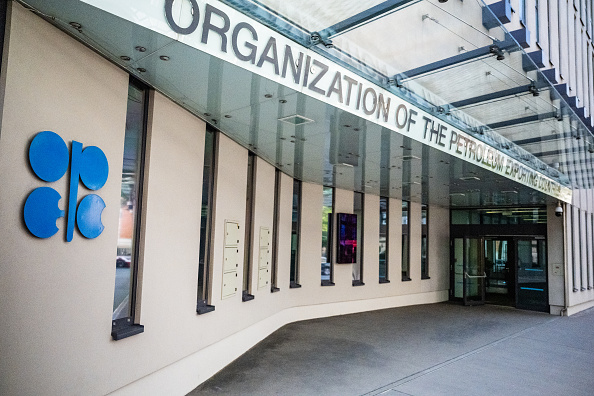
The United Arab Emirates has announced it will exit the Organisation of the Petroleum Exporting Countries and the broader OPEC+ alliance, with the decision taking effect from May 1, 2026. The move follows a comprehensive review of national production policy, capacity, and long-term economic priorities. Authorities say the decision reflects the country’s evolving energy profile and its aim to enhance flexibility in responding to global market dynamics.
In a statement, the UAE said the step is based on national interest and its commitment to meeting global energy demand effectively. It added that it will continue to play a responsible role in ensuring market stability. The announcement comes at a time of continued volatility in global energy markets, including recent disruptions linked to tensions around the Strait of Hormuz, a key route for nearly a fifth of global oil shipments.
The UAE, which joined OPEC in 1967 through Abu Dhabi and remained a member after the federation was formed in 1971, said it values decades of cooperation. It noted, “The time has come to focus our efforts on what our national interest dictates and our commitment to our investors, customers, partners and global energy markets.”
Officials confirmed the country will continue increasing output gradually, aligned with demand. The UAE’s production capacity is close to 5 million barrels per day, though OPEC+ quotas had limited output to significantly lower levels. The government said it will maintain investments across oil, gas, and renewable energy sectors while supporting long-term market stability.
After nearly six decades, the United Arab Emirates has stepped away from OPEC, marking the end of one of the most significant partnerships in global energy. Abu Dhabi joined the oil producers’ group in 1967, even before the UAE was formed, and went on to become one of its most influential members, ranking as the third-largest producer after Saudi Arabia and Iraq.
Recent disruptions linked to Iran and instability around the Strait of Hormuz have affected oil flows, adding pressure on the UAE’s export capacity. At the same time, long-standing differences over production quotas and the country’s ambition to raise output to five million barrels a day by 2027 have sharpened the need for greater flexibility.
For OPEC, the exit is a major setback. Losing a key member during a period of geopolitical strain and market volatility raises questions about the group’s cohesion. For the United States, which has often criticised OPEC’s influence on prices, the move could be seen as a strategic gain. And for global oil markets already facing uncertainty, this signals a new and potentially unpredictable phase.