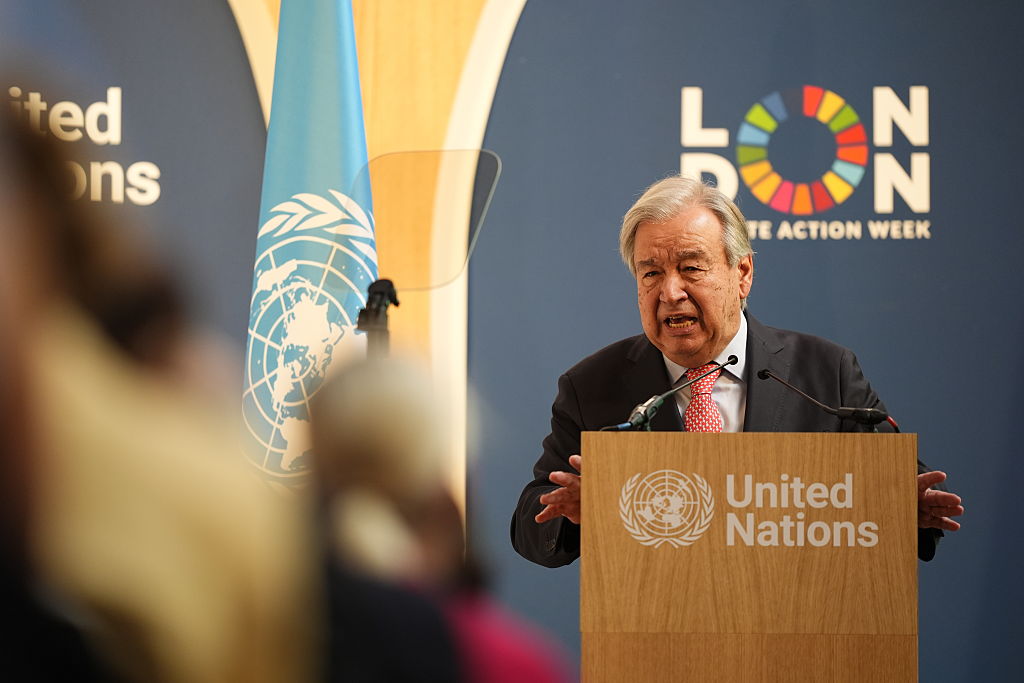
United Nations Secretary-General Antonio Guterres said on Wednesday that climate adaptation must be treated as a core priority for governments — and properly valued by the financial system — as climate risks intensify and a funding gap widens.
As droughts, floods and other extreme weather events affect communities worldwide, Guterres told policymakers and finance leaders at London Climate Action Week that adaptation has so far been undervalued and chronically underfunded.
“Finance ministers, central banks, planning ministries and public investment authorities must treat climate risk as core economic policy in order to mobilise greater domestic resources,” he said, urging governments to incorporate climate risk across everything from fiscal policy to regulation.
Closing the gap will require a broad mix of tools, Guterres said, including levies on polluting industries, blended finance structures and guarantees to encourage private investment.
He called for windfall taxes on fossil fuel companies, with proceeds directed toward adaptation and climate-related losses and damage.
Against the backdrop of reform of the world’s development banks, he said their shareholders must give the lenders “far greater firepower,” including increased capital, to scale up lending for resilience-building projects.
POOREST NATIONS MOST EXPOSED TO CLIMATE IMPACTS
The need for increased public and grant-based finance is most acute in developing countries, he said, which are the most exposed to climate impacts but have the least capacity to prepare.
According to the United Nations Environment Programme, these countries will need $310–$365 billion a year by 2035, yet received only about $26 billion in 2023.
Guterres said the financial system must also shift how it values resilience, particularly to attract more private capital.
“Countries that invest in reducing risk should be rewarded, not punished,” he said, calling on insurers, regulators and credit rating agencies to reflect adaptation efforts in lower borrowing costs and better insurance terms.
He added that stronger preparation before disasters strike is essential, including universal access to early warning systems and more affordable, pre-arranged financing such as insurance.
“You cannot allow climate disasters to become fiscal disasters,” he said. “Adaptation is an economic necessity, a development imperative, a security imperative and a matter of climate justice.”
(Reuters)