




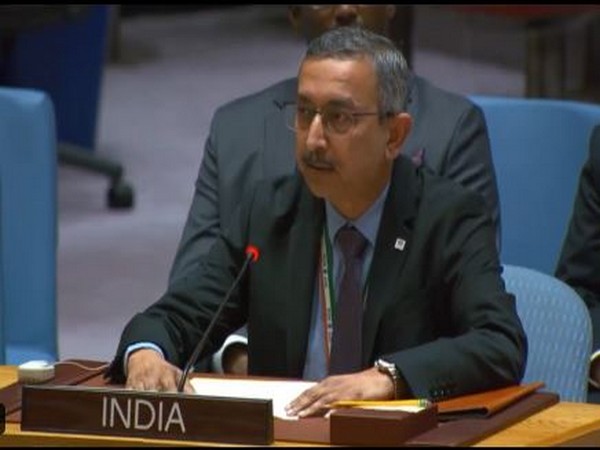
Tanmaya Lal, Secretary (West), Ministry of External Affairs, asserted that the United Nations Security Council (UNSC) urgently needs reform to become more representative, transparent, efficient, effective, democratic and accountable.
The remarks by Lal came during the UNSC Open Debate on Leadership for Peace. He said the world is grappling with devastating armed conflicts and the current multilateral response is inadequate, failing to prevent or resolve these conflicts.
“Serious armed conflicts are impacting lives, economies and societies across geographies in our interconnected world. The current multilateral response is falling seriously short in ending and preventing such conflicts, in tackling unrelenting threats from terrorism, and transnational organised crimes, and in ensuring maritime security, ,” Lal said.
He said that the UN Security Council mandated to secure international peace and security was designed eight decades ago in a different era, when three-quarters of today’s UN member states were colonies and now the times have changed, the world has moved on.
He added, “The UNSC has to become representative, transparent, efficient, effective, democratic and accountable. Text-based negotiations must begin. Those opposing a meaningful change to global governance structure are damaging UN’s legitimacy, overshadowing its contributions in developmental and humanitarian sectors.”
Lal during his speech, also criticised Pakistan for its alleged support of terrorism, emphasising the need for the international community to condemn such actions. He said, “… Their (Pakistan) support for the elaborate terror ecosystem, training and harbouring global terrorists is well documented. It is high time that Pakistan starts working for its own people. Their cynical export of terror in pursuit of their vicious agenda can never succeed. Such continuing threats to international peace and security must be firmly rejected by the international community.”
Notably, India has long sought a permanent seat in the Security Council to better represent the interests of the developing world. The nation’s quest has gained momentum with support from the international community.
The UNSC is composed of 15 member states, including five permanent members with veto power and ten non-permanent members elected for two-year terms.
The five permanent members of the UNSC include China, the United Kingdom, France, Russia, and the United States. The non-permanent members of the United Nations Security Council are elected for 2-year terms by the UNGA.
Meanwhile, Lal also spoke about India’s stance on nuclear weapons at the High-level Meeting to Commemorate and Promote the International Day for the Total Elimination of Nuclear Weapons at the United Nations.
He said, “Nuclear weapons continue to pose a grievous danger to humanity. India remains firmly committed to the goal of universal, non-discriminatory nuclear disarmament in a specified time frame.” (ANI)