Despite what it called a humanitarian “disaster” in Afghanistan, the U.S. said on Monday international assistance to the country should be evaluated, given Taliban “intransigence” and its exclusion of the female population from basic rights.
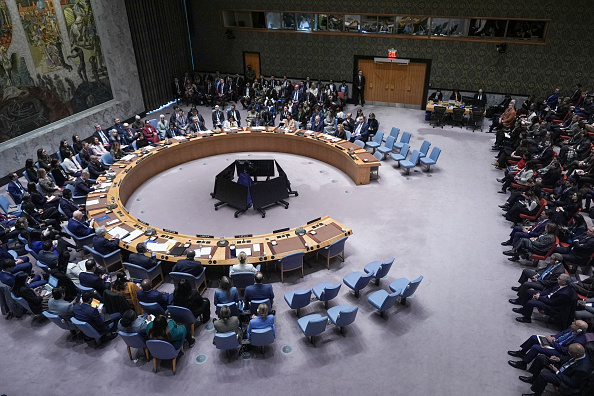
Speaking to a U.N. Security Council meeting on Afghanistan, the U.S. ambassador to the United Nations, Mike Waltz, noted that the budget for the United Nations Assistance Mission in Afghanistan (UNAMA), the mandate of which is up for renewal next week, is the largest of any special U.N. mission in the world.
“In light of the Taliban’s intransigence, we must carefully evaluate the utility of international assistance and engagement in Afghanistan,” Waltz said, even as he highlighted an ongoing “humanitarian disaster” there.
“This council must consider carefully the funds we collectively provide for this mission’s budget, when the mission’s female national staff are not even able to go into the office to work,” he added.
Afghanistan under the Taliban faces one of the world’s most pressing humanitarian crises.
According to the U.N. World Food Programme, more than 17 million Afghans – or one-third of the population – are facing acute food shortages, including 4.7 million facing emergency levels of hunger.
The temporary head of UNAMA, Georgette Gagnon, told the meeting Afghanistan had “urgent” humanitarian needs and the humanitarian crisis there had worsened due to funding cuts. She said humanitarian agencies aimed to assist 17.5 million Afghans in 2026 through an appeal for $1.71 billion, but this was currently only 10% funded.
Gagnon said Afghanistan’s nearly two-week conflict with Pakistan had had “punishing human and economic costs” and the Iran war on its other border was causing prices of basic commodities to rise.
She said some positive developments showed the value of international engagement, including the Taliban ban on opium poppy cultivation. She warned that if rights and humanitarian issues were not dealt with, Afghanistan could “once again become a driver of regional and global instability in the form of outmigration, terrorism, narcotics and more.”
(REUTERS)