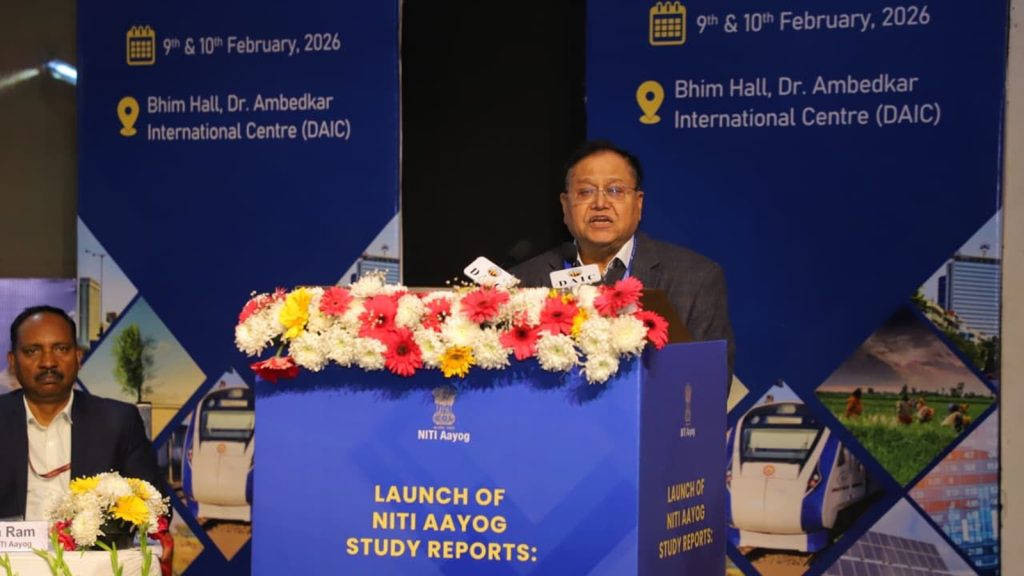
India can achieve its vision of Viksit Bharat by 2047 while simultaneously reaching Net Zero emissions by 2070, according to a set of new scenario-based reports released by NITI Aayog on Tuesday.
The government think tank released four sectoral reports – covering transport, industry, power, and critical minerals – as part of a larger series of eleven studies assessing development pathways that align economic growth with climate commitments.
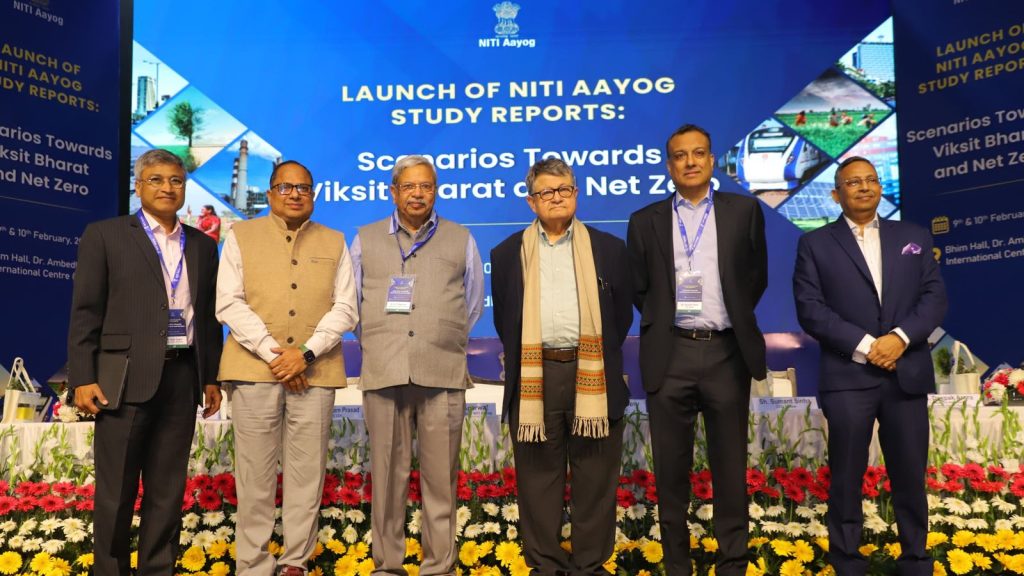
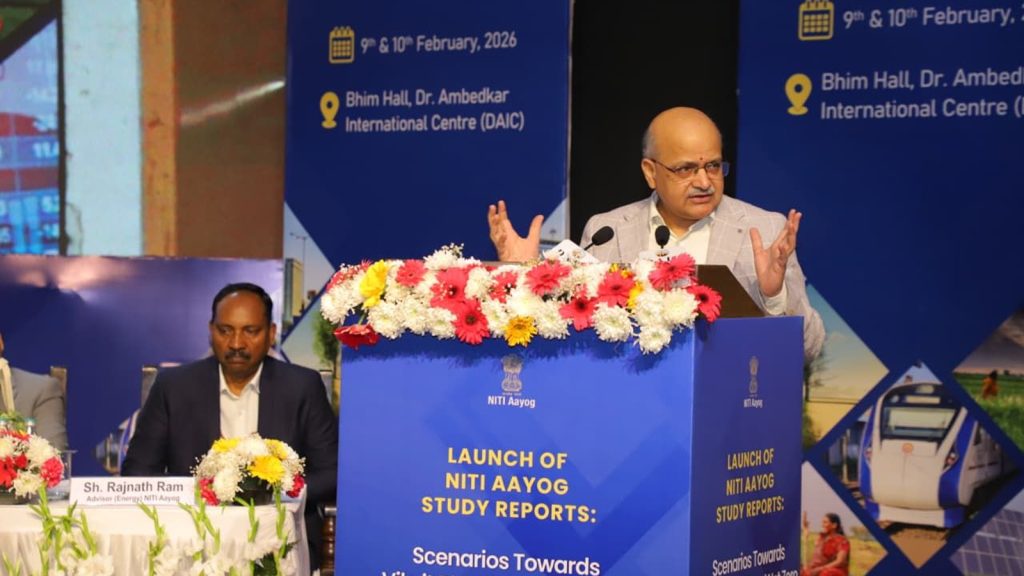
The reports were unveiled at the Ambedkar International Centre in New Delhi in the presence of senior policymakers, including Dr V.K. Saraswat, Member, NITI Aayog, and B.V.R. Subrahmanyam, CEO, NITI Aayog, along with officials from the power, renewable energy and petroleum sectors.
The studies emphasise that electrification, greening of energy, Mission LiFE-led behavioural change, circularity, and energy efficiency will be critical to achieving India’s Net Zero target.
According to the analysis, measures such as electrification, circular economy practices and improved energy efficiency could reduce final energy demand by 20 per cent by 2070. Electricity’s share in final energy consumption is projected to rise sharply from 21 per cent in 2025 to nearly 60 per cent by 2070.
The share of non-fossil fuel-based power generation could increase from the current 23 per cent to 80-85 per cent by 2070, driven by rapid expansion of renewables, storage, nuclear power and green hydrogen.
Despite the transition, India’s coal consumption will continue to rise till 2047 even as it fulfils Net Zero goals.
In the transport sector, electricity, biofuels and hydrogen could together meet nearly 90 per cent of transport energy demand by 2070, supported by modal shifts towards rail and waterways, zero-emission vehicles, and greater use of public and shared mobility.
The industry sector, particularly hard-to-abate segments such as steel, cement and aluminium, is projected to see demand grow four to six times by 2070. Electrification, green hydrogen, material efficiency and recycling are expected to become the backbone of industrial decarbonisation.
On critical minerals, the report estimates that 20–25 per cent of copper and graphite demand could be met through recycling by mid-century. It also outlines strategies to secure supply chains through domestic resource development, international sourcing, institutional reforms and circular economy approaches.
Addressing the event, Dr V.K. Saraswat said the transition presents both a challenge and an opportunity for India. “Energy, industry and transport are the engine of India’s economy. Along with the challenge of Viksit Bharat 2047 and achieving Net Zero by 2070 lies the opportunity to shift to clean energy and new fuels like green hydrogen and lock in efficiency gains,” he said.
NITI Aayog CEO B.V.R. Subrahmanyam noted that power, transport and industry together account for nearly 80 per cent of the energy transition challenge. While imports of critical minerals may rise, he said the decline in fossil fuel imports would be significantly larger, potentially strengthening India’s overall energy security position.
Officials from the power and renewable energy ministries highlighted the need for robust planning across generation, transmission, storage and demand management, as well as maintaining financially strong distribution companies during the transition.
The reports are part of India’s first government-led, multi-sectoral integrated modelling exercise to assess long-term development scenarios aligned with economic growth and climate commitments. The study was informed by ten inter-ministerial working groups examining areas such as macroeconomic impacts, sectoral transitions, financing, critical minerals, research and development, manufacturing, and social implications.
NITI Aayog said the findings are intended to guide long-term policy planning as India balances rapid development with climate responsibility.